
Combating Illegal Seafood Imports
-
Adrian Ramsay MP co-signed this cross-party letter initiated by Kerry McCarthy MP & Sarah Champion MP.
Rt Hon Emma Reynolds MP
Secretary of State for Environment, Food and Rural Affairs
2 Marsham Street
London
SW1P 4DF
December 2025
Dear Secretary of State,
We are writing to express our alarm at the findings of the Coalition for Fisheries Transparency’s report, Criminal catches: how to stop the supply of illegal seafood to the UK, and urge the government to take urgent action in response to increase risk-based import controls and fully implement the Charter for Transparency.
The report reveals that seafood linked to illegal, unreported and unregulated (IUU) fishing and severe human rights abuses is entering the UK due to weak enforcement and under utilisation of our import controls. As a result, the public is at real risk of unwittingly purchasing seafood tainted by environmental harm and exploitation, while law-abiding British fishers are forced to compete to sell their produce on a domestic market flooded with cheap,
imported seafood that is at high risk of being illegally-caught.
IUU fishing has devastating impacts on marine ecosystems, it drives the collapse of fish populations, and often involves destructive fishing practices such as shark finning and the targeting of endangered species. It directly undermines global conservation efforts and the long-term sustainability of fish populations that support UK coastal livelihoods and provide a vital source of income and nutrition for billions of people in the Global South. Furthermore, investigations frequently show that where IUU fishing occurs, it is accompanied by human
trafficking, forced, bonded and slave labour.
As covered in The Times and revealed in Criminal catches, more than a quarter of UK seafood imports originate from countries that ranked among the world’s most notorious offenders for illegal fishing, including those that have been formally warned by the European Union (EU) for failing to address IUU fishing in their fleets. China and Russia are consistently among the worst-performing states globally, yet scrutiny of their imports remains far below
levels required to identify and screen out illegal catches. The UK receives around 1,000 catch certificates annually from China – covering roughly 58,000 tonnes of seafood – but only four consignments have been refused since 2012. No Russian catch certificates have been verified or refused since 2021.
Verification checks – a process through which authorities scrutinise catch documentation and request evidence from exporting flag-states to confirm legality – are a critical safeguard and using them frequently sends a clear message that a country wants to protect its market from illegal seafood. Despite this, since Brexit the UK has seen a three-fold decline in verifications – significantly fewer than best practice countries. Spain, for example, carries out more than 18 times as many verifications as the UK, despite historically importing only
around twice the number of catch certificates. Since Brexit, key monitoring and reporting of the UK’s IUU import controls has also ended, meaning we are now effectively blind to the full extent to which these controls are being implemented. Further, we are deeply concerned to learn from the report that Port Health Authorities currently receive no guidance identifying and prioritising high-risk seafood consignments for scrutiny. This lack of advice prevents a coordinated, risk-based approach and hinders the efficient use of their limited resources.
We welcome the government’s recent confirmation of its intention to update the information required in the UK catch certificate next year. It is imperative that these reforms match new data requirements from the EU – improvements that parliamentarians, industry and civil society have long supported. Falling behind the EU in this and other related areas risks the UK becoming Europe’s dumping ground for illegal and slave-caught seafood.
We should also match the EU’s introduction of a digitised catch certificate system, which would speed up processing times, allow for less administrative burden, and aid UK authorities in using a risk-based approach to identify and respond to IUU fishing links in imports. The use of a paper-based system in 2026 is deeply outdated and leaves us vulnerable to seafood fraud.
Crucially, we also urge the UK to require the provision of labour-specific risk information in catch certificates provided by seafood importers to the UK. Information such as the vessel’s time at sea, trans-shipment history, a vessel or captain’s history of prosecutions for labour offences, and whether crew have access to wifi serve as internationally recognised indicators of forced labour, trafficking and other serious abuses of crew. This information, which should already be held or easily accessible to importers, would enable UK authorities to assess the risk that seafood has been produced through both IUU fishing and associated labour abuses, which so often occur side-by-side. It would also encourage importers to conduct more robust supply chain due diligence, while creating a strong incentive to source from vessels and captains with clean records on labour abuses, rather than having to disclose links to unscrupulous operators.
We regard these changes to the UK’s catch documentation as important priorities. However, further strengthening is urgently required to ensure that the UK is not seen as an easy entry point for seafood linked to criminality, environmental destruction and human exploitation.
We therefore urge the government to adopt the full set of recommendations outlined in Criminal catches, including:
Turning the UK’s public support into a timebound commitment to fully implement the Global Charter for Fisheries Transparency.
Implementing a “carding” system based on yellow and red cards to incentivise positive reforms and ensure meaningful consequences for countries failing to act against IUU fishing. UK consumers were protected by such a system before Brexit.
Significantly increasing verification checks – with a clear focus on high-risk consignments – to prevent illegal imports and protect responsible industry.
Implement a risk-based approach to identify consignments for further scrutiny at the border.
Together, these measures would help protect our ocean, support ethical supply chains and level the playing field for responsible UK fishers and businesses that sell seafood on the UK market.
We would welcome a meeting with you or a member of your ministerial team to discuss these findings and how we can work together to support a strengthened UK response.
We look forward to your reply.
Adrian Ramsay MP co-signed this cross-party letter initiated by Kerry McCarthy MP & Sarah Champion MP.
It is time to end the cruelty of cages and crates in UK farming
Originally published on the 12th of December 2025 on https://www.farmersguardian.com/blog/4523182/exclusive-adrian-ramsay-end-cruelty-cages-crates-uk-farming
The UK likes to believe it leads the world on animal welfare. We tell ourselves that we set high standards and that our farms reflect the compassion we hold so dear as a nation. Yet each year, millions of animals are trapped in conditions we would not allow our dogs or cats to endure. In far too many cases, hens are still confined to cages that offer less space than a sheet of A4 paper. Sows remain locked inside farrowing crates for weeks at a time, unable to turn around. Calves begin their lives alone in narrow pens that restrict natural movement. All of this continues despite mounting evidence, clear public concern, and workable alternatives.
Later this month, the Government is due to publish its Animal Welfare Strategy. It is a chance to meaningfully improve the lives of farmed animals. I led a group of 36 MPs and Lords from across the political spectrum, urging the Secretary of State for the Department for Environment, Food & Rural Affairs to use the animal welfare strategy to move towards a more humane treatment of farmed animals. This must start with a time-bound plan to phase out the use of confinement cages and crates in our farming system. However, regulation alone is not enough. The Government must offer financial and practical support to farmers so they can move to higher-welfare systems with confidence.
From talking with the NFU and farmers across my East Anglian constituency, it is clear that many support high welfare standards, and that they would welcome government support for improving welfare standards. They also often feel undercut by the megafarms – huge industrial units of hundreds of thousands of chickens or many thousands of pigs – which are becoming commonplace in East Anglia. Or they feel squeezed by the supermarkets driving down prices. Both these issues need simultaneous government action.
You might ask, Adrian, is this really a big issue? Well, there are almost eight million laying hens remaining in cages where they cannot even stretch their wings. About two hundred thousand pigs spend close to a quarter of their adult lives in farrowing crates. These animals live in conditions that deny their most basic instincts. Many countries in Europe have already recognised this and acted. They are moving away from cages for hens. Some, like Switzerland and Norway, have banned farrowing crates entirely. Research from Humane World for Animals shows that more than two-thirds of people in the UK oppose the use of farrowing crates, so there is growing public support to move towards a more humane system.
In our letter to the Secretary of State, we set out what must be done to bring the UK into line with international best practice. First, the Animal Welfare Strategy should set a timeline for the phase-out of farrowing crates, individual calf pens, and all cages used for birds. Second, the Government must back a funded transition package so that farmers can invest in new housing and management systems for their animals. Finally, stronger enforcement is essential. Too many existing laws go unmonitored and unenforced. New research from the Animal Law Foundation reveals that only 2.2% of UK farms were inspected in 2024, meaning 97.8% of farms received no official welfare visit at all. That means nearly all farms received no visit at all. This leaves both animals and law-abiding farmers at risk, while sending the wrong message to those, who do not follow the regulations. That means nearly all farms received no visit at all. This leaves both animals and law-abiding farmers at risk, while sending the wrong message to those who cut corners.
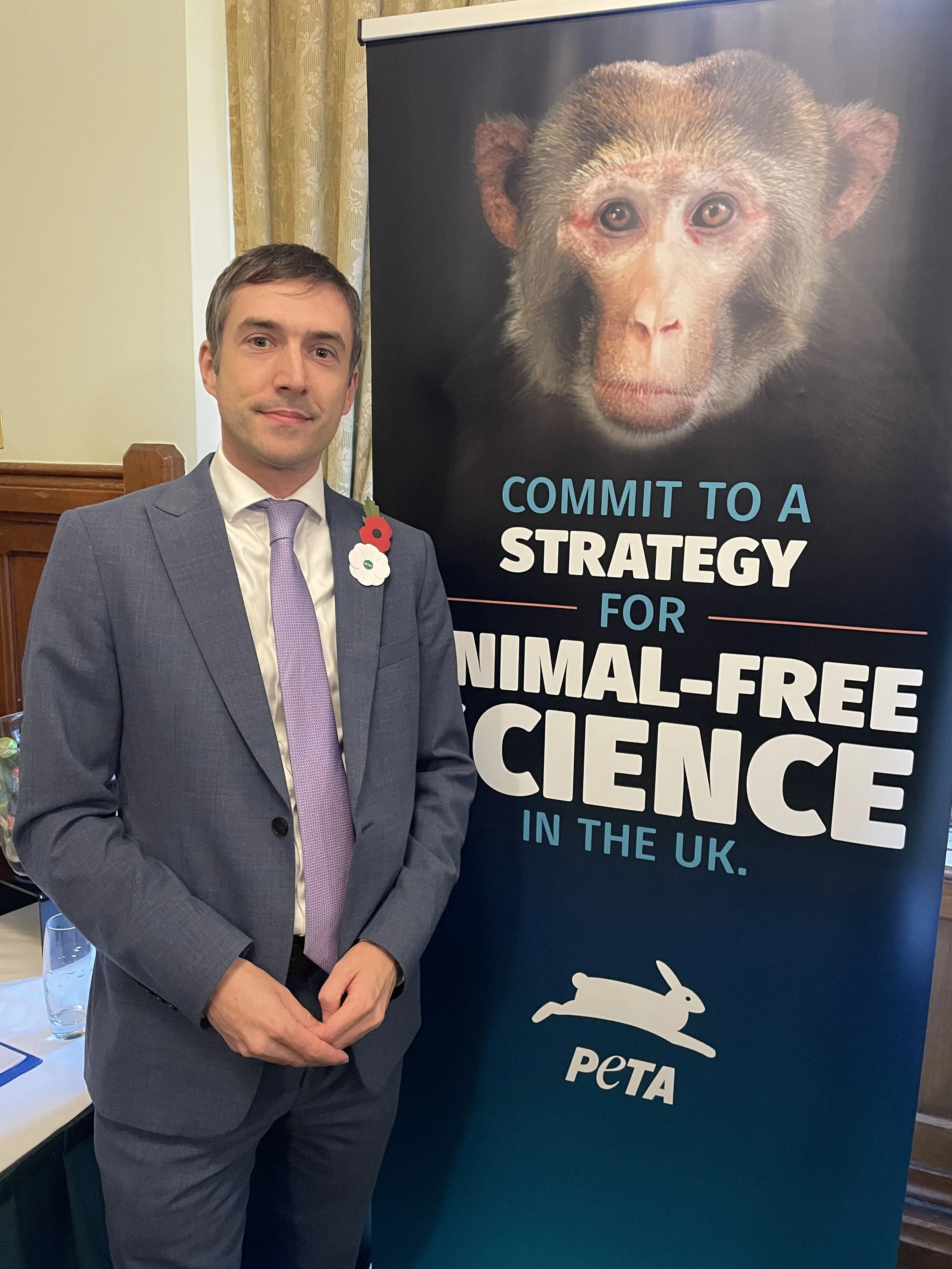
I was recently at an event where the problem was perfectly summed up. A country cannot claim leadership in animal protection while failing to check that its own laws are followed. When violations rarely lead to consequences, poor practice goes unchallenged. We would not tolerate it in any other regulatory area, nor should we accept it when animals are involved.
Alongside these measures, Greens would like to see trade rules reformed so that imports cannot be allowed where they fail to meet the same standards as are required in UK production. This is fundamental to supporting our farmers. We would also like to see action on supermarkets to stop the practice of driving down prices they pay to farmers to levels that stop farmers making a real living.
And of course, there are many other areas where I am advocating for farmers, such as the need for the Sustainable Farming Incentive to be reopened and put on a long-term footing that farmers can rely on – to help advance nature-friendly farming. Plus, I am pressing the Government to rethink its place on Agricultural Property Relief so that ordinary family farms are not impacted.
On my proposals for the Animal Welfare Strategy, many farmers already lead the way, and many more would join them if given the tools to do so. Higher welfare farming is part of a resilient food system because it supports healthier animals, reduces the risk of disease outbreaks and creates steadier supply chains that are less vulnerable to shocks. The Animal Welfare Strategy provides an opportunity to make improvements that reflect who we are as a country, while providing essential support to farmers for this transition. There’s strong public support for these changes and I hope the government delivers.
Farming and IHT
20th of December 2024
In the last few weeks I’ve had many conversations with farmers in my constituency about the very difficult year they had last year and their concerns for the future.
As many of us will remember, 2024 was extraordinarily wet, even though East Anglia thankfully escaped the worst of it. Nationwide, 2024 was the second worst harvest on record. On top of that, farmers have faced rising costs which, combined with the injustice of supermarkets squeezing margins evermore, makes it very difficult to make a living.
Then came the October Budget and the proposal to close a tax loophole which exempted farmland and businesses from inheritance tax. The Chancellor is proposing a threshold of £1 million on business and agricultural assets - anything more than that would be subject to inheritance tax of 20 percent. Cue mass protests by farmers at Westminster and a growing tide of concern and anger in farming communities.
This issue has been quickly politicised with opposition parties lining up to attack the Government. There’s no surprise there. Looking for a weakness in the Government’s position is what opposition parties do. It’s part of how our democracy works. But it’s not enough for opposition parties to simply defend the current situation and offer no alternative – as the Conservatives are doing.
Because what’s become clear to me in my conversations with local farmers is that, while the Government’s proposed changes are deeply flawed, the status quo is not working either. More and more farmland is being bought by wealthy investors to avoid inheritance tax, driving up prices and denying ordinary farmers the chance to expand their farms. And these investors often have no interest in farming.
I spoke to one farmer who told me about a 350-acre farm in Suffolk which had been bought by a wealthy London banker who didn’t even visit the property. In fact, he bought it before it even went on the market. In another case, a farmer who was hoping to expand his farm and had set aside the money to buy some neighbouring land saw that land sold for 60 percent above the asking price – again bought by someone taking advantage of tax rules. It’s no wonder that land prices are rising by an average of 14 percent every year.
One nationwide land agency found that non-farmers bought more than half of the farms and estates sold on the open market in England in 2023. The amount of land bought by ordinary farmers was the lowest on record.
This is not good for farmers or for our food security. It’s clear to me that this tax loophole has to be addressed in order to save family farms and the livelihoods of ordinary working farmers.
But the way the Government has framed this policy is going to end up protecting the investors while harming the farmers. The reduced inheritance tax rate will still entice wealthy investors who want to minimise their inheritance tax liabilities, even if they can’t avoid them altogether. But farmers will face huge tax bills when they try to pass on a family farm to the next generation.
The rise in land values isn’t only pricing out many ordinary farmers. It is also driving up the paper value of their farms, pushing many of them way above the £1 million threshold proposed by the Chancellor. An average-sized farm of 300 acres could easily be worth £3 million and that’s just for the land. Then there are the buildings, the farm equipment and the livestock on the farm.
Yet many farmers are earning barely more than the minimum wage, despite working very long hours.
There is a clear solution to this. Close the tax loophole to deter investors and, hopefully, bring down land prices but protect genuine farmers by raising the threshold much higher than the proposed £1 million. That’s what the farmers and local National Farmers Union reps I’ve spoken to want to see.
Farming is an absolutely critical industry – vital for our food security, the protection of wildlife and our response to climate change. But if we want to protect it, there must be a fair deal for farmers to include: ensuring the funding pots for environmental land management schemes are adequate and easy to access; tackling the power of the supermarkets and stopping them squeezing the prices that farmers receive; and addressing the existing tax loophole. This loophole is clearly creating major problems for ordinary working farmers and costing the Treasury millions in lost tax revenue. That money is urgently needed for public services like the NHS, education and public transport – and nature friendly farming schemes.
The Conservatives and others who want to preserve the status quo aren’t acting in the interests of genuine farmers – they are protecting the interests of very wealthy investors. I want to see a huge investment in our public services, funded by taxing those with the broadest shoulders like these wealthy investors. I also want to family farms to thrive.
The Chancellor can do both by closing this tax loophole and raising the inheritance tax threshold to protect ordinary farms. It would be positive way to start the new year.
I wish you all a hopeful and peaceful 2025.