
Proposed Restrictions on the Use of Terms Such as “Burger” and “Sausage” for Plant Based Foods
-
Adrian Ramsay MP co-signed this cross-party letter initiated by the Vegetarian Society.
LETTER TO MEMBERS OF THE EUROPEAN COMMISSION
From Members of Parliament of the United Kingdom
Re: Proposed Restrictions on the Use of Terms Such as “Burger” and “Sausage” for Plant Based Foods
06/12/2025
Dear Commissioners,
We write as members of the UK Parliament to express our deep concern regarding the proposed ban on the use of everyday, well-understood food terms, such as ‘burger’, ‘sausage’, and similar descriptors, when used for plant-based products. Although the United Kingdom is no longer a member of the European Union, our markets, companies, consumers, and regulatory conversations remain closely intertwined. Decisions taken at EU level continue to influence global norms, international trade, and the direction of sustainable food innovation.
We urge you not to adopt these restrictions, as we are deeply concerned about the significant global impact they could have. The evidence is clear: existing legislation already protects consumers; consumers themselves overwhelmingly understand and support current naming conventions; and new restrictions would undermine economic growth, sustainability goals, and the EU’s own simplification agenda.
1. Current legislation already ensures consumer protection
The Food Information to Consumers (FIC) Regulation provides extensive safeguards against consumer confusion. The European Court of Justice confirmed in Case C-438/23 that the current legislative framework is fully adequate to protect and inform consumers and to address misleading presentation when it arises1.
The Court also reiterated that existing rules already mandate transparency when expected ingredients are substituted - requirements that plant-based producers consistently follow.
This position has also been acknowledged at multiple points by the European Commission (see 2020 response2, 2022 response3 and 2024 response4).
2. Most consumers are not confused, however, a ban could increase confusion
1 https://eur-lex.europa.eu/legal-content/EN/TXT/PDF/?uri=CELEX:62023CJ0438
2 https://www.europarl.europa.eu/doceo/document/E-9-2020-004966-ASW_EN.html 3 https://www.europarl.europa.eu/doceo/document/E-9-2022-002681-ASW_EN.html 4 https://www.europarl.europa.eu/doceo/document/E-10-2024-002312-ASW_EN.html
Research consistently shows that consumers intentionally choose plant-based alternatives and do not confuse them with animal meat.
The Advocate-General’s Opinion (Capeta, 2024) explicitly warns that banning familiar food terms could increase confusion, not reduce it5. Empirical studies reinforce this finding:
• BEUC study (2020): ~80% support use of terms like ‘veggie burger’6 • Smart Protein (2023): Only 9% of consumers do not recognise plant-based meat alternatives7
• Germany (2022): 92% identify plant-based alternatives correctly8
• Spain (2021): Only 13% oppose plant-based use of traditional terms9 • Portugal (2021): >95% understand that plant-based alternatives contain no animal meat10
• Greece (2024): ~82% do not oppose current naming11
• Empirical study on label clarity (Gleckel, 2020)12
These findings show an overwhelming pattern; most European consumers understand the terminology for plant-based foods well.
3. The proposed ban undermines competitiveness, innovation, and the single market
Introducing a denomination ban would run counter to the EU’s commitments on simplification and competitiveness. It would create administrative burdens, force companies to redesign packaging, and generate inconsistencies across languages and Member States.
This is particularly problematic given the rapid growth of the plant-based market: • Europe remains the world’s largest consumer market for plant-based alternatives13
5
https://curia.europa.eu/juris/document/document.jsf?text=&docid=289831&pageIndex=0&doclang=en&mo de=req
6 https://www.beuc.eu/sites/default/files/publications/beuc-x-2020-
042_consumers_and_the_transition_to_sustainable_food.pdf
7 https://smartproteinproject.eu/wp-content/uploads/Smart-Protein-European-Consumer-Survey_2023.pdf 8 https://www.vzbv.de/sites/default/files/2022-
04/220307_IFH%20K%C3%96LN_Verbraucherzentrale_Kennzeichnung%20von%20Ersatzprodukten_final.p df9 https://proveg.com/es/wp-content/uploads/sites/2/2021/02/Resultados-estudio-nomenclatura-alimentos vegetales.pdf
10 https://www.atrevia.com/wp-content/uploads/2021/03/Relatorio_Upfield_FINAL_UCP.pdf 11 https://hellasveg.gr/wp-content/uploads/2025/05/survey-2024-final_EN.pdf
12https://ssrn.com/abstract=3727710
13 https://gfi.org/resource/plant-based-meat-eggs-and-dairy-state-of-the-industry-report
• The EU market grew 21% between 2020 and 202214
• Consumer trends show rising flexitarianism and reduced meat consumption15 • 31% of Europeans are reducing meat intake16
• Economic modelling demonstrates substantial opportunities: Plant-based dietary shifts could increase farm incomes by up to 71%17
• Alternative proteins could create 83 million jobs globally by 205018 • This sector is also a major opportunity for European farmers, with most crops used in plant-based dairy grown inside the EU (ProVeg International, 2022).
4. Plant-based foods support climate goals and European food security
Alternative proteins offer some of the highest emissions-reduction returns per euro invested, outperforming investments in electric vehicles and green building initiatives19.
They are also identified as one of the key ‘super-leverage points’ that can accelerate transitions across multiple sectors. Meldrum et al. (2023): The Breakthrough Effect.
Greater cultivation of pulses and legumes improves soil fertility and reduces fertiliser dependency, lowering production costs20,21. All of this shows that expanding plant-based options is aligned with environmental, economic, and food-security goals.
Conclusion
We recognise the importance of protecting consumers and ensuring clarity in food labelling. However, the evidence is unequivocal:
• Current EU law already provides full protection
• Consumers overwhelmingly understand and support the existing naming system • The proposed restrictions could damage competitiveness, innovation, and climate progress.
Clear labelling, not unnecessary terminology bans, is the best approach for consumers, producers, and the future of sustainable European food systems.
14 https://gfieurope.org/market-insights-on-european-plant-based-sales-2020-2022/ 15 https://smartproteinproject.eu/market-research/
16 https://europa.eu/eurobarometer/surveys/detail/2954
17 https://doi.org/10.1111/1477-9552.12530
18 https://www.climateworks.org/ginas-methane/
19 https://www.bcg.com/publications/2022/combating-climate-crisis-with-alternative-protein 20 https://doi.org/10.1016/j.ecolecon.2016.03.024
21 https://doi.org/10.1002/fes3.175
We therefore urge the Commission to reject these restrictions and maintain the current, proportionate, effective regulatory framework, which we firmly believe sets the global standard for best practice.
Yours sincerely,
Members of Parliament of the United Kingdom
Siân Berry MP
Irene Campbell MP
Jeremy Corbyn MP
Carla Denyer MP
Kerry McCarthy MP
Navendu Mishra MP
Adrian Ramsay MP
Alex Sobel MP
Also supported by:
The McCartney Family

Call it a reset, call it a “plan for change”, the Prime Minister’s administration was in desperate need of a relaunch
6th of December 2025
Call it a reset, call it a “plan for change”, the Prime Minister’s administration was in desperate need of a relaunch. Labour have had a shaky first few months, peppered with mis-steps from the ending of the winter fuel allowance to a budget which penalises small businesses and employers and won’t deliver improved living standards for people.
So now we have the Government’s new priorities from housing to NHS waiting lists to early years education. The ambition for Britain to be a clean energy superpower squeezes on to the list but, disappointingly, the ambition has been weakened to 95% clean power by 2030 – the same target set by the previous Conservative government.
What’s more disappointing is the silence on how we should be adapting to the impacts of climate breakdown which are affecting our communities now.
Even if we manage to limit global heating to 1.5C, and that looks more and more unlikely as emissions continue to grow and global efforts to decarbonise falter, significant changes to the climate and our weather systems are baked in. That means the UK faces more frequent severe flooding and more summer heatwaves.
We were all shocked this autumn by the images from Spain as the Valencia region was hit by devastating floods which destroyed homes, bridges, roads and cost hundreds of lives. The cost to the Spanish economy is huge. The Valencia region has asked for over 30 billion Euros in relief and the insurance costs are expected to run to several billion more.
Are we so confident that similar catastrophic flooding couldn’t happen here in the UK? The storms which hit parts of England and Wales this autumn were nothing like as severe as those in Spain yet they still led to hundreds of homes in the Midlands and South being flooded, exposing the total inadequacy of our flood defences. More than half the population say they’re not equipped to deal with flooding and the damage it would cause to their home.
The need to adapt to a different, more unstable climate shouldn’t come as a surprise to Government. Its own advisers, the Climate Change Committee, issued a review of the National Adaptation Programme earlier this year and it was scathing.
The UK is falling far short of what’s needed. The adaptation plans lack the pace and ambition to address the climate risks which are happening now. Fewer than half of the short-term actions needed to address the most urgent risks are in progress. There is no vision and the current approach isn’t working.
So while I welcome the Government’s ambition to make the UK a clean energy super-power to reduce our carbon emissions, ministers aren’t addressing the need to adapt and build up resilience now. And in some respects, we’re moving backwards.
Take the ambition for more house building. We urgently need more homes, especially more affordable homes and homes built for social rent. But building on floodplains not only condemns future owners to the misery of likely flooding, it also stops the land absorbing and holding back floodwater as nature intended.
Allowing floodplains to do their job isn’t the only nature-based solution that is being overlooked. We need to un-do the damage of previous generations and re-plant hedgerows and trees, rewind rivers and create ponds to hold back floodwaters. Nature is our ally in adapting to a changed climate: we shouldn’t ignore it.
Flooding is not the only risk to people’s livelihoods and the economy. So is extreme heat. We have already seen temperatures of above 40C in the UK which scientists say have happened only because of climate change. Our infrastructure needs to be resilient to these extreme temperatures so railways don’t buckle and people don’t bake in their homes. Retrofitting homes isn’t only about insulation to keep people warm in winter. It’s also about methods to keep them cool in summer. Over half of homes are at risk of over-heating which gives a sense of the scale of the challenge. On this, the Government has nothing to say.
Nor should we ignore the impact extreme temperatures have on our food security. The Climate Change Committee warned five years ago that more frequent weather extremes would damage crops and livestock, making food prices more volatile. Biodiversity loss could have an even greater impact, leaving crops more vulnerable to pests and pathogens.
So yes, Prime Minister, your Government needed a reset. But you’ve missed a critical mission – a national adaptation plan to safeguard our food security, better prepare the country for a future of more extreme weather and put nature at the heart of our response to climate change.
Giving staff time to travel sustainably is smart business - letter for the Financial Times
-
Adrian Ramsay MP co-signed this cross-party letter initiated by We Are Possible.Giving staff time to travel sustainably is smart business
Many employees would choose low-carbon travel for their holidays if they did not have to forfeit precious time off work. Sustainable Travel Leave, pioneered by the charity Possible, offers a simple fix: grant a small amount of extra paid leave when staff choose trains, coaches or ferries instead of flying.
The principle is straightforward. A London–Berlin rail journey cuts emissions by roughly 92% but takes seven hours longer than flying. Under the Sustainable Travel Leave policy, employers cover that additional time with a modest leave allowance.
Possible has already supported almost 200 employers to adopt the policy, and it is now spreading internationally as standard practice. Employees can make lower-carbon choices; employers face minimal disruption.
Six years’ worth of data shows that the extra amount of leave taken averages just three minutes per employee per month. Yet participating organisations report measurable gains: 74% say it increases staff motivation and wellbeing, 67% say it has aided recruitment efforts, and 81% say it helps embed sustainability across their operations.
We are calling on the Cabinet Office to offer Sustainable Travel Leave within the Civil Service. It is an ultra low-cost way to align workplace practice with the Government’s net-zero strategy while improving the public-sector employee offer. It also signals credible leadership at a time when voters expect consistency between climate ambition and day-to-day decisions. Crucially, it requires no new regulation, no subsidy and no complex administration.
The UK has repeatedly shown that people embrace climate-positive measures when they are practical and fair. Allowing employees modest time to travel responsibly is exactly that: commercially sensible, reputationally valuable and operationally light. It should become a standard part of the modern employment offer, in Whitehall and beyond.

Adrian celebrates small and independent businesses and encourages everyone to show their support in the lead up to Christmas
4th December 2025
This week, in the lead up to Small Business Saturday, Waveney Valley MP Adrian Ramsay visited a number of small businesses in Norfolk and Suffolk and attended A Taste of Suffolk, Wine and Cheese in Parliament.
Speaking after the event, Adrian said,
“Small and independent businesses are the backbone of our communities. They create local jobs, bring life to our high streets, and help our market towns thrive. Their success sends out benefits that reach well beyond any single town or high street.”
After speaking with Flint Vineyard, Adrian said,
“Waveney Valley is blessed to have a diverse and thriving independent business like Flint Vineyard just outside Bungay. It is creating outstanding wine - showing the diversity of what can be grown in East Anglia - and supporting local jobs. Reducing VAT for hospitality and reversing the employer National Insurance rise, as the Green Party has proposed, would ease pressure on small businesses like this.”

Adrian added that he always makes a point of visiting local traders.
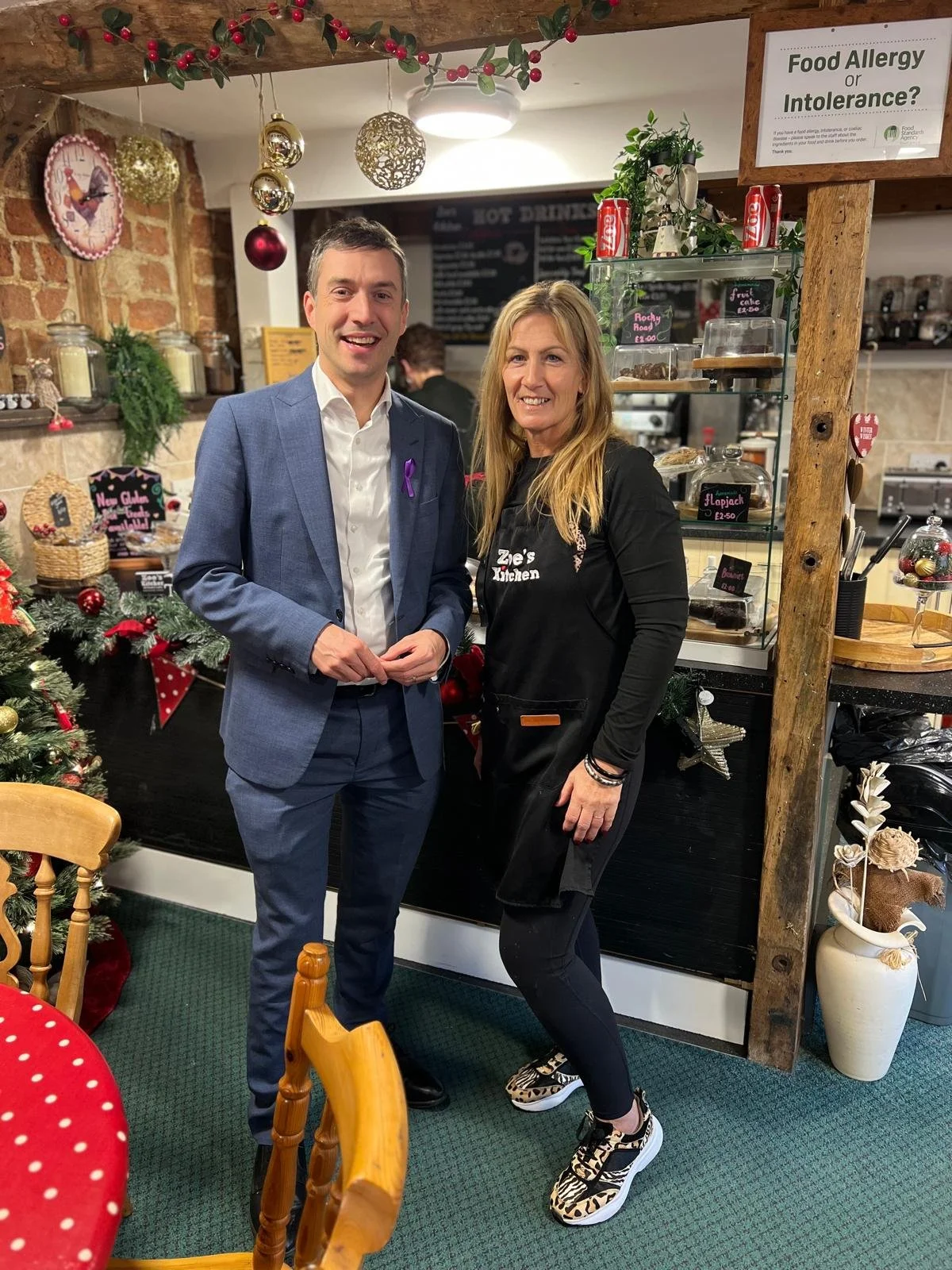
“Whenever I am in one of our market towns, I try to drop into a few businesses, including local gems such as Zoe’s Kitchen, a beautiful cafe by The Mere in Diss. I talked to the owner about the challenges of rising costs and also about how there's a lot of support locally for our high streets.”
Cross-party Parliamentarians urge Government to end cruelty of cages and crates in UK farming ahead of forthcoming Animal Welfare Strategy.
-
Adrian Ramsay MP initiated this cross-party letter with Irene Campbell MP.
3rd December 2025
The Rt Hon Emma Reynolds
Secretary of State for Environment, Food and Rural Affairs.
Dear Secretary of State,
We are writing as cross-party Parliamentarians to request that the forthcoming Animal Welfare Strategy includes a time-bound phase-out of all confinement cages and crates in farming, alongside a properly funded package of support for farmers to transition away from this practice.
Every year, millions of farmed animals in the UK endure severe and prolonged suffering confined to crates and cages. Around 8 million laying hens are kept in cages no larger than an A4 sheet of paper, unable to forage, feel sunlight, or fully stretch their wings. In addition, around 200,000 mother pigs spend nearly a quarter of their adult lives in farrowing crates, unable to turn around for weeks at a time and forced to nurse their piglets through metal bars.
The UK claims to have some of the highest farmed animal welfare standards. But despite progress in moving towards cage-free systems, millions of animals are still suffering daily, leaving us behind a number of European countries. Cagesfor hens are either banned or being phased-out in Austria, Germany, Czech Republic, France, Slovenia and Slovakia. Farrowing crates for sows are banned in Sweden, Switzerland and Norway.
In the UK there is clear and growing public, professional and industry-level support for ending this cruel and unnecessary practice. Research from Humane World for Animals shows that over two-thirds of the public oppose the use of farrowing crates. The British Veterinary Association reports that 75% of vets are concerned about the welfare impacts of these crates. And many farmers are ready and willing to transition away from this practice, given appropriate support to do so.
This Government was elected on a mandate to deliver the most ambitious animal welfare improvements in a generation. To deliver on this promise, we call on you to ensure the forthcoming Animal Welfare Strategy includes:
A time-bound phase-out of farrowing crates for sows, individual calf pens, and all cages used for birds, including hens, partridges, pheasants and quail.
A comprehensive, funded package of support to help farmers transition to higher-welfare systems.
Adequate resourcing for enforcement bodies and enhanced enforcement powers.
Measures to ensure Parliament can properly track and scrutinise progress on the phase-out, and the Strategy more broadly.
We should be grateful for your response to this letter.
Yours sincerely,
Adrian Ramsay MP
Irene Campbell MP
Fleur Anderson MP
Baroness Bennett of Manor Castle
Siân Berry MP
Bob Blackman MP
Olivia Blake MP
Richard Burgon MP
Ellie Chowns MP
Jeremy Corbyn MP
Carla Denyer MP
Dame Caroline Dinenage MP
Neil Duncan-Jordan MP
Sorcha Eastwood MP
Sarah Edwards MP
Andrew George MP
Lord Goldsmith of Richmond Park
Andrew Gwynne MP
Wera Hobhouse MP
Terry Jermy MP
Baroness Jones of Moulsecoomb
Clive Lewis MP
Kerry McCarthy MP
John McDonnell MP
Helen Maguire MP
Rachael Maskell MP
Manuela Perteghella MP
Peter Prinsley MP
Baroness Redfern
Bell Ribeiro-Addy MP
Jenny Riddell-Carpenter MP
Andrew Rosindell MP
Vikki Slade MP
Alex Sobel MP
Ian Sollom MP
Steve Witherden MP

Cross-party Parliamentarians urge Government to end cruelty of cages and crates in UK farming ahead of forthcoming Animal Welfare Strategy.
3rd of December 2025
A cross-party group of over 35 Parliamentarians coordinated by Green MP Adrian Ramsay, have today written to the Secretary of State for Environment, Food and Rural Affairs urging her to ensure that the Animal Welfare Strategy - expected later this month - includes a time-bound phase-out of all confinement cages and crates in UK farming, alongside a fully-funded package to support farmers through the transition.
The letter urges the Government to commit to a phase-out of farrowing crates for sows, individual calf pens, and all cages used for birds. It also calls for adequate financial support to help farmers transition to higher-welfare systems.
Every year, millions of farmed animals in the UK endure severe and prolonged needless suffering inside cages and crates that restrict natural movement and behaviour. Sows in crates cannot turn around, while hens in cages can't even fully stretch their wings.
Speaking after submitting the letter Adrian Ramsay, the Green MP for Waveney Valley, said:
“We often say the UK leads the world on animal welfare, yet millions of animals remain confined in awful conditions that many other European countries have already moved away from. As a nation that prides itself on caring for animals, it is unacceptable that these cruel practices continue. The Animal Welfare Strategy is the moment to put this right and set a clear timetable for moving away from crates and cages.”
The MPs warn that failing to act would mean a wasted opportunity to deliver the ambitious and essential animal welfare improvements that voters were promised.
The letter also calls for stronger resources and powers for enforcement bodies, to ensure already existing laws surrounding animal protection are properly enforced.
This comes as new data reveals that only 2.2% of UK farms were inspected in 2024, meaning 97.8% of farms received no official welfare visit at all. The report, published by the Animal Law Foundation today, highlights the current state of monitoring and enforcement in UK farms.
Edie Bowles, Executive Director, The Animal Law Foundation said:
"The UK government cannot claim to be a world leader in animal protection while failing to enforce the laws that already exist.
"This is our third report, and it is also our third year of disappointment. Year after year, the evidence tells the same story: the system is simply not working. When only a tiny fraction of violations ever lead to consequences, the message to industry is clear: breaking the law carries no real risk."
ENDS
Full letter & signatories:
3rd December 2025
The Rt Hon Emma Reynolds
Secretary of State for Environment, Food and Rural Affairs.
Dear Secretary of State,
We are writing as cross-party Parliamentarians to request that the forthcoming Animal Welfare Strategy includes a time-bound phase-out of all confinement cages and crates in farming, alongside a properly funded package of support for farmers to transition away from this practice.
Every year, millions of farmed animals in the UK endure severe and prolonged suffering confined to crates and cages. Around 8 million laying hens are kept in cages no larger than an A4 sheet of paper, unable to forage, feel sunlight, or fully stretch their wings. In addition, around 200,000 mother pigs spend nearly a quarter of their adult lives in farrowing crates, unable to turn around for weeks at a time and forced to nurse their piglets through metal bars.
The UK claims to have some of the highest farmed animal welfare standards. But despite progress in moving towards cage-free systems, millions of animals are still suffering daily, leaving us behind a number of European countries.Cages for hens are either banned or being phased-out in Austria, Germany, Czech Republic, France, Slovenia and Slovakia. Farrowing crates for sows are banned in Sweden, Switzerland and Norway.
In the UK there is clear and growing public, professional and industry-level support for ending this cruel and unnecessary practice. Research from Humane World for Animals shows that over two-thirds of the public oppose the use of farrowing crates. The British Veterinary Association reports that 75% of vets are concerned about the welfare impacts of these crates. And many farmers are ready and willing to transition away from this practice, given appropriate support to do so.
This Government was elected on a mandate to deliver the most ambitious animal welfare improvements in a generation. To deliver on this promise, we call on you to ensure the forthcoming Animal Welfare Strategy includes:
A time-bound phase-out of farrowing crates for sows, individual calf pens, and all cages used for birds, including hens, partridges, pheasants and quail.
A comprehensive, funded package of support to help farmers transition to higher-welfare systems.
Adequate resourcing for enforcement bodies and enhanced enforcement powers.
Measures to ensure Parliament can properly track and scrutinise progress on the phase-out, and the Strategy more broadly.
We should be grateful for your response to this letter.
Yours sincerely,
Adrian Ramsay MP
Irene Campbell MP
Fleur Anderson MP
Baroness Bennett of Manor Castle
Siân Berry MP
Bob Blackman MP
Olivia Blake MP
Richard Burgon MP
Ellie Chowns MP
Jeremy Corbyn MP
Carla Denyer MP
Dame Caroline Dinenage MP
Neil Duncan-Jordan MP
Sorcha Eastwood MP
Sarah Edwards MP
Andrew George MP
Lord Goldsmith of Richmond Park
Andrew Gwynne MP
Wera Hobhouse MP
Terry Jermy MP
Baroness Jones of Moulsecoomb
Clive Lewis MP
Kerry McCarthy MP
John McDonnell MP
Helen Maguire MP
Rachael Maskell MP
Manuela Perteghella MP
Peter Prinsley MP
Baroness Redfern
Bell Ribeiro-Addy MP
Jenny Riddell-Carpenter MP
Andrew Rosindell MP
Vikki Slade MP
Alex Sobel MP
Ian Sollom MP
Steve Witherden MP
A Letter on the Urgent Need for Targeted Prostate Cancer Screening
-
Adrian Ramsay MP co-signed this cross-party letter initiated by Prostate Cancer Research
Dear Secretary of State,
We write united by a belief that no man should die because of his postcode, ethnicity, or GP access.
Prostate cancer is now the most common cancer in UK men, with over 63,000 diagnoses and 12,000 deaths annually.i Today, the UK National Screening Committee (UK NSC) meets to decide on prostate cancer screening. This is a defining moment for men’s health. The Government must be ready to act so that those at highest risk – men aged 45–69 who are Black, have a family history of prostate, breast or ovarian cancer, or carry BRCA1/BRCA2 variants, all of whom face at least twice the average risk of developing prostate cancer – are no longer left behind.ii
1) A growing inequity
The latest National Prostate Cancer Audit (2025) shows inequalities are deepening. Men in deprived areas are more likely to present with advanced disease and more likely to die.iii Our current opportunistic PSA testing system is unstructured, inefficient and unfair – a postcode lottery where some men succeed because they know to ask or can pay privately, while others are turned away despite repeated requests.
Yet the data hide what cannot be modelled: eroded trust among communities who feel abandoned. Black men, already at higher risk, often believe the system fails them. Families bear devastating emotional and financial burdens from late-stage disease – costs absent from formal modelling but among the most compelling reasons to act.
2) The evidence is now clear
The evidence shows screening saves lives. The 23-year follow-up of the European Randomised Study of Screening for Prostate Cancer demonstrated a 13% mortality reduction – comparable to breast and bowel screening, with the numbers needed to screen and treat to prevent a death in line with those for existing programmes.v
Modern diagnostic pathways have transformed safety. Prostate Cancer UK’s 2024 analysis found harms reduced by 79% thanks to MRI and improved biopsy techniques.vi The Göteborg-2 trial confirmed pre-biopsy MRI halves overdiagnosis.vii
Today, the pathway is entirely different to when the UK NSC last evaluated screening: men have an MRI before any biopsy is considered; biopsies are carried out using safer transperineal methods; and low-grade cancers are far less likely to be detected – and, when they are, they are managed with active surveillance rather than treatment. Harms that once justified inaction have largely been engineered out.
These advances mean we now have the tools to deliver screening safely and effectively, yet the system is frozen waiting for next-generation trial data. Comments in The Times (3 October) suggest results from the upcoming TRANSFORM trial may take over a decade.viii Waiting would entrench inequality and allow preventable deaths. Evidence is strong enough to act now.Perfection must not be the enemy of progress.
3) Practical, affordable and efficient
Targeted screening is practical and affordable. Prostate Cancer Research’s 2025 report, Prostate Cancer Screening: The Impact on the NHS, with modelling by Carnall Farrar, shows additional annual costs would be around £25m – just 0.01% of the NHS budget – with modest workforce uplift and costs per screen comparable to existing programmes.ix Recent data also show a simplified MRI, taking 10 minutes, is as effective as current scans, opening the path to increased capacity within existing resources.x
The socio-economic benefits are substantial. Deloitte UK modelling found a five-year targeted programme would deliver a net benefit of £54m through earlier diagnosis, reduced treatment costs, and quality-of-life gains.xi Late-stage treatment averages £127,000 per patient vs. £13,000 for early-stage.xii Every delay costs lives and money.
Public support is overwhelmingly behind action: a nationally representative Healthwatch England poll of 3,575 men found 79% would attend screening if invited.xiii Tens of thousands have called on Parliament to act. We have a duty to listen, and to act.
4) Learning from the world
The UK can lead but risks falling behind. Sweden’s Organised Prostate Testing (OPT) programme shows that structured, equitable testing is achievable even without a formal programme, laying the groundwork for a future national rollout.xiv Across Europe, the EU is implementing its prostate cancer screening recommendation, and Australia is preparing to endorse risk-adapted testing for high-risk men.xv xvi
Introducing targeted screening would be a legacy-defining advance for men’s health, aligned with the ambitions of the Men’s Health Strategy and the National Cancer Plan.
Yours sincerely,
Adrian Ramsay MP co-signed this cross-party letter initiated by Prostate Cancer Research.
i prostatecanceruk.org/for-health-professionals/data-and-evidence
ii James ND, Tannock I, N'Dow J et al. The Lancet Commission on prostate cancer: planning for the surge in cases. Lancet.
2024 Apr 27;403(10437):1683-1722. doi: 10.1016/S0140-6736(24)00651-2. Epub 2024 Apr 4. Erratum in: Lancet. 2024 Apr
27;403(10437):1634. doi: 10.1016/S0140-6736(24)00748-7
iii National Prostate Cancer Audit (NPCA) State of the Nation Report 2025. London: National Cancer Audit Collaborating
Centre, Royal College of Surgeons of England, 2025. natcan.org.uk/reports/npca-state-of-the-nation-report-2025/
iv Roobol MJ, de Vos II, Månsson M, et al. European Study of Prostate Cancer Screening - 23-Year Follow-up. N Engl J Med.
2025 Oct 30;393(17):1669-1680. doi: 10.1056/NEJMoa2503223
v Vickers A. Early Detection of Prostate Cancer - Time to Fish or Cut Bait. N Engl J Med. 2025 Oct 30;393(17):1742-1743. doi:
10.1056/NEJMe2509793
vi Norori N, Burns-Cox L, Blaney N et al. Using real world data to bridge the evidence gap left by prostate cancer screening
trials, ESMO Real World Data and Digital Oncology, Volume 6, 2024, 100073, ISSN 2949-8201, doi:
10.1016/j.esmorw.2024.100073
vii Hugosson J, Månsson M, Wallström J et al. Prostate Cancer Screening with PSA and MRI Followed by Targeted Biopsy Only.
N Engl J Med. 2022 Dec 8;387(23):2126-2137. doi: 10.1056/NEJMoa2209454
ix Prostate Cancer Research. Prostate Cancer Screening: Impact on the NHS; 2025
x Ng ABCD, Asif A, Agarwal R et al. Biparametric vs Multiparametric MRI for Prostate Cancer Diagnosis: The PRIME Diagnostic
Clinical Trial. JAMA. 2025 Oct 7;334(13):1170-1179. doi: 10.1001/jama.2025.13722
xi Prostate Cancer Research. Socio-Economic Impact of Prostate Cancer Screening; 2024
xii Prostate Cancer Research, ibid
xiii healthwatch.co.uk/blog/2025-10-08/men-would-come-forward-prostate-cancer-screening
xiv Bratt O, Godtman RA, Jiborn T et al. Population-based Organised Prostate Cancer Testing: Results from the First Invitation
of 50-year-old Men. Eur Urol. 2024 Mar;85(3):207-214. doi: 10.1016/j.eururo.2023.11.013
xv EU Council Recommendation 2022/2381 and Beating Cancer Plan updates (2024). consilium.europa.eu/en/press/press-
releases/2022/12/09/council-updates-its-recommendation-to-screen-for-cancer/
xvi Prostate Cancer Foundation of Australia, Public Consultation: Draft 2025 Clinical Guidelines for the Early Detection of
Prostate Cancer. pcfa.org.au/public-consultation/
Letter to Chancellor on Tax-Free Childcare Cap
-
Adrian Ramsay MP co-signed this cross-party letter initiated by Claire Hanna MP.
Rt Hon Rachel Reeves MP
Chancellor of the Exchequer
HM Treasury
1 Horse Guards Road
Westminster
London
SW1A 2HQ
25 November 2025
Dear Chancellor,
We are writing to you as Members of Parliament and stakeholders from across England, Northern Ireland,
Scotland and Wales, alongside Pregnant Then Screwed, the leading charity working to end the motherhood
penalty, to request urgent action to support families who are struggling with the rising cost of childcare.
As per previous correspondence earlier this year, we are calling for the cap on Tax-Free Childcare, fixed at
£2,000 per child per year since the scheme was introduced in 2017, to be uprated in line with inflation.
Since 2017, prices have risen by approximately 34%, yet the cap has never been adjusted. As a result, the
real value of the support available to families has been significantly eroded.
During this period, childcare costs across the UK have increased sharply, placing growing pressure on
households already struggling to make ends meet. Updating the Tax-Free Childcare cap to reflect inflation
would be a simple, fair and effective way to ease the financial burden on families.
It is also important to note that many other benefits and forms of support, including tax credits and
pensions are uprated each year. We therefore believe it is both reasonable and consistent that the same
principle should be applied to the Tax-Free Childcare cap.
The forthcoming Budget provides an opportunity to address this. Increasing the cap would offer vital
support to parents and would strengthen the economy by enabling more parents to enter, remain in or
return to the workforce.
We look forward to your response.

The upcoming budget is a chance to delivering real, lasting improvements for people.
19th of November 2025
Across the country, families are struggling to get by, children are going to bed hungry, and millions cannot keep their homes warm, while the ultra-wealthy continue to get richer, and inequality grows. The Chancellor has a chance to change that in the upcoming budget, by taxing extreme wealth fairly, tackling the cost-of-living crisis, and delivering real, lasting improvements for people.
This cannot be viewed in isolation. By continuing real terms cuts to public services, Labour has pushed people who were already struggling even deeper into poverty while those who need support the most are often unable to access it. You only need to look at the scandal in our Special Educational Need (SEND) system to see one example of the consequences.
This is a system that successive governments have failed to get a grip of. Recently, I joined parents and campaigners outside Norfolk County Hall for Every Pair Tells a Story. The steps of County Hall were lined with rows of empty shoes, each pair representing a child who has been failed by the SEND system. It was moving and powerful to hear parents talk about the struggle to secure even the most basic support for their children. At the same time, the number of families in Waveney Valley who rely on foodbanks has grown by 50% since 2019. Meanwhile, the wealthiest in Britain continue to grow richer. Billionaire wealth rose by £35 million a day last year, and the fifty richest families now hold more wealth than half the population combined.
So, I find it hard to believe when Ministers keep insisting there is not enough money to lift children out of poverty, to properly fund our schools, or to provide vital support for people with disabilities. The Chancellor's self-imposed fiscal rules are not putting the markets at ease, nor are they delivering for people, nor helping the economy advance into the greener future we need. For politics to mean anything it must deliver for people. That is why this week I joined other Green Party MPs, our leadership and Council Leaders and Deputy Leaders from around the country in calling on the Chancellor to tax wealth fairly, end the cost-of-living crisis, and deliver real change now.
Our wealth tax measures alone would raise over £30 billion a year and form part of a broader package of reforms to tackle the growing inequality in the UK. This includes introducing a wealth tax of 1 per cent on assets over £10 million and 2 per cent on assets over £1 billion, which could raise at least £14.8 billion annually. It also means changing Capital Gains Tax, currently the lowest in the G7, so that income from work is not taxed more than income from wealth. This change could raise around £12 billion a year. We have also called on the Chancellor to introduce National Insurance on investment income, in line with employment income, which could raise at least £6.1 billion per year. It should not be radical to expect that those with the broadest shoulders pay their fair share.
In addition to reforming the tax system to make it fairer, those doing the most damage to our environment should not be subsidised to continue the destruction of our natural world. This is why we would end financial handouts to fossil fuel producers, saving an estimated £2.7 billion each year. We have also called on the Chancellor to tax windfall profits of UK retail banks. This could raise around £11.3 billion this year from Britain’s big four banks alone.
These tax measures will enable the government to take urgent action to tackle the cost-of-living crisis. We are calling on them to commit to both immediate and long-term measures that meaningfully address rising costs and lift children out of poverty.
Firstly, we would move policy costs off electricity bills. But instead of scrapping funding for home insulation to cover this, like the government is rumoured to be thinking about, we are calling on the Chancellor to pay for these policy costs through taxation, including wealth taxation. This move would cut a household’s electricity bill by around 17%. For a ‘typical’ household this could mean a £156 cut per year.
We would also go further, ending the link between gas and electricity prices which pushes electricity prices up, and means many ordinary people aren’t feeling the full benefits of the growth of cheaper renewables. According to Greenpeace, this could cut bills by £5.1 billion annually within two years. Or £65 per year for the average household.
We should invest in a mass retrofit revolution, led by local authorities, to insulate every home, street by street. This would not only save people money on their bills, but crucially, it would also support local economies by creating good, high-quality jobs across the country.
We would also scrap the cruel two-child benefit cap, lifting 330,000 children out of poverty, and introduce free school meals for all primary and secondary school children. Families from all backgrounds struggle with food insecurity, and this measure would not only save households £490 per child per year but also ensure that every child in the country receives at least one hot meal at school every day.
In politics, it all comes down to choice. We can choose to keep people in poverty while billionaire and multimillionaire wealth grows ever larger, or we can choose to lift people out of poverty and begin addressing the structural issues in our society. In next week’s budget, this Labour government has only one morally right option: tax wealth fairly, tackle the cost-of-living crisis head on, and rebuild our country for the better.

Every Pair Tells a Story: The Human Cost of a Broken SEND System
10th of November 2025
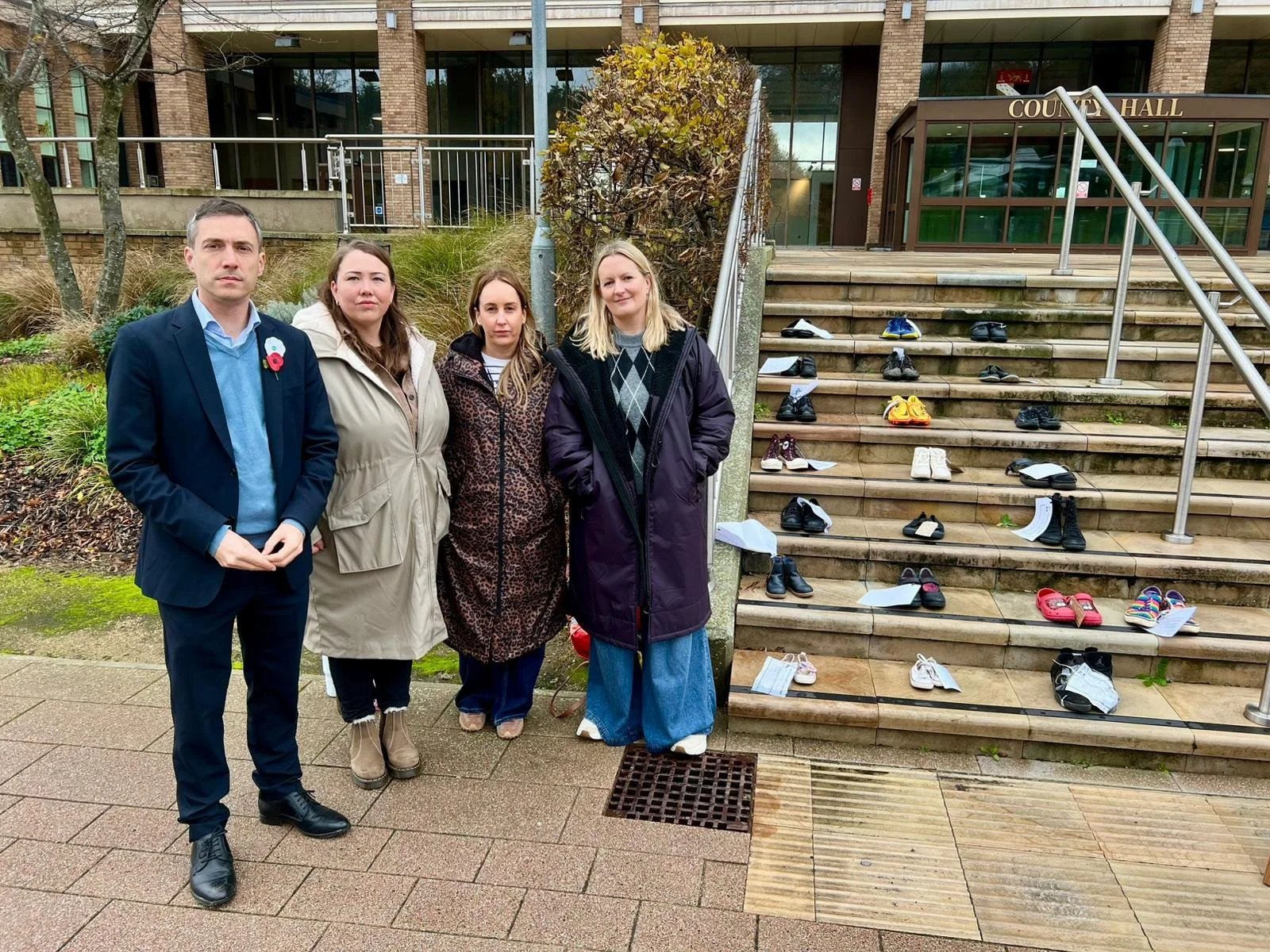
Recently, I joined parents and campaigners outside Norfolk County Hall for “Every Pair Tells a Story.” The steps of County Hall were lined with rows of empty shoes, each pair representing a child who has been failed by the Special Educational Needs and Disabilities (SEND) system. It was a powerful sight, both moving and enraging. Behind each set of shoes was a story of a family pushed to the edge by a system that has promised help, only to deliver delay and bureaucracy.
Standing there, surrounded by those empty shoes, I felt a mix of grief and rage at how badly these children have been let down. The SEND crisis is not new. It is not unforeseen. It has been warned about for years, reported on repeatedly. Yet still, children are waiting months or even years for assessments. Schools are still expected to cope with too little funding and too few resources. Still, parents are forced into legal battles to secure the basic support their child is entitled to by law.
Every one of those shoes told a story that should send a powerful message to those in power. A story of a child denied an Education, Health and Care Plan because of a stretched budget. A story of a pupil struggling without the proper support, then ending up out of school. A story of parents taking time off work, fighting bureaucracy to get their child what the system is supposed to provide. These are not statistics. They are children. And they deserve better.
Like many MPs, children who have been let down by the SEND system form a big part of my caseload, and I do everything I can to advocate for them. But the truth is that there are major systemic issues that need addressing in order for the situation to change.
What makes this situation so maddening is that the failures are systemic, predictable, and could be resolved with genuine political will. Successive governments have known for years that SEND provision is collapsing under the weight of rising demand and inadequate funding. Councils like Norfolk and Suffolk have pleaded for fairer settlements and better guidance, while schools juggle impossible workloads and overstretched budgets. The result is a system built on goodwill and desperation, where families are expected to do the heavy lifting while ministers debate policy papers and budgets.
The anger among parents is not misplaced. They are not asking for special treatment. All they are asking is that the system meet its legal responsibilities. The Children and Families Act 2014 was supposed to guarantee that children with additional needs would receive coordinated, timely, and appropriate support. More than a decade later, for many, those guarantees exist only on paper. Families are left chasing paperwork, fighting for appeals, and explaining their child’s condition again and again to a carousel of professionals who often lack the resources or authority to act.
It is time for the Government at all levels to stop making excuses and start delivering change. This means urgent investment in early intervention, proper funding for Education, Health and Care Plans, and genuine accountability when councils fail to meet their legal duties. It means ensuring schools have the specialist staff and resources to meet children’s needs and that teachers receive the support and training needed to enable far more children to thrive in mainstream schools. And for those children for whom a mainstream school is not the right setting, we need adequate spaces in alternative provision schools. At its core, we need a system that treats parents as partners, not adversaries, and children as real people whose right to proper support is non-negotiable.
Norfolk and Suffolk’s children deserve better than being represented by empty shoes on cold concrete. They deserve classrooms that welcome them, schools that have the resources to help them, and councils that see them as individuals rather than numbers on a spreadsheet. I will keep pressing both the Government and county councils to deliver the reforms and funding that are long overdue.
Introduction of a Medal for British Soldiers Injured in Combat
-
Adrian Ramsay MP co-signed this cross-party letter initiated by Davin Baines MP.
Re: Introduction of a Medal for British Soldiers Injured in Combat
Dear Minister,
I am writing to urge the Government to support the campaign of my constituent Corporal Andy Reid MBE to establish an official medal to recognise British service personnel who have been wounded or injured while serving on active duty.
In October 2009, Corporal Andy Reid MBE stepped on a Taliban improvised explosive device while on patrol in Helmand Province, Afghanistan. Injured so badly that it was thought he would not survive, he defied the odds to the extent that, within a month, he was able to meet up with members of his patrol again. Since then, as a triple amputee, he has gone on to carry out many arduous challenges to raise money for charity and give back to the associations that helped him and his family through difficult times.
Through his Standing Tall Foundation, Andy continues to provide invaluable support to injured service personnel and their families, demonstrating remarkable dedication to those who have served and also to the wider community.
Currently, UK service personnel who are wounded in active service receive no formal medal or honour to reflect the profound physical and mental sacrifices they have made in defence of our country. While the Elizabeth Cross appropriately recognises the families of those who have made the ultimate sacrifice, there is no equivalent recognition for those who bear the wounds of their service. This stands in stark contrast to our international allies: the United States awards the Purple Heart, and India presents the Wound Medal or Parakram Padak to those injured in conflict.
Andy understands intimately the sacrifices made by our armed forces and is leading the charge for this vital recognition. As Andy eloquently states: "For many injured soldiers that bit of recognition in the form of a medal for
the mental and physical sacrifices they have made would give them that real boost they might need – a thank you from the nation that might just pull them out of that dark place and move forward with their lives towards a better future."
This medal would provide something instantly recognisable to the general population – a visible acknowledgement that this individual has paid a sacrifice for their safety and the safety of the nation.
My colleagues and I look forward to your response and to working with you on this important matter.
Adrian Ramsay MP co-signed this cross-party letter initiated by Davin Baines MP.
Use the Autumn Budget to lower electricity prices
-
Adrian Ramsay MP co-signed this cross-party letter initiated by the MCS Foundation.
Dear Chancellor,
Subject: Use the Autumn Budget to lower electricity prices
The cost of living crisis is still hitting millions of households across Britain. Prices remain high, and the latest rise in the Energy Price Cap will only make things worse. The public wants to see action to reduce energy bills, which now ranks as the most worrying household expense amongst the population.
Britain has some of the highest electricity costs in Europe. A significant factor in keeping prices high is the social and environmental levies placed directly on households’ electricity bills. These levies make up 18% of a typical household’s electricity bill and disproportionately affect the most vulnerable. Households reliant on direct electric heating, such as electric radiators and fan heaters, are more likely to be in fuel poverty – yet they pay a far higher proportion of their income funding social and environmental levies.
Research from The MCS Foundation shows that moving these levies off electricity prices could save households, including those on direct electric heating and those with heat pumps, up to £300 on their bills.
Reducing the cost of electricity has the dual benefit of tackling fuel poverty while providing a significant financial incentive for households to electrify - a necessity for tackling climate change and meeting our net-zero obligations.
Social and environmental levies were introduced to raise revenue to support those in fuel poverty and boost renewable energy. While these areas are still in critical need of funding, retaining levies on electricity is now running directly counter to these initial aims, by disincentivising the switch away from fossil fuel heating.
While we appreciate that there are political and economic challenges that must be overcome, we believe now is the time for bold action. We urge you to use the Autumn Budget to reduce bills and incentivise electrification. There’s no time to waste.
Yours sincerely,
Adrian Ramsay MP co-signed this cross-party letter initiated by the MCS Foundation.
Every Pair Tells a Story
3rd of November 2025
I was pleased to stand with families at Every Pair Tells a Story outside Norfolk County Hall this morning. Seeing those empty shoes lined up was infuriating, because each one represents a child who has been failed by a system that should protect and support them. We cannot allow these stories to continue. Norfolk and Suffolk's children deserve better, and I will keep pressing both the government and our County Councils to deliver the changes needed to ensure every child gets the support and school place they need.
Letter to the Prime Minister Ahead of COP30
-
Adrian Ramsay MP co-signed this letter along with Sian Berry MP, Carla Denyer MP and Dr Ellie Chowns MP.
Rt Hon Sir Keir Starmer MP
Prime Minister
10 Downing Street
London
SW1A 2AA
31 October 2025
Dear Prime Minister,
We are writing ahead of COP30 to urge that you use the UK’s influence to ensure an ambitious outcome consistent with avoiding the most catastrophic climate impacts. This year’s COP summit is taking place at a pivotal moment in history - just past the mid-point in what’s a critical decade for climate and nature action.
The state of nature, biodiversity and ecosystems are deteriorating more rapidly than ever, and global temperatures continue to climb at a terrifyingly dangerous rate. The combined effect is devastating for the life support systems on which we all depend, and therefore also for our security, for our economic, social and political stability, and for everything from our food supplies to our health and wellbeing.
The UN Secretary General has called the fossil fuel companies the godfathers of climate chaos and the IPCC warn that emissions from fossil fuels are the dominant cause of global warming. Yet COP30 is taking place against a backdrop of continued financial support from governments for the fossil fuel industry – including an estimated £17.5 billion every year here in the UK.
At the same time, the poorest peoples of the world, with the least historic responsibility for climate emissions, continue to bear the brunt of climate breakdown. It is vital that the decisions made at COP30 do not further perpetuate climate injustice.
And with this year marking the start of a new round of Nationally Determined Contributions, COP30 is critical to closing the 1.5°C delivery gap and other gaps – as the UN Secretary General said in his remarks of 27th October 2025:
We need Nationally Determined Contributions that cut emissions much more deeply and accelerate the transition from fossil fuels to renewables. At COP30 in Brazil, we must go further and faster to close the ambition gap. We need more ambition in adaptation, mitigation and climate financial justice.
We warmly welcome your attendance at COP30 and hope your leadership will include advocating for:
A Climate Damages Tax – a “polluters pay” tax on the extraction of fossil fuels in the world’s richest advanced economies.
The Fossil Fuel Non-Proliferation Treaty – a framework to manage the global transition to safe, renewable & affordable energy for all.
Climate Justice – a climate finance package made up primarily of public funded grants funds, accompanied by debt cancellation measures, and that enables countries in the Global South to reduce their emissions, adapt to the impacts of climate change and meet the costs associated with loss and damage.
A global Just Transition - negotiators must stop blocking progress towards a Belém Action Mechanism (BAM).
An action plan to end forest destruction by 2030 - voluntary initiatives have failed to halt and reverse deforestation or to stop forest degradation, and substantive, structural change is needed to ensure existing forest commitments are met in an efficient, just and equitable way.
The UK’s global leadership should also be matched with ambitious domestic action as evidence of leading by example.
So we also call on you to back national measures that are aligned with the priorities of a successful COP30, and signal to the rest of the world that the UK is prepared to do its fair share in closing the gap between what the climate science demands and current emissions projections. Specifically, we urge you to:
End handouts to fossil fuel companies - use the forthcoming Budget to stop tax reliefs, investment allowances and subsidies, and to close loopholes in the ban on UK overseas finance supporting fossil fuels.
Play fair on climate finance – this must not come at the expense of overseas development aid, must be new government money, must not increase debt burdens, and must reflect the UK’s historic responsibilities.
Back the Energy Jobs Bill - to invest in British jobs and a just transition for workers in the oil and gas sector.
Deliver climate justice at home – with policies that ensure the poorest in our communities do not bear the financial brunt of climate action.
Keep your promise on no new oil and gas – by rejecting Rosebank, Jackdaw, other new extraction proposals and all new use of tie-backs – and go even further by refusing development consent for oil and gas projects that have already been licensed.
Step up on climate adaptation – with a national climate resilience plan and a sixth Government mission on adaptation that reflects the CCC’s advice of 15th October 2025.
Whilst we recognise that the UK and the world are making significant strides towards a carbon free economy, this is still accompanied by plans to produce more than double the quantity of fossil fuels in 2030 than would be consistent with holding global temperature rises to 1.5C above preindustrial levels.
This collective failure is driving climate breakdown.
COP 30 is an opportunity to change course – to choose transformative action that tackles injustice and inequality alongside greenhouse gas emissions.
We trust you will recognise this decisive moment by ramping up your ambition still further, in order to help secure a liveable future for all.
Yours sincerely,
Adrian Ramsay MP co-signed this letter along with Sian Berry MP, Carla Denyer MP and Dr Ellie Chowns MP.
Gentoo penguins at Sea Life London
-
Adrian Ramsay MP co-signed this cross-party letter initiated by David Taylor MP.
Dear Secretary of State,
Re: Urgent review of the welfare of Gentoo penguins at SEA LIFE London Aquarium
We, the undersigned Members of Parliament, are writing to express our deep concern regarding the welfare of fifteen Gentoo penguins currently kept at the SEA LIFE London Aquarium, a short walk from Parliament. In light of the growing public concern, we respectfully request that DEFRA conduct an independent review into whether the current conditions meet the highest standards of animal welfare and, if necessary, intervene to secure a more appropriate environment for these animals.
Recent reports have highlighted that the penguins are housed in a windowless basement enclosure, with no access to natural light or fresh air, and that the pool depth is around six to seven feet, which is far shallower than the environments Gentoo penguins experience in the wild. Concerns have been raised by respected conservationists, including Chris Packham and Megan McCubbin, who argue that such an environment cannot adequately support the species’ natural behaviours.
As Members of Parliament from across the political spectrum, we share a collective commitment to animal welfare. All political parties in this great nation value the protection of animals as a reflection of our shared compassion and sense of moral duty. The United Kingdom has a proud record in this area, from the Hunting Act 2004, which banned the hunting of wild mammals with dogs, to the ongoing work to strengthen welfare protections for both domestic and wild animals. The 2024 General Election manifesto commitments to phase out animal testing, ban the use of snares, end the import of hunting trophies, and strengthen protections for wildlife reflect the continued importance placed on these issues across Parliament.
In that spirit, we respectfully ask that DEFRA:
Commission an independent welfare assessment of the Gentoo penguin enclosure at SEA LIFE London, involving external veterinary and zoological specialists. Evaluate the facility’s compliance with both the Standards of Modern Zoo Practice and the Animal Welfare Act 2006, as well the likelihood of compliance with the revised zoo Standards entering into force in May 2027, with particular focus on light, air quality, pool depth, and enrichment.
Consider whether the penguins should be relocated to a more suitable facility better aligned with their behavioural, ecological and physiological needs. Publish the findings of this review to ensure transparency and maintain public confidence in welfare standards.
We wish to make clear that this is not an adversarial request but a constructive one, recognising the Government’s strong record on animal welfare and DEFRA’s expertise in safeguarding species under human care. This is an opportunity to demonstrate that the United Kingdom continues to lead the world in setting and upholding exemplary welfare standards.
We would be grateful for your response outlining the Department’s intended course of action and the anticipated timeframe for review.
Kind Regards,
Adrian Ramsay MP co-signed this cross-party letter initiated by David Taylor MP.
End Starvation as a Weapon of War
-
Adrian Ramsay MP co-signed this cross-party letter initiated by Action Against Hunger UK.
The Rt Hon Yvette Cooper MP
Secretary of State for Foreign, Commonwealth and Development Affairs
Foreign, Commonwealth & Development Office
King Charles Street
London
SW1A 2AH
October 2025
Dear Secretary of State,
We are writing to urge the UK Government to ratify the 2019 Amendment to Article 8(2)(e)(xix) of the Rome Statute of the International Criminal Court, which criminalises the use of starvation of civilians as a method of warfare in non-international armed conflicts. As you take up this role, we hope you will seize the opportunity to strengthen the UK’s leadership in driving international accountability for such crimes.
The UK rightly supported the adoption of this amendment at the Assembly of States Parties in December 2019. However, the UK is yet to ratify it, and is therefore failing to implement its support to the ICC’s jurisdiction on this matter. At a time when starvation is being used as a method of warfare in so many conflict zones around the world - from the systematic denial of humanitarian aid to targeting food production and besieging populations - it is vital that the UK strengthens its commitment to ending these abhorrent practices.
The UK implemented the Rome Statute via the International Criminal Court Act 2001. The Act currently only criminalises starvation as a method of warfare in the context of international armed conflicts. Ratifying the 2019 amendment would send a vital signal of the UK’s intent to uphold international law and to support global accountability efforts to ensure this is illegal in non-international armed conflicts, such as civil wars.
Ratification would:
Reinforce the UK’s long-standing support for accountability and international justice
Further implementation of UN Security Council Resolution 2417, which calls for action against the use of starvation in conflict
Bolster the rules-based international order and strengthen norms against impunity
Underscore the UK’s global leadership in protecting civilians, particularly the most vulnerable
Encourage other states to follow suit and build international consensus.
We note that 21 countries have already ratified this amendment, including Germany, New Zealand, the
Netherlands, and Spain. UK ratification would send a powerful message of resolve and leadership. Ratification
will require primary legislation to ensure national compliance. Ratification is a necessary and timely step in
aligning the UK’s legal framework with the UK Government’s stated values and international commitments.
We respectfully request that the Government bring forward legislation to enable the UK’s timely ratification.
We look forward to your response.
Yours sincerely,
Adrian Ramsay MP co-signed this cross-party letter initiated by Action Against Hunger UK.

Why we urgently need more banking hubs in Suffolk
29th of October 2025
Recently spoke in a debate in Parliament about an issue affecting communities across Waveney Valley and beyond: the urgent need for more banking hubs in rural areas. Nationwide, an average of 53 bank branches have closed every month since 2015 and over 85% of banks across Waveney Valley have shut during that same period. This situation is not sustainable.
With advances in technology, banking has become easier for many people. But not everyone can, or wants to, bank online. Many people still prefer face-to-face contact, and many small businesses depend on handling cash safely. As you all know, getting reliable broadband and mobile signals in parts of the constituency can be hard at the best of times, so it is not realistic to expect everyone to "just use the app".
Access to banking should never depend on owning a smartphone or having a fast internet connection. That is why banking hubs are invaluable. They bring physical access that so many people rely on.
In Halesworth, the recent closure of the post office that was housed in Coopers has really affected access to banking. This will be made worse when Barclays, which has been operating a weekly pop-up at the library for some time, closes its service in December as well. Alongside our Green councillors I have been urging the post office to prioritise the search for potential alternative sites in Halesworth.
Meanwhile, Eye has been left with just one cash point, no banking facility and no post office. Green Councillor Lucy Elkin has been working with local business owners to try to bring a post office back to Eye. These losses show exactly why banking hubs are essential and why the Government must accelerate the rollout of the hubs. Like in Eye, Bungay has lost all banks and the Barclays banking service in the library has also closed.
I frequently hear from residents and business owners that managing everyday banking has become increasingly complex without a local branch. People are struggling to deposit cash, pay bills, or receive in-person advice. Small businesses that handle cash daily are finding it harder to bank their earnings safely. Older residents who do not use online banking are at an extra disadvantage as they must travel to the nearest town. For those without cars and with poor public transport links, the loss of local banking services is a serious barrier to independence.
That is why I have been calling for the Government to accelerate the rollout of banking hubs across the country, prioritising rural areas. A banking hub is a shared space where the post office and several high street banks work together to provide face-to-face services. Customers of different banks can visit on set days to withdraw or deposit cash, pay in cheques, or get advice from a representative of their own bank.
In Harleston, a banking hub has been operating in a temporary location for some time, making an enormous difference. It helps keep people coming into the town centre, supports local shops and cafés, and ensures that vital financial services remain accessible to everyone.
We need the long-term future for existing banking hubs to be secured, and we need more hubs across our region. Banking hubs are not just about convenience. They are about fairness and inclusion. They allow everyone, regardless of age, income, or digital ability, to manage their finances confidently.
It is deeply worrying to see banks withdraw entirely from communities, especially while many report record profits. Access to banking is not a luxury. It is an essential service that underpins local economies. When banks close, the impact is felt across the community. Small businesses lose cash services, older residents lose independence, and high streets lose footfall. A thriving market town needs essential services that keep it connected and alive.
I’ve been worried seeing banks leaving our community, especially as the high street banks are reporting record profits. Access to banking cannot be treated as a luxury for the future. It is an essential service, and when private banks cannot or will not provide it, the Government must ensure that communities are not left behind.
I will continue to raise this issue in Parliament and with both the Post Office and the Treasury. We cannot allow rural East Anglia to become a patchwork of communities without access to cash or local banking. Halesworth, Eye, Bungay and other rural towns deserve better, and I will keep fighting to make sure they get it.

Adrian is proud that he & his staff are Dementia Friends
14 October 2025
Local MP Adrian Ramsay is proud that he & his staff are Dementia Friends. Recently, the local branches of the Alzheimer's Society gave training to Adrian Ramsay MP and his team. After the training, Adrian said:
“I am proud to share that my constituency team and I are now all fully qualified Dementia Friends, thanks to the support of the Alzheimer’s Society. I cannot thank the Society enough for working with my team.
With one in three people born in the UK today expected to develop dementia in their lifetime, we all must understand more about the condition and how to support those affected. Alzheimer’s disease is the most common form of dementia, but there are many types, and all have a profound impact on individuals and families.
As part of the Dementia Friends training, we learned five essential facts that everyone should know:
Dementia is not a natural part of ageing
Dementia is caused by diseases of the brain
Dementia is not just about losing your memory
There is more to the person than the dementia
A little understanding makes a big difference
I encourage everyone to consider becoming a Dementia Friend. Small steps in understanding and kindness can help make our communities more supportive and inclusive for people living with dementia and their loved ones.”
Hana Richardson, Alzheimer’s Society Local Services Manager, said: “This has been a fantastic opportunity to raise awareness, reach those that might need our support and create a society of Dementia Friends within the local community in Norfolk and Waveney.
“Around one million people are living with dementia in the UK. The impact of dementia is devastating. It can often leave people feeling excluded and cut off from everyday life. Alzheimer’s Society’s Dementia Friends is all about increasing people’s understanding of dementia and inspiring everyone to make a difference for people affected in their communities. It could be checking in on a friend who is caring for someone with dementia, being more patient in the shop queue or taking part in a fundraising event. Whatever you choose to do, a little understanding makes a big difference.
“At Alzheimer’s Society, we know the steps it will take to create a future where dementia no longer devastates lives. No one can beat dementia alone. It will take a society to beat it. Join us and become a Dementia Friend today, visit dementiafriends.org.uk”
Urgent Investment Needed to Power Industrial Decarbonisation and Secure UK Jobs
-
Adrian Ramsay MP co-signed this cross-party letter initiated by ADE the Association for Decentralised Energy.
Dear Chancellor,
Urgent Investment Needed to Power Industrial Decarbonisation and Secure UK Jobs
The UK’s 2050 target depends on decarbonising our industrial heartlands, but current policy is failing to address half the problem.
While significant focus is rightly placed on large industrial clusters, nearly 50% of our industrial emissions – and at least 1.4 million jobs in the manufacturing and utilities industrial sectors alone could be at risk – are based in dispersed sites outside these clusters. These are the distilleries in Scotland, the ceramics kilns in the Midlands, the food processors in East Anglia. They are the backbone of our regional economies and our national supply chains, yet they face a perfect storm of barriers.
Our electricity prices are the highest among IEA nations, with policy costs up to fourteen times more expensive and this contributes to making power more expensive than gas. This makes electrification – the primary route to decarbonisation for most of these sites – an economic non-starter. Compounded by crippling grid connection delays and a lack of tailored support, these businesses are being locked into high-carbon operations.
This is an active threat to our economic competitiveness and energy security. We are stalling investment and risking carbon leakage at a time when we should be spurring green growth in every part of the country.
The recent ADE: Demand report, "Decarbonising Dispersed Industries," provides a framework of this challenge, outlining five distinct archetypes of rural industry, each with unique needs but all united by this common policy blind spot.Therefore, I urge you to use the upcoming budget to allocate significant funding to address this imbalance. We need a mechanism that bridges the damaging price gap between electricity and gas, conditional on fuel switching, to make electrification the economically rational choice for British industry. This will unleash the investment we desperately need.
By providing this price signal, you can unlock billions in private investment, secure hundreds of thousands of jobs, and finally put dispersed industrial decarbonisation on the fast track
Let’s not leave half of our industrial economy behind. Let’s give them the tools to help us all reach net zero.
Yours sincerely,
Adrian Ramsay MP co-signed this cross-party letter initiated by ADE the Association for Decentralised Energy.
Supporting Parents of Seriously Sick Children
-
Adrian Ramsay MP co-signed this cross-party letter initiated by Chris Hinchliff MP.
Dear Secretary of State,
Re: The Government’s Consultation On Support for Parents of Seriously Sick Children
We are writing in support of the It’s Never You campaign for Hugh’s Law, following the government’s announcement of a stand-alone consultation on supporting parents of seriously ill children.
The campaign for Hugh’s Law goes to the heart of what our welfare state must provide: a safety net people can rely on in moments of crisis. Too many parents, already facing the anguish of caring for a seriously ill child, also face the devastating reality that they cannot afford to be at their child’s bedside. Hugh’s Law would introduce an immediate, non-means tested benefit for parents of seriously ill children, offering immediate support that current benefits simply do not provide. Families must not fall through the cracks of the welfare system at what is, for many, the hardest period of their lives. There is support for families at certain stages of life, such as maternity and paternity leave. There is nothing bespoke for parents of seriously ill children, aside from the limited Neonatal Care Act, applying only in a child’s earliest days. Hugh’s Law is a natural extension of that Act. Our welfare state should
respond not to the timing of illness, but to the reality of need.
We welcome the consultation as a significant step forward that reflects the government’s commitment to addressing the campaign for Hugh’s Law. We would be grateful for clarification on the following points ahead of the consultation:
Will the consultation’s terms be co-produced with It’s Never You to ensure they reflect families’ real needs?
Will you confirm the timeframe for the consultation?
Will you announce an intention to legislate on Hugh’s Law in next year’s King’s Speech?
Can you outline a potential timeframe for implementation of any resulting legislation?
The government’s announcement marks significant progress. The upcoming King’s Speech provides
the ideal opportunity to build on this to deliver Hugh’s Law, ensuring the needs of families are fully
addressed.
Yours sincerely,
Adrian Ramsay MP co-signed this cross-party letter initiated by Chris Hinchliff MP.