
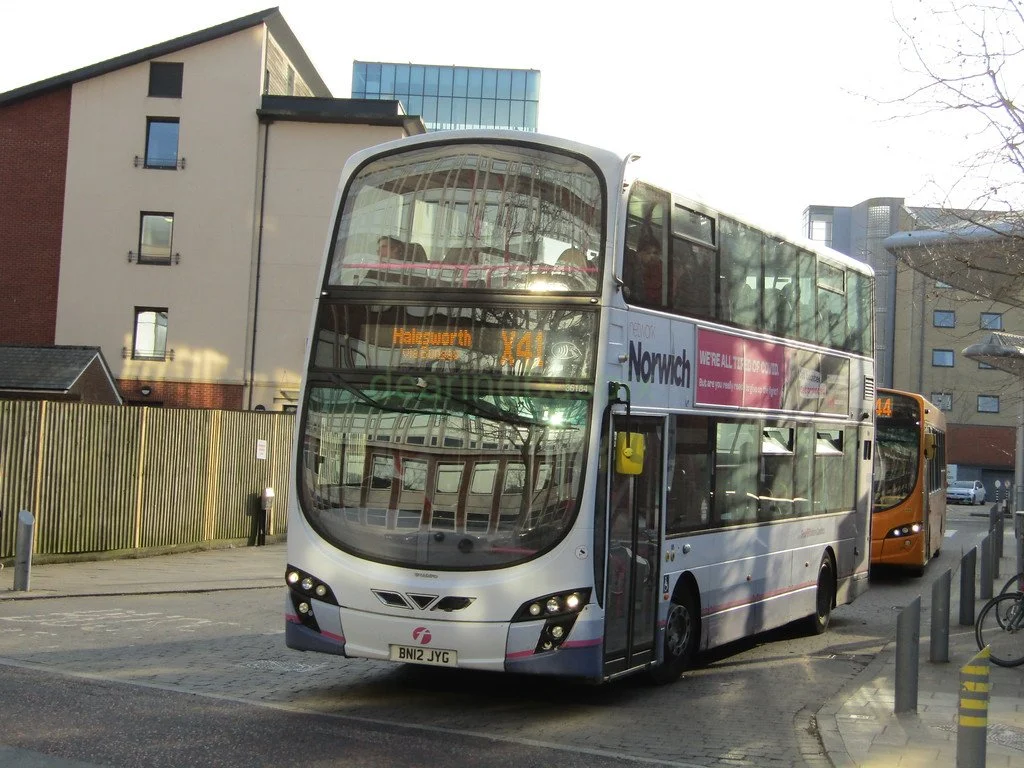
Adrian Ramsay MP demands Reform restore funding for rural buses as X41 service is cut back
Adrian Ramsay, Green Party MP for Waveney Valley, is calling on Reform to provide the funding needed to keep rural bus services running, after it was annouced that the X41 will have a reduced service between Halesworth, Bungay and Norwich.
The X41 now runs only once an hour, and journeys are taking longer. Adrian and Peter Ianno, the Green County Councillor for Bungay, say the change is having a huge impact on people in Bungay, Halesworth and the surrounding area, with residents contacting both of them in large numbers to complain.
Adrian has requested a meeting with the Reform cabinet member to discuss the X41's timetable and funding.
Adrian Ramsay MP said:
"Rural buses are a lifeline. They get people to work, to appointments and to see family, and for many they are the only way to do it. Reform are refusing to provide the funding needed to keep the X41 going, and people in Bungay, Halesworth and the surrounding area are paying the price.
"Cutting rural buses cuts people off from jobs, healthcare and each other. I will keep pressing Reform to provide the funding our crucial local bus services need, and I will keep standing up for residents until this service is protected."
ENDS
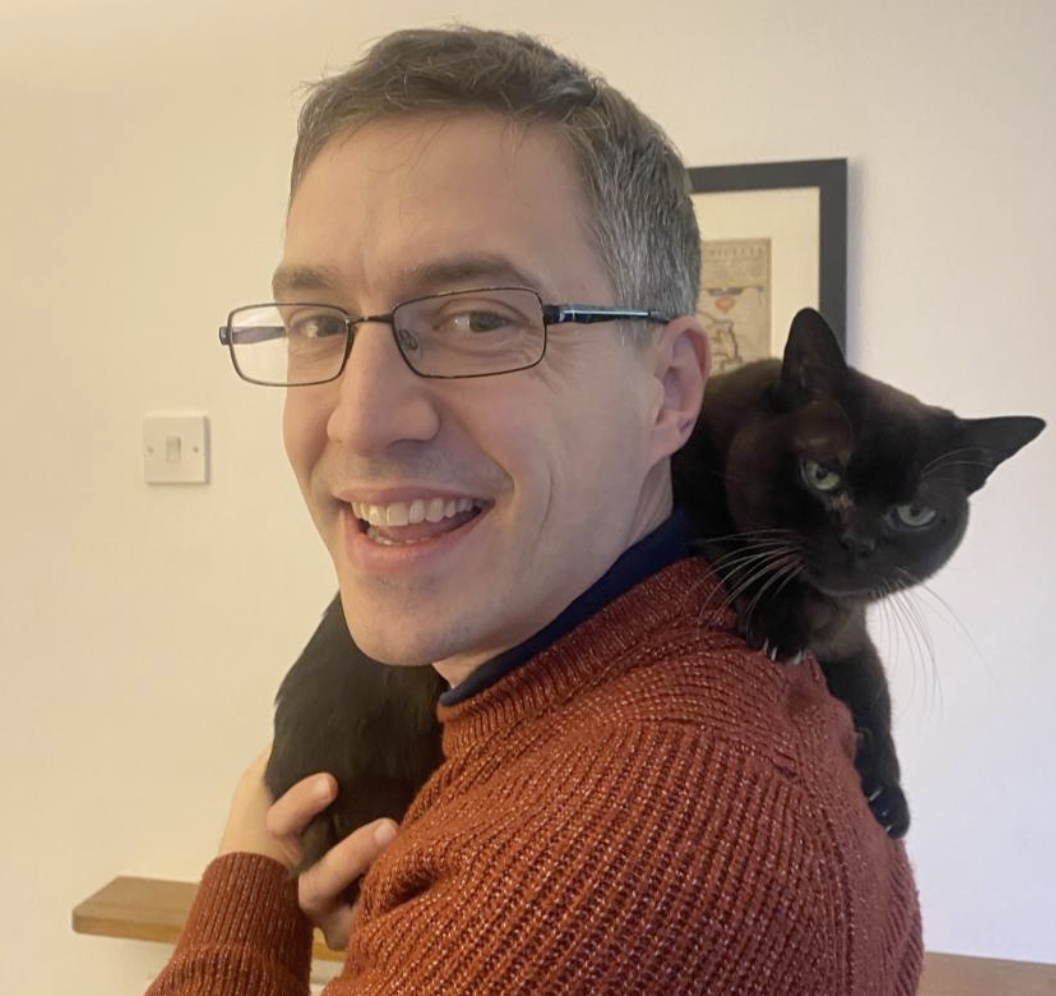
Adrian Ramsay MP's cat Bella crowned Purr Minister of 2026
Adrian Ramsay MP for Waveney Valley is delighted that his beloved cat Bella has won the public vote for Purr Minister of the Year.
Welcoming the victory and reinforcing his work on animal protection, Adrian said:
“I'm delighted that the real boss of our house, Bella, has been crowned Purr Minister of the United Kingdom. I'm very proud of her! Battersea does vital work on behalf of cats nationwide, helping to highlight the welfare challenges cats face and the action needed to keep them safe and healthy.”
Adrian continued by saying, “We are a nation of animal lovers, and I am proud to play a leading role in championing animal issues in Parliament. Animal protection isn’t a side issue. It is fundamental to the kind of country we want to be, and the public rightly expects us to act.”
“That is why it is vital that this Government fully implements the commitments in the Animal Welfare Strategy published last December. Ministers must set clear timescales to phase out confined systems in factory farms like crates and cages, properly support farmers through the transition, and ensure imports meet the same standards we expect of our own farmers. Warm words in a strategy document mean nothing without delivery, and animals deserve action not more delay.”
ENDS
Notes to editors:
Through Purr Minister, Battersea aims to encourage policymakers and the public alike to consider the welfare challenges facing cats today and the actions needed to help keep them safe and healthy.
For those inspired by Bella's success, Battersea encourages prospective owners to consider adopting a rescue cat and helping more animals find the loving homes they deserve. For more information about Purr Minister 2026, and to read Bella's winning 'Manifursto', visit: https://www.battersea.org.uk/about-us/news/purr-minister
Adrian has a long-standing record on animal welfare. In December 2025, he coordinated a cross-party letter, signed by over 35 Parliamentarians, urging the Government to ensure the forthcoming Animal Welfare Strategy included a time-bound phase-out of all confinement cages and crates in UK farming, alongside a fully-funded package to support farmers through the transition. At the time, Adrian said: "We often say the UK leads the world on animal welfare, yet millions of animals remain confined in awful conditions that many other European countries have already moved away from. As a nation that prides itself on caring for animals, it is unacceptable that these cruel practices continue."
When the Government's Animal Welfare Strategy was published, Adrian welcomed it but warned it "must have real teeth to deliver meaningful improvements for animals," calling for clear timescales to phase out crates and cages, proper support for farmers through the transition, and no imports that fail to meet UK standards. He also welcomed action on snares, hunting and puppy farming, while calling for the strategy to go further, including by ending greyhound racing, as the Welsh Government is doing.
Picture of Adrian & Bella can be found it at this link https://drive.google.com/file/d/1wyrPZdxsWLfMM39hVRMUsV7yRK3WN-f8/view?usp=sharing.
Press release from Battersea in case you did not receive it.
Battersea is delighted to announce that Bella, the beloved cat of Waveney Valley MP Adrian Ramsay, has been elected Purr Minister 2026.
After weeks of campaigning and public voting, 14-year-old Bella secured 36 per cent of the public vote, triumphing over three fellow feline candidates to become Westminster's top cat for 2026.
Bella won over voters with the promise of sweeping reforms - such as a ban on visible bowl bottoms and the introduction of a tuna-based economy - positioning herself as the candidate determined to tackle the issues that matter most to cats. Her vision of a future built on sunlight, full bowls, warm
keyboards and obedient humans clearly struck a chord with the electorate, landing her the title of Purr Minister 2026.
Battersea's much-loved Purr Minister competition continues to celebrate the unique role cats play in our lives while raising awareness of important cat welfare issues. Since launching in 2014, the contest has seen parliamentary cats from across Westminster compete for the prestigious title.
Adrian Ramsay, Waveney Walley MP and proud owner of Bella said: “Bella is greatly looking forward to devoting all of her 1.5 waking hours per day - when she isn’t eating, hunting spiders or grooming – to serving the cats of the United Kingdom and advancing the battle for full feline dominance and
sovereignty.”
Bella's victory comes as Battersea continues to campaign on behalf of cats nationwide. While microchipping became compulsory for pet cats in England in 2024, Battersea's latest research found that more than one in five cats still do not have a microchip, highlighting the ongoing need to raise awareness among owners. Through Purr Minister, Battersea aims to encourage policymakers and the public alike to consider the welfare challenges facing cats today and the actions needed to help keep them safe and healthy.
For those inspired by Bella's success, Battersea encourages prospective owners to consider adopting a rescue cat and helping more animals find the loving homes they deserve.
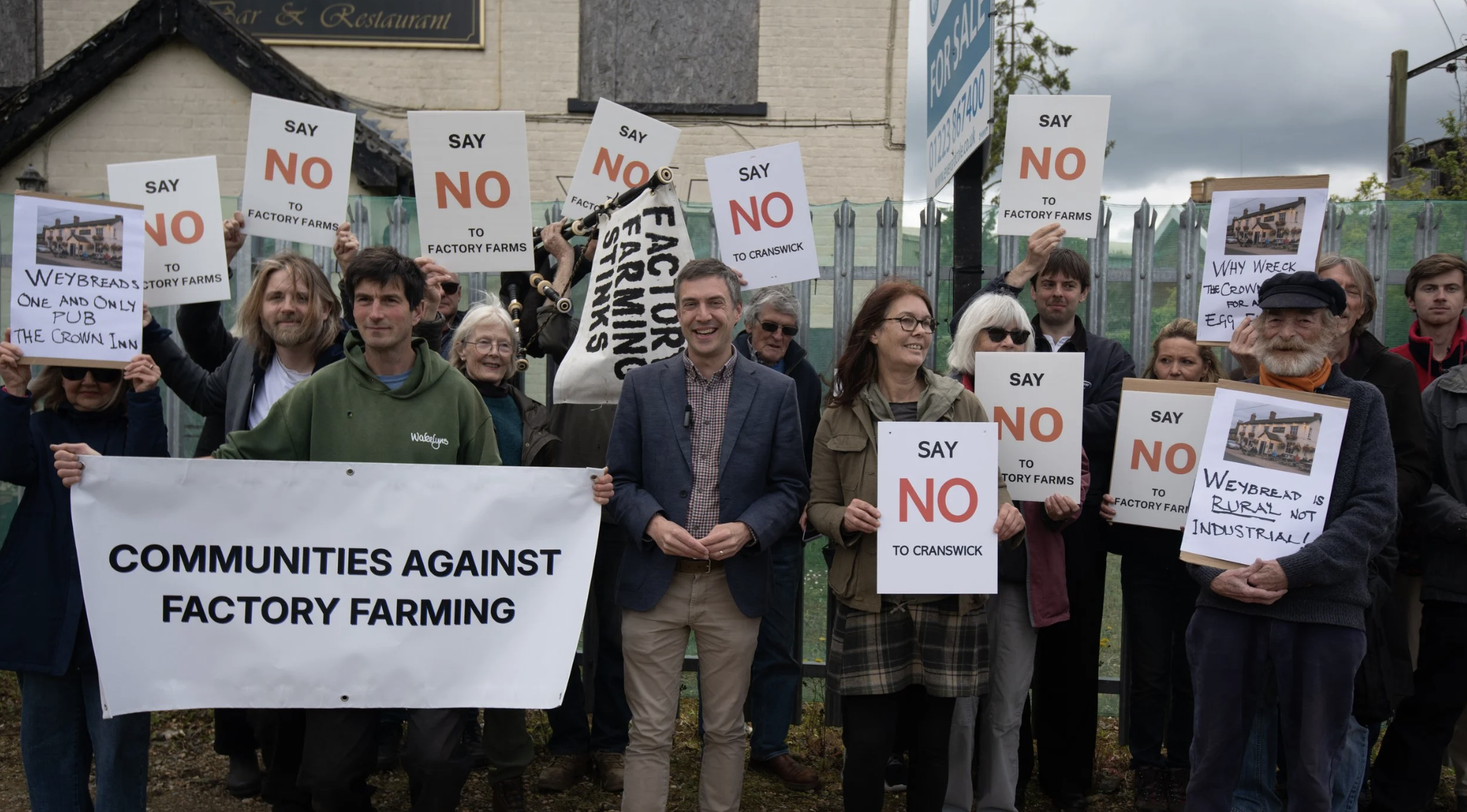
Green MP and Newly Elected Councilor join residents in Weybread to protest the Cranswick expansion.
Adrian Ramsay MP for Waveney Valley & Cllr Sally Mittuch joined residents in Weybread in a peaceful protest today against plans for a large-scale chicken incubation unit in the village.
The protest will see residents and campaigners gather outside the former Crown Inn to voice concerns over agricultural giant Cranswick’s controversial planning application for a broiler chicken incubation facility.
Campaign group Communities Against Factory Farming (CAFF), which has been supporting residents opposing the application, will attend alongside members of the Weybread Community Group.
Campaigners are urging Mid Suffolk District Council’s planning committee to “Stop the Incubator” and “Save Our Pub”.
Under the plans, The Crown Inn, which has been owned by Cranswick and closed for several years, would be demolished to make way for the factory development. Residents have raised concerns about the long-term loss of an important community asset, alongside worries over increased HGV traffic, industrial activity, pollution and the wider impact on village life.
Adrian Ramsay MP said
“The impact of large-scale factory farm developments on rural communities, like the one proposed in Weybread, is becoming increasingly concerning. These enormous industrial operations are being placed in tiny villages that are just not suitable.
Residents are rightly worried about the impact of three shift working patterns, with significant numbers of HGV movements travelling through small village roads throughout the day and night.
At a time when many rural communities desperately need genuinely affordable housing and investment in local services, people are asking why yet more large-scale industrial facilities are being prioritised over developments that would actually strengthen village life and support local people.
In addition, residents in Weybread are rightly concerned about the pollution impacts of this development and the huge implications of an increasingly industrialised food system for animal welfare."
Cllr Sally Mittuch, newly elected Green Councillor for Hoxne & Eye, said.
“Our community in Weybread has already seen huge changes over the past decade, and many residents feel we are gradually losing the very character of the village we love. People move to places like Weybread because of the countryside, the peace and the strong sense of community, but increasingly those qualities are being eroded by large-scale industrial developments that are completely out of keeping with a small rural village.
Residents still feel the loss of the village pub. Rural pubs are not just businesses; they are community spaces that bring people together and help sustain village life. We are deeply worried about the growing levels of industrial traffic, noise and disturbance associated with these kinds of developments, alongside the wider environmental impacts on the River Waveney and the surrounding countryside.”
ENDS
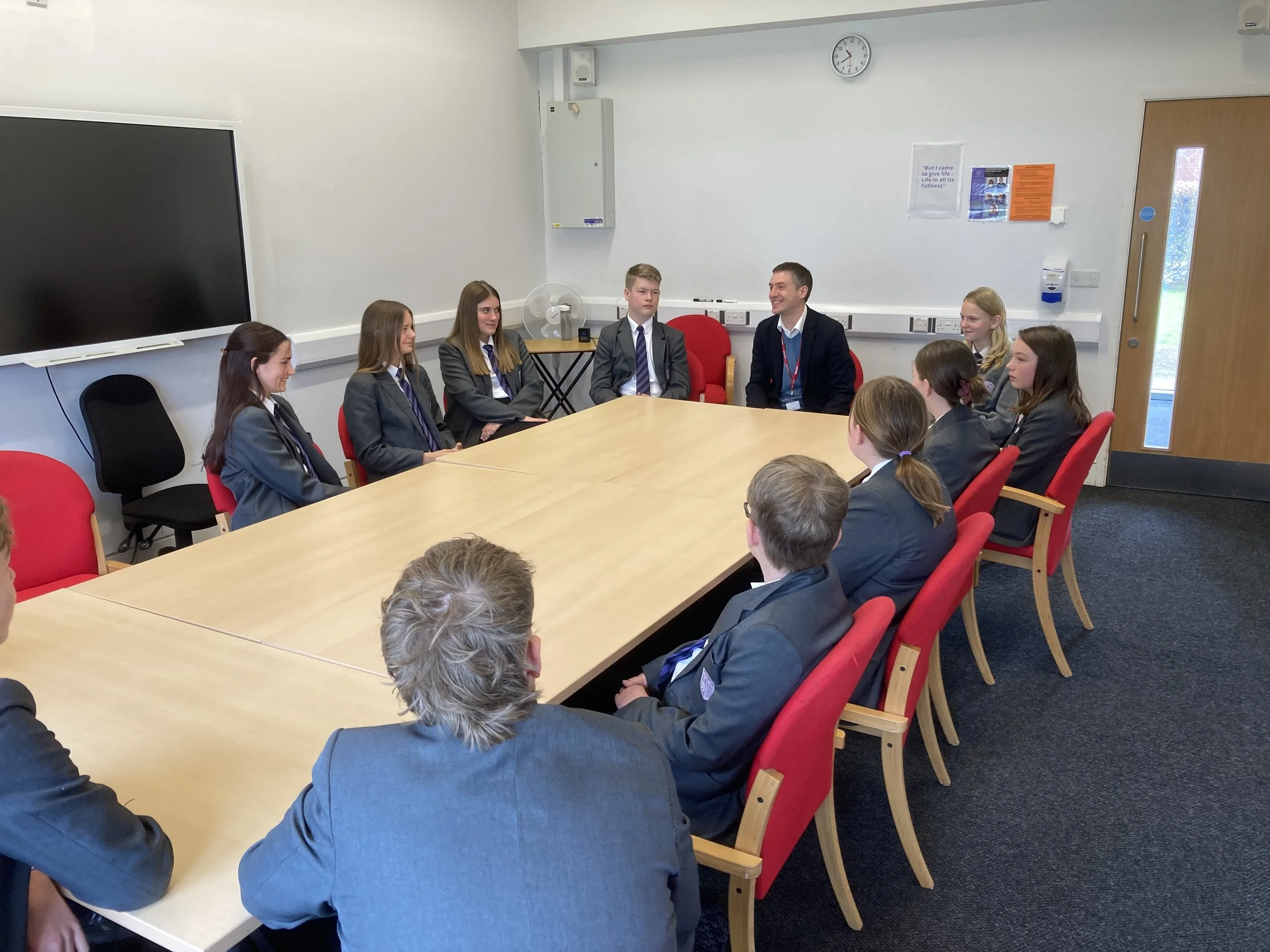
Adrian Ramsay MP seeks young people’s views on proposed social media ban.
Adrian Ramsay MP seeks young people’s views on proposed social media ban.
Adrian Ramsay, Green Party MP for Waveney Valley, has visited two secondary schools in his constituency to speak with young people and teachers about the proposed social media ban.
Speaking after both forums, Adrian said
“Access to social media for children and teenagers has been a constant topic of discussion in recent months. We all recognise the substantial risks, but we should also acknowledge the benefits of social media.
“I’ve received many welcome emails from parents expressing their views and concerns. I also felt it was important to hear directly from young people and teachers. Over the past few weeks, I have met with secondary school pupils and teachers at Harleston Sancroft and Hartismere School to hear their views and experiences.
“There was a range of views, but overall, the feeling was that there needs to be far stronger restrictions on the content that the tech firms allow on their platforms to ensure we keep young people safe online. Age restrictions need to be put in place which correspond with the content on each platform. Phones need to be set up so that a responsible adult always has control over a phone used by an under-16. And stronger resourcing of social services is needed to support those young people who are becoming vulnerable to online harms.
“These responses reinforce my own feelings on the topic, as an MP and as a parent, that it’s probably not a case of there being a total ban or not but about what restrictions are needed to keep young people safe and what is the right age for different apps. I will be responding to the Government consultation informed by these helpful discussions and will carefully follow the outcomes of the Government consultation which must inform the debate.”
Teachers who attended the roundtables also shared their perspectives, noting that, from a safeguarding standpoint,
“The majority of what we are dealing with as safeguarding leads is via social media.”
Students also had their say. One who is supportive of a ban said,
“Whilst scrolling through short-form media my phone picks up inappropriate content and restricts me from seeing it. Although scrolling is addictive, you do learn about other people’s lives.”
Others highlighted the need for balance, with one stating,
“There are games where you can make friends without insecurities, but there should also be a balance (on usage)”.
Teachers also recognised some of the benefits of social media, saying,
“Pupils gain more knowledge and power, better communication skills, especially for those with neurodivergence. [They can] gain more confidence socially via chatting online than they might get from family and friends.”
ENDS
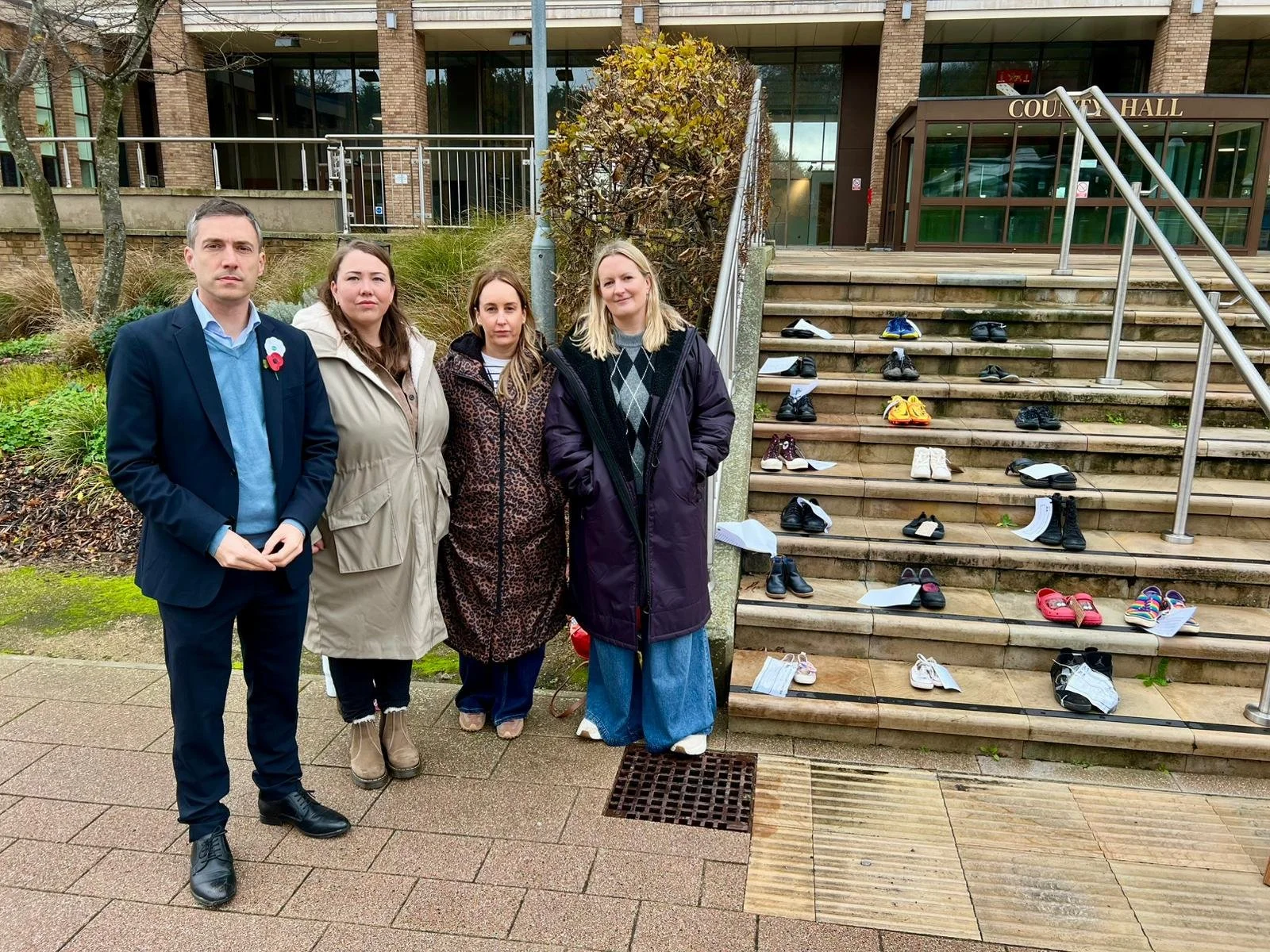
Every Pair Tells a Story: The Human Cost of a Broken SEND System
10th of November 2025
Recently, I joined parents and campaigners outside Norfolk County Hall for “Every Pair Tells a Story.” The steps of County Hall were lined with rows of empty shoes, each pair representing a child who has been failed by the Special Educational Needs and Disabilities (SEND) system. It was a powerful sight, both moving and enraging. Behind each set of shoes was a story of a family pushed to the edge by a system that has promised help, only to deliver delay and bureaucracy.
Standing there, surrounded by those empty shoes, I felt a mix of grief and rage at how badly these children have been let down. The SEND crisis is not new. It is not unforeseen. It has been warned about for years, reported on repeatedly. Yet still, children are waiting months or even years for assessments. Schools are still expected to cope with too little funding and too few resources. Still, parents are forced into legal battles to secure the basic support their child is entitled to by law.
Every one of those shoes told a story that should send a powerful message to those in power. A story of a child denied an Education, Health and Care Plan because of a stretched budget. A story of a pupil struggling without the proper support, then ending up out of school. A story of parents taking time off work, fighting bureaucracy to get their child what the system is supposed to provide. These are not statistics. They are children. And they deserve better.
Like many MPs, children who have been let down by the SEND system form a big part of my caseload, and I do everything I can to advocate for them. But the truth is that there are major systemic issues that need addressing in order for the situation to change.
What makes this situation so maddening is that the failures are systemic, predictable, and could be resolved with genuine political will. Successive governments have known for years that SEND provision is collapsing under the weight of rising demand and inadequate funding. Councils like Norfolk and Suffolk have pleaded for fairer settlements and better guidance, while schools juggle impossible workloads and overstretched budgets. The result is a system built on goodwill and desperation, where families are expected to do the heavy lifting while ministers debate policy papers and budgets.
The anger among parents is not misplaced. They are not asking for special treatment. All they are asking is that the system meet its legal responsibilities. The Children and Families Act 2014 was supposed to guarantee that children with additional needs would receive coordinated, timely, and appropriate support. More than a decade later, for many, those guarantees exist only on paper. Families are left chasing paperwork, fighting for appeals, and explaining their child’s condition again and again to a carousel of professionals who often lack the resources or authority to act.
It is time for the Government at all levels to stop making excuses and start delivering change. This means urgent investment in early intervention, proper funding for Education, Health and Care Plans, and genuine accountability when councils fail to meet their legal duties. It means ensuring schools have the specialist staff and resources to meet children’s needs and that teachers receive the support and training needed to enable far more children to thrive in mainstream schools. And for those children for whom a mainstream school is not the right setting, we need adequate spaces in alternative provision schools. At its core, we need a system that treats parents as partners, not adversaries, and children as real people whose right to proper support is non-negotiable.
Norfolk and Suffolk’s children deserve better than being represented by empty shoes on cold concrete. They deserve classrooms that welcome them, schools that have the resources to help them, and councils that see them as individuals rather than numbers on a spreadsheet. I will keep pressing both the Government and county councils to deliver the reforms and funding that are long overdue.

The Government has finally acknowledged the NHS dentistry crisis. Now it must take action.
8th of August 2025
When I stood for election a little over a year ago, the one issue that came up time and time again was the near-complete collapse in access to NHS dental care locally. It was raised by parents who couldn’t get appointments for their children, and by people sometimes travelling hours just to be seen. I’ve even spoken to people in so much pain that they resorted to pulling out their teeth. This cannot be right.
I’ve long believed that dentistry is the forgotten sibling of the NHS. A vital service that has been chronically underfunded for decades.
From day one in Parliament, I made it a priority to press the Government on this issue. I’ve repeatedly raised it on the floor of the House, submitted questions, and met with the British Dental Association (BDA) and the campaign group Toothless in England multiple times to hear directly from those on the front lines. Their message has been consistent: the current system is broken.
Dentists are willing and able to help, but many are leaving NHS work because the contract model is unworkable, and the funding is not there. That is why I have sought to work with the BDA to secure a new workable contract - one that serves dentists, patients, and the NHS.
The Government’s response until now has been lacklustre to say the least. They have promised reforms that never materialised and continued to allocate funding that, infuriatingly, went unspent. In fact, despite the Government’s initial action and announcements and schemes that were supposed to fix things, the proportion of dentists working in the NHS in Norfolk and Waveney continues to drop.
I took the opportunity in Parliament last month to ask the Minister of State for Care whether the recently announced additional funding for the Department of Health and Social Care would lead to substantial investment in NHS dentistry. I asked a simple, direct question. Will the Government ensure that the extra funding that has been put into the Department is actually reflected in extra funding for NHS dentistry?
This time, the Minister gave a clear and welcome commitment. He said, and I quote, “Every penny that is allocated to NHS dentistry must be spent on NHS dentistry.” He also acknowledged how outrageous it is that we have seen underspending in dentistry budgets at a time of rising demand. Crucially, he recognised that areas like East Anglia, which have been underserved for years, must be prioritised.
As someone who has worked consistently on this issue, both inside and outside Parliament, I am pleased that the Government is finally starting to recognise the scale of the problem. But let’s be clear. Words are not enough. Promises mean little unless they are followed by action. What we need is for this Government to live up to its commitment to spend every penny allocated to NHS dentistry, and to follow through as soon as possible with the contract reforms so we can stop – and then reverse – the exodus of dentists from the NHS.
For people in Waveney Valley and across East Anglia, this needs to result in more NHS dentists on the ground. It needs to mean appointments that are available when needed. Patients must not be forced into private treatment or left waiting for months or longer for basic care.
There is also a broader question here about how we view dentistry as part of our health system. For too long, dental care has been treated as a separate or second-tier service. That must change. Oral health is not an optional extra, it’s a vital part of our overall health. Until the Government sees this, we are going to get nowhere in improving our overall wellbeing.
Untreated dental problems can lead to severe pain, serious infections, and, in some cases, leave people unable to eat. Tooth decay is the number one reason for hospital admission for children – a total scandal. The idea that this essential part of healthcare is now out of reach for so many people is not just unfair. It is a public health failure.
The Government may have come to its senses on NHS dentistry, but this must now be a turning point, not just a passing gesture. In the months ahead, I will continue to work with the BDA and Toothless in England to push for tangible action, not just words.
No one should be in pain because they cannot afford to see a dentist. No child should be denied basic healthcare because of where they live. It’s time the Government made good on its promise and delivered NHS dentistry that works for the people who need it most.
I will not let this issue drop. I will continue to fight for a system that works, for patients, for dentists, and communities like ours.
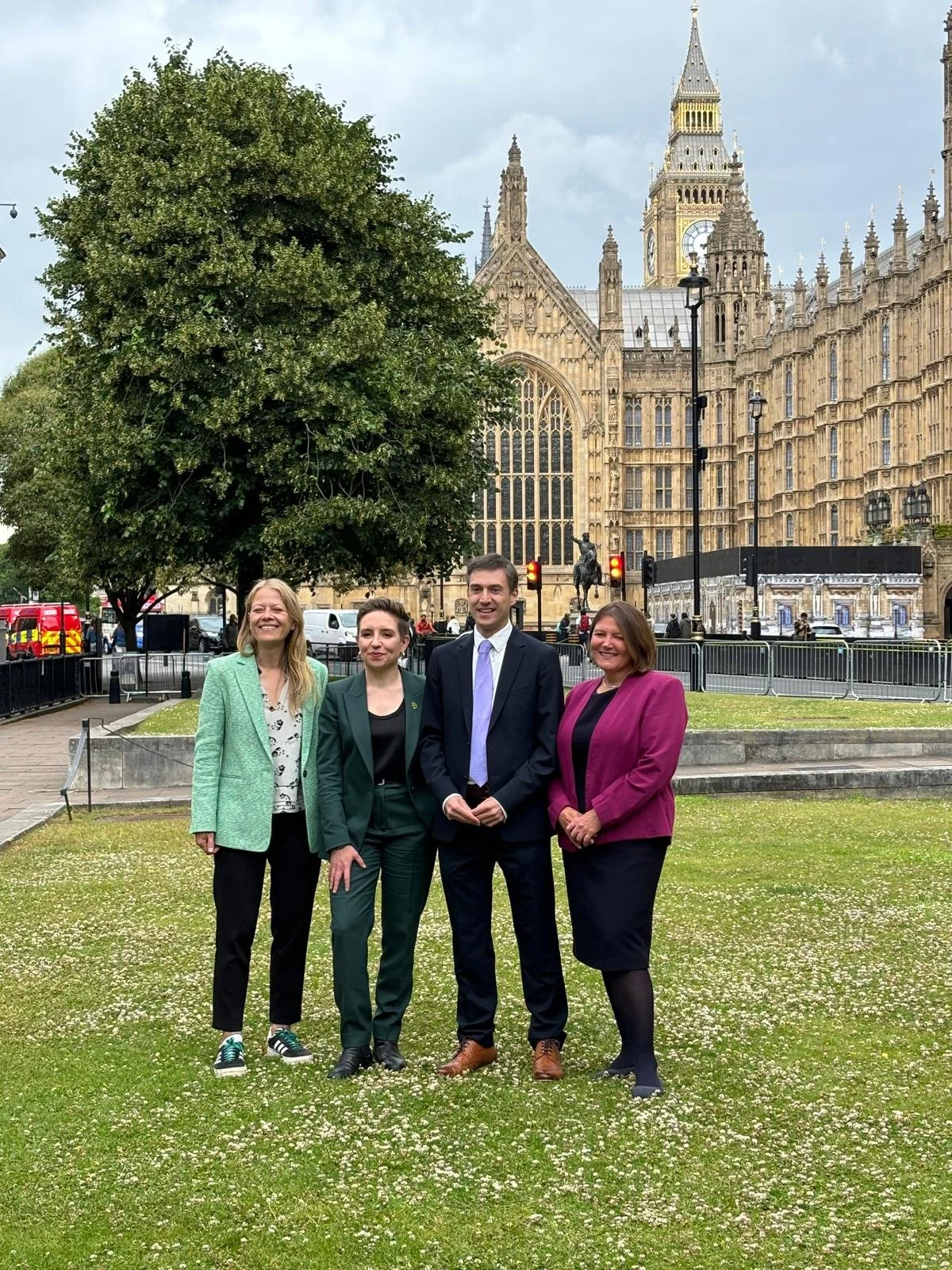
My first year as an MP
4th of July 2025
It’s hard to believe that it’s only a year ago that voters went to the polls, threw out the Conservatives and gave Labour its huge majority - and I became the first MP for the new Waveney Valley constituency, and one of four Green MPs, quadrupling our representation in Parliament.
The past 12 months have been a whirlwind and this seems a good moment to reflect on what’s happened since my election.
To start, the fortunes of both Labour and the Conservatives have tumbled. Labour’s promise of change has turned into more of the same brutal cuts to public services, causing them to haemorrhage support, while the Conservatives have slumped even further in opinion polls, to the point where their actual survival as a party is being questioned.
I’m glad to say that, in contrast, the Greens have built up our support across the country, while in Parliament I and my fellow Green MPs continue to hold the Government to account on issues ranging from support for public services to protection of the environment.
I’ve challenged ministers on the disastrous state of NHS dentistry in East Anglia; on cuts in education spending and the pressures on SEND provision; on the failure to address the roots of poverty; on the betrayal of farmers not only with the badly conceived changes to inheritance tax rules but also the abrupt pause to funding for sustainable farming; on the need to listen to residents’ concerns about the proposed new pylons route and properly consider alternatives for much-needed improvements to the electricity grid; and on the Government’s refusal to take a stand on the Israeli government’s attacks on civilians in Gaza – to name but a few of the issues that I know are important to my constituents.
Only last week, during Prime Minister’s Questions, I called on Keir Starmer to scrap the two-child benefit cap and the totally unacceptable cuts to universal credit for ill and disabled people which will push more and more people into poverty.
I’ve spoken about the lack of flood preparedness in Norfolk and Suffolk and given my backing to local natural flood management projects. I’ve highlighted the urgent need to hold water companies to account for the damage they have done to our rivers and beaches. I initiated and led a debate on the welfare of farmed animals and the horrifying increase in industrial factory farming. I believe in working with MPs from other parties in areas where we can agree and I’m glad that in both these areas, there has been cross-party support. Too often, the tribalism of our politics gets in the way of resolving some of the many challenges we face.
That is why I have supported the Government’s commitment to tackling the climate and nature crises – the issue which above all others brought me into politics. I only wish its actions lived up to its ambition, rather than pandering to the interests of the fossil fuel industry by pledging huge public investment in carbon capture and storage and keeping open the option of more oil and gas drilling in the North Sea.
When I was elected last July, I promised to be an active and visible MP in Waveney Valley. And this has been a key focus of my work – holding more than 40 constituency surgeries over the past 12 months and visiting many of the schools, businesses and local organisations across the constituency. I’ve received and replied to more than 4,100 emails from constituents voicing their concerns, whether it’s on national policy or their own difficulty in accessing vital public services.
I know people in Waveney Valley are proud of the area they live in and want to protect it. But I also know you feel let down by the loss of local services and the degradation of the local environment. The lack of NHS dentistry is a prime example of the erosion of public services so it’s disappointing that each time I have raised this with ministers, and the Prime Minister himself, I am fobbed off with promises of addressing the issue – but no firm date for reforming the NHS dental contract which is the root cause of the problem. I will keep up the pressure on this crucial issue.
I knew when I stood for Parliament that Waveney Valley was a remarkable place with a real sense of community. The people I’ve met over the last 12 months and the organisations I’ve visited have only made me even more proud of our great communities. It is a huge honour to be your MP.
I promised when I was elected that I would be Waveney Valley’s voice at Westminster, not Westminster’s voice in Waveney Valley. I hope I am fulfilling that promise as I continue to fight for the interests of all my constituents and ensure your voice is heard in the corridors of power.
Adrian Ramsay MP Urges Government to Restore Trust After Abrupt SFI Withdrawal
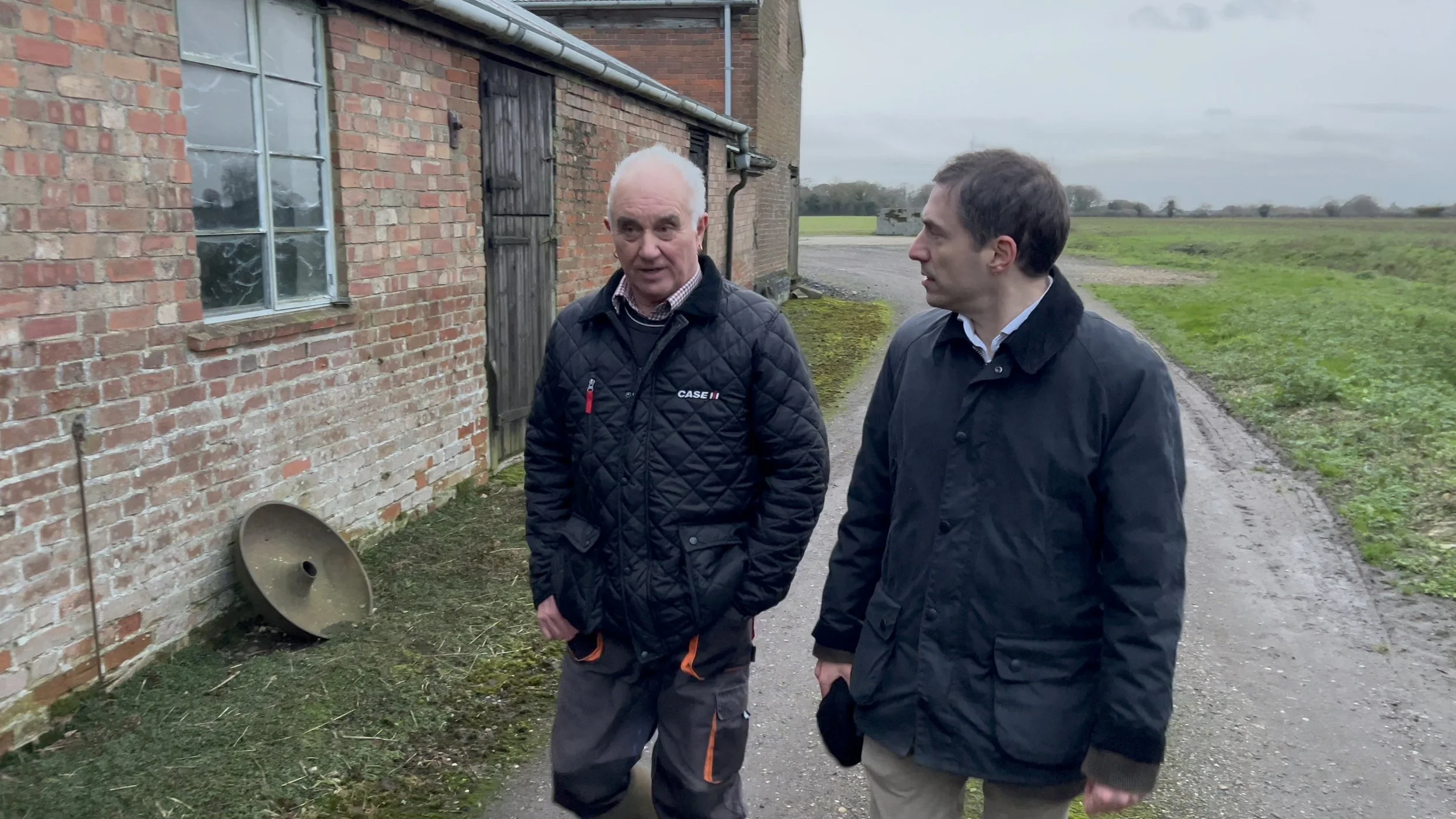
Adrian Ramsay MP, Co-Leader of the Green Party of England and Wales and Member of Parliament for Waveney Valley, has raised serious concerns about the Government’s handling of the Sustainable Farming Incentive (SFI), following its abrupt and unexplained withdrawal for new entrants earlier this year.
Speaking after meeting with farmers across Waveney Valley and writing to the Minister of State for Food Security and Rural Affairs, Adrian Ramsay MP said:
“Farmers in my constituency have told me they feel blindsided by the Government’s decision to close new applications to the SFI without any warning or consultation. Many had invested time, money, and energy into preparing for the scheme only to face sudden rejection and financial uncertainty. This has severely undermined trust in the Government.”
He continued:
“The SFI scheme is not perfect, but it offers a meaningful replacement for the EU’s CAP payments and to a future in which farmers could invest in the natural capital of their land. In one of the most nature-depleted countries in the world, this kind of support is essential for reversing catastrophic biodiversity loss. Without it, farmers say they may be forced to abandon environmental practices just to stay afloat.”
Adrian Ramsay has written to Daniel Zeichner MP, the responsible minister, seeking urgent answers on behalf of those affected. In his letter, he asked:
Will you confirm when the new eligibility criteria will be published?
What steps are you taking to prioritise farmers affected by the abrupt closure?
What reassurance can you give to those already in the SFI that they will be able to reapply in good time for future phases?
Can you guarantee that the full £2.4 billion annual farming budget will be protected through and beyond the Spending Review, so that Environmental Land Management schemes deliver on their promises for nature, food security, and rural livelihoods?
In closing Adrian Ramsay MP said, “The long-term success of environmental land management schemes should not be dictated by short-term Treasury pressures,” Ramsay added. “This is about protecting our countryside, strengthening rural livelihoods, and meeting our climate and biodiversity goals. Farmers deserve clarity — and a government that keeps its promises.”
ENDS
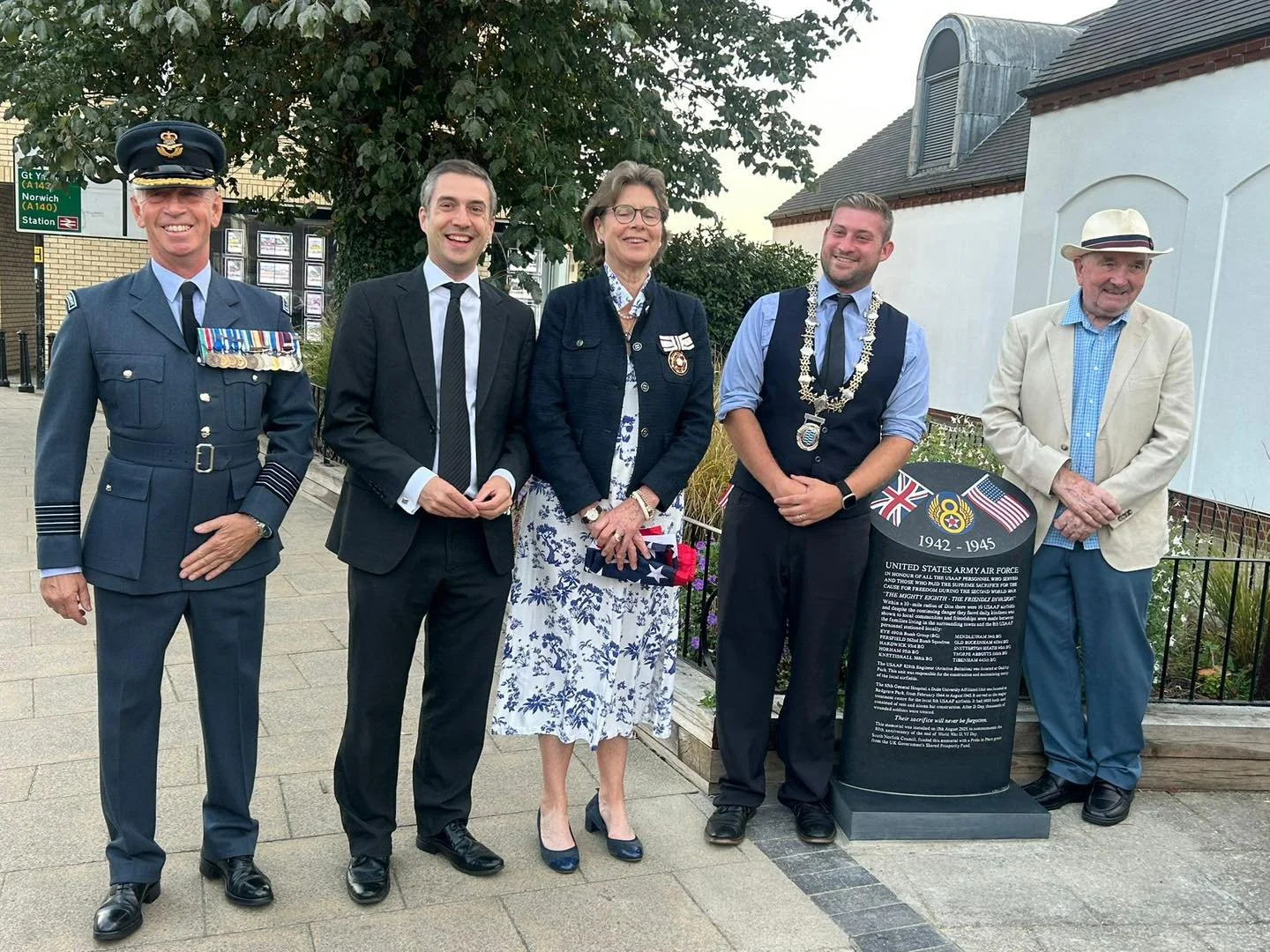
Adrian Ramsay MP Marks VE Day at Westminster Abbey and Across Waveney Valley
12th of May 2025
Adrian Ramsay MP, Co-Leader of the Green Party of England and Wales and Member of Parliament for Waveney Valley, marked VE Day by attending the national commemoration ceremony at Westminster Abbey, followed by local events across his constituency.
Adrian Ramsay MP said:
“It was an enormous honour to represent the Green Party at Westminster Abbey to mark 80 years since the end of the Second World War in Europe. VE Day is a time to reflect on the significant sacrifices made in the pursuit of peace. As we commemorate that hard-won peace, I am reminded that we, as Members of Parliament, have a duty to promote and protect peace in the world today.”
Later that evening, Adrian joined residents at events in Diss and Harleston to commemorate VE Day locally:
"It was a privilege to attend VE Day events in Diss and Harleston, following the ceremony at Westminster Abbey. It brought home the fact that, at its heart, VE Day is about community and remembrance. Eighty years ago, people across the country came together to celebrate the end of the war with their neighbours, while also mourning the fallen who made the ultimate sacrifice. I was proud to stand alongside our communities in Diss and Harleston as they gathered once again in that same spirit. As we honour the past, it is also a moment to reflect on the enduring values of peace, unity, and resilience."
ENDS
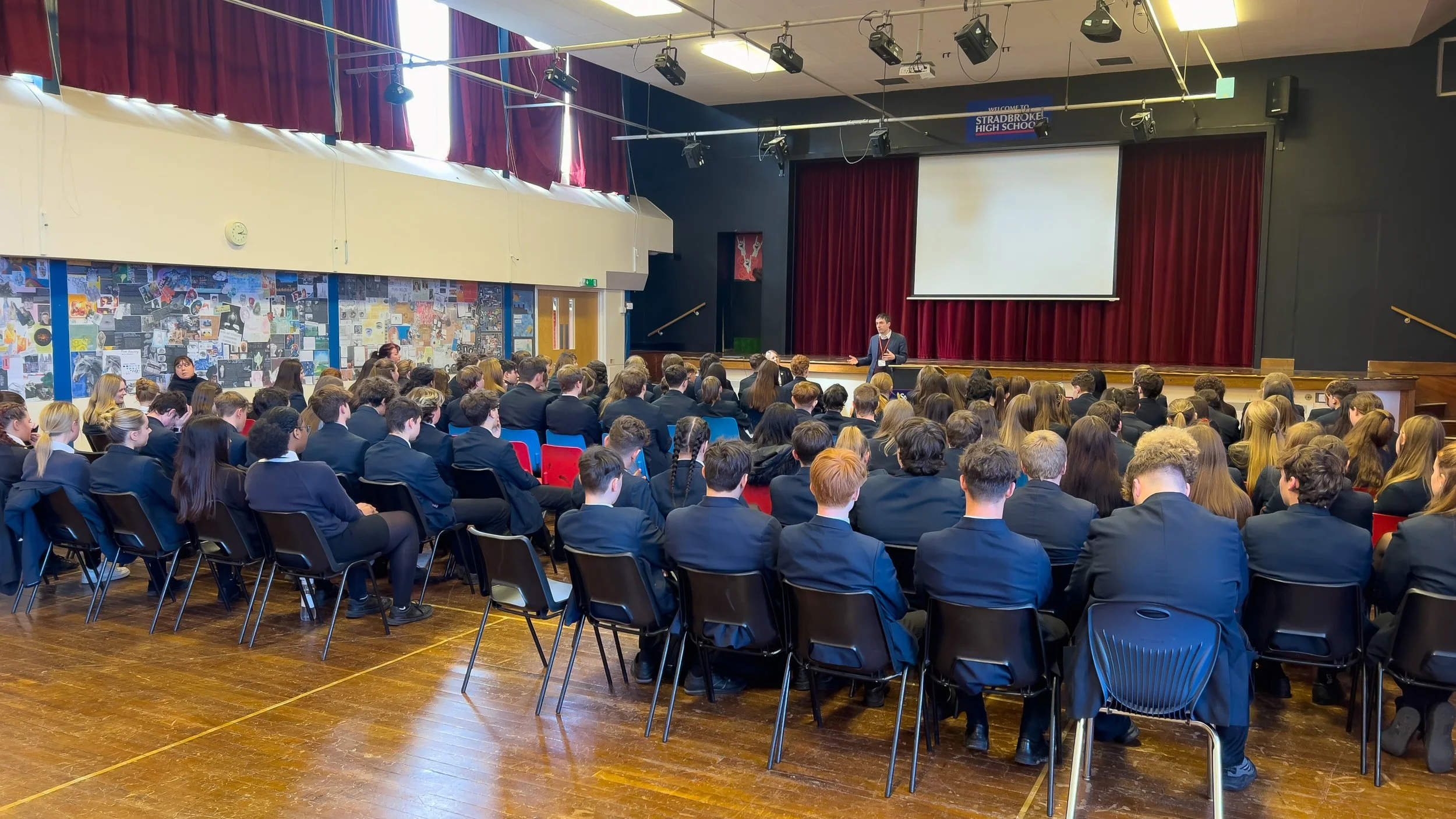
Adrian Ramsay, MP for Waveney Valley, Urges the Government to Increase Funding for Rural Schools.
Adrian Ramsay, MP for Waveney Valley, Urges the Government to Increase Funding for Rural Schools.
Adrian Ramsay MP has called on the Secretary of State for Education to urgently address the funding crisis affecting rural schools in Norfolk and Suffolk.
In a letter sent to the Secretary of State for Education, Adrian Ramsay MP highlighted the mounting challenges schools in the Waveney Valley face due to insufficient funding.
Waring that "Schools are struggling to maintain the same level of educational provision with reduced resources."
He continued, "While national pay rises for staff are to be welcomed, the fact that they have been only partly funded by the government is putting further pressure on school budgets, resulting in a reduced staffing model, larger class sizes, and diminished support for students. Schools are facing difficult decisions about staffing levels, redundancies, and service reductions, along with the concomitant impact on staff wellbeing and morale."
The letter also pointed to the deteriorating condition of school buildings, saying, "I am aware of one school which has a leaking science block roof. This has been a health and safety risk while negatively impacting lesson delivery and student morale."
ENDS
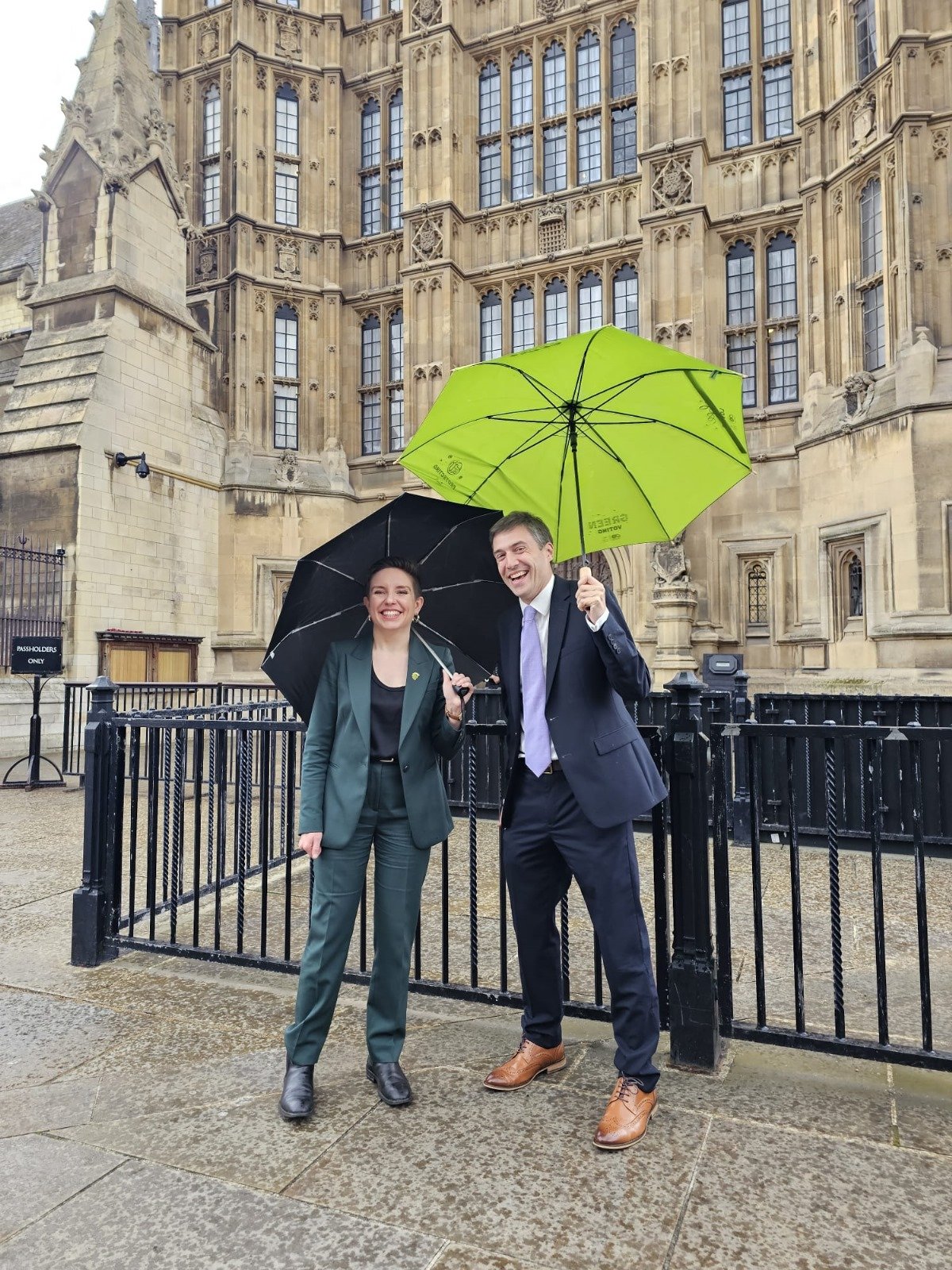
100 days as an MP
18 of October 2024
It’s hard to believe it’s been 100 days since I was elected as an MP, the first-ever MP for the new constituency of Waveney Valley. The first 100 days of any job is a good time to reflect both on what’s been achieved so far and the many tasks ahead.
So what have been my first impressions as a new MP?
I don’t think anyone can visit the Houses of Parliament without feeling the weight of history and a sense of awe at the grandeur of the Palace of Westminster, despite all the scaffolding surrounding it.
Navigating around the building and getting to grips with the many arcane ways of doing business here is quite a challenge and I was very grateful to be allocated a “buddy” by the parliamentary authorities. It was my buddy’s job to show me where everything was, make sure I didn’t get lost (easy to do in the many labyrinths of the Palace of Westminster), explain some of the parliamentary processes, how I could table an urgent question, or add my name to an early day motion or apply for an adjournment debate.
When I arrived at Parliament on July 8th, four days after the election, I was one of hundreds of new MPs all trying to find somewhere to work, get connected to the IT system and get to grips with the role. All this without a group of staff as the recruitment process could only start once the election was over.
And all the while, the constituency casework in the constituency has continued to pour in. In fact, it started within moments of my election being announced – that is the level of need left by years of Conservative-led austerity and under-funding of public services. Many of the issues raised are ones that I was hearing about on the doorstep during the campaign – issues like the number of children with special educational needs or disabilities who don’t have school places or the lack of vital NHS services like dentistry.
I’ve had the opportunity to raise some of these issues in Parliament already. I spoke in a debate on healthcare provision in the East of England last month, pointing out that East Anglia is the Sahara desert of dental services. It is shocking and completely unacceptable that in the 21st century people are reduced to pulling out their own teeth because they cannot access NHS dental care. The dental contract is clearly broken and needs urgent reform.
When the Government has such a huge majority, I know it will be difficult to force a change in government policy. Even a few Labour rebels will not be sufficient to block a bad law.
But it is does create one advantage for smaller opposition parties like the Greens. Parliamentary protocol demands that the Speaker switches between government and opposition benches in debates and when the government benches are so crowded, those of us on the opposition side have a much greater chance of being selected to speak and I have more opportunity to put Waveney Valley’s voice directly to ministers and raise issues in the House of Commons chamber which might otherwise not be heard.
It was though luck rather than numbers which saw my name come up in the draw to ask a question of the Prime Minister within three weeks of being elected. I wanted to know what steps Keir Starmer would be taking to reverse the catastrophic depletion of nature in Britain. It was an opportunity for him to show leadership on this vital issue to our common future. Needless to say, he didn’t answer and just chose to score a political point. The collegiality which I saw during the first few days of this Parliament didn’t last long.
It is the privilege of my life to serve as the first MP for Waveney Valley. I hope constituents will bear with me as I build a team so I can deliver the best possible service as your MP.
I promised in my election leaflets that I would be Waveney Valley’s voice at Westminster, nor Westminster’s voice in Waveney Valley. That is my aim over the next four or five years of this Parliament.
The crisis in SEND provision in East Anglia
In my constituency surgeries, I meet people who are often at the end of their tether and have reached out to me because they don’t know where else to turn. Many of their stories are heart-rending and some of the most powerful, and most frequent, are the ones from parents who have children with special educational needs or disabilities (SEND). When they turn to the “system” for help, they often find they’re on their own.
In my constituency surgeries, I meet people who are often at the end of their tether and have reached out to me because they don’t know where else to turn.
Many of their stories are heart-rending and some of the most powerful, and most frequent, are the ones from parents who have children with special educational needs or disabilities (SEND). When they turn to the “system” for help, they often find they’re on their own.
Let me tell you about one parent. Her young child has what’s known as an EHCP, a document which sets out the educational, health and care plan the child needs because of their disabilities or a long-term illness. Her child couldn’t go to a mainstream primary school after leaving nursery but there were no places available at special needs schools. After a long period at home, the family were told there wouldn’t be a place until 2025.
Her son desperately missed being with other children and his mum had had to give up work for care for him. The lack of a special school place put enormous stress on other members of the family. Trying to navigate the system was bad enough, she said, but even worse was the “not knowing” and feeling that when she reached out for support, there was almost none there.
Even an educational psychologist who is used to navigating the relevant systems told me she struggled to get a place for her child in a suitable school and when one was offered, it was many miles from her home in a rural village.
It’s common for families to wait two years or more for an assessment of their child’s needs, whatever their age even though, by law, the process is supposed to take no more than 20 weeks. And specialist services can only be accessed once the child has been assessed and issued with that all-important EHCP which can take another year.
While the family are waiting, over-stretched teachers are struggling to support a child who has complex needs but they can’t get specialist services to help them because there isn’t yet an EHCP.
Families who are struggling are at the sharp end of this crisis. And the need is rocketing. Many of my fellow Norfolk and Suffolk MPs tell me they’re also seeing a huge caseload of SEND cases. Along with many of them, I spoke in a debate at Westminster last week about SEND provision in the East of England. And that was the eleventh debate on SEND education in Parliament just this year. That is how critical this issue has become.
I know from my discussions with Suffolk County Council leaders that they are worried about the sharp increase in cases involving children with special needs and disabilities. They’ve gone up by over 60 percent in the last two years, putting huge pressure on resources.
Norfolk County Council is spending nearly £50 million a year taking pupils with special educational needs to school, inside and outside the county. That’s not money for their education, it’s just for getting the children to school, often travelling quite long distances.
An Ofsted report late last year into Suffolk’s SEND provision said children got “lost in the system and (fell) through the cracks.” That’s certainly been the experience of some of my constituents. Six months after that Ofsted report, and despite Suffolk saying they’d find the money to turn around the service, parents were still saying the Council wasn’t acting on their concerns or dealing with their complaints.
The head of Suffolk’s SEND services highlight that they need more staff to help it improve, particularly more education psychologists who can assess a child’s needs. Speeding up the assessment process is vital.
But we also need more places for special needs children in our area, either in specialist schools or units within mainstream schools. And the system needs to be streamlined so parents find it much easier to navigate.
The Government is promising extra funding for special education, with about £13 million going to local authorities in the East of England. I hope there will be funding too for better access to mental health and other support, whether that’s for speech and language delay or ADHD.
Parents should have confidence that government and local authorities are there for them and able to provide the services their children need. They don’t feel that at the moment, and that has to change.
Adrian Ramsay MP