
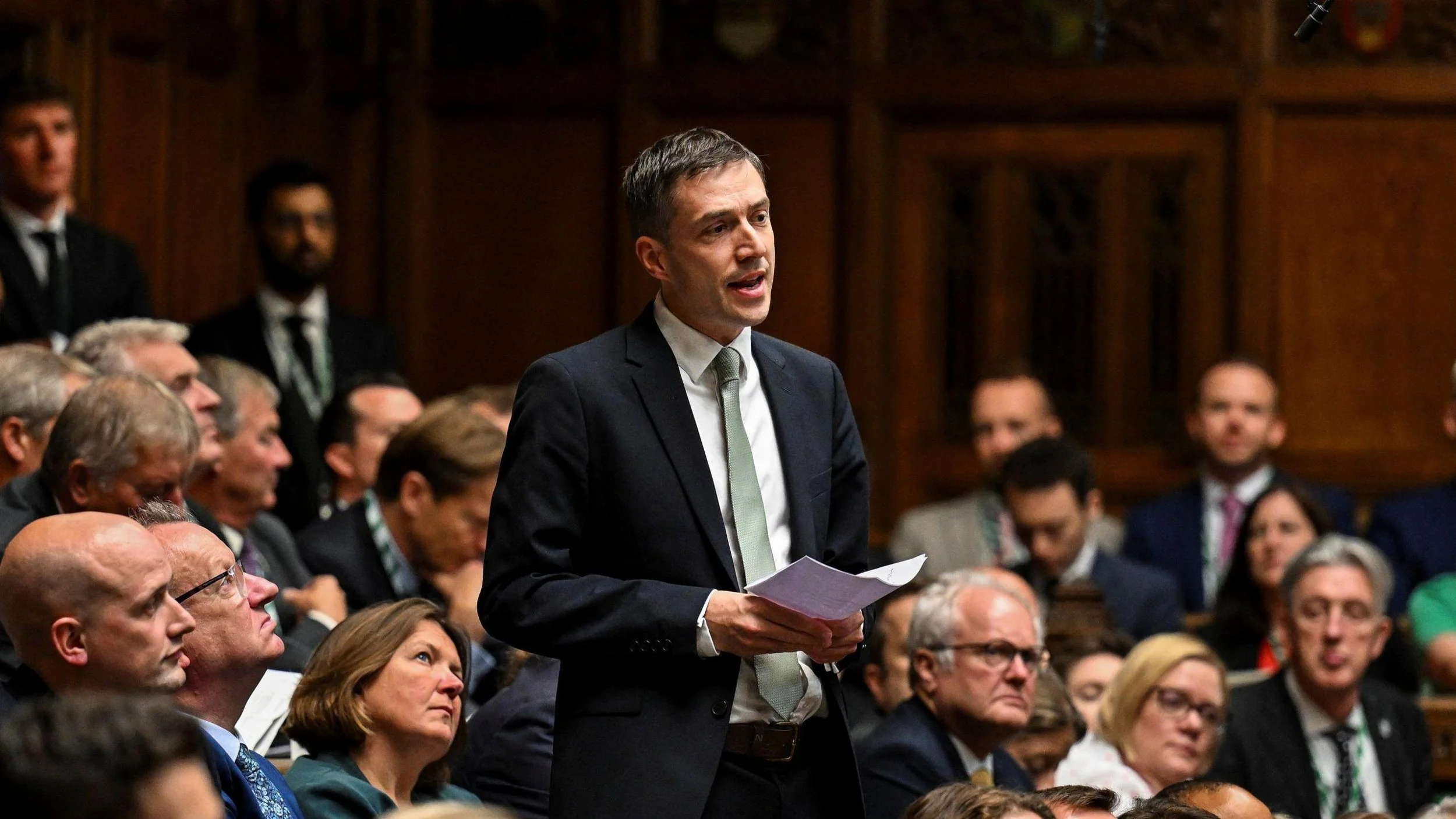
Adrian Ramsay, has welcomed the Government’s Animal Welfare Strategy, published today, but warned that it must have real teeth to deliver meaningful improvements for animals.
22nd of December 2025
Green MP for Waveney Valley, Adrian Ramsay, has welcomed the Government’s Animal Welfare Strategy, published today, but warned that it must have real teeth to deliver meaningful improvements for animals.
Adrian Ramsay said:
“There is much to welcome in the Animal Welfare Strategy, but it must have real teeth to deliver for animals. Ministers must set clear timescales to phase out crates and cages, properly support farmers through the transition and not allow imports that don’t meet UK standards.
“I welcome the action on snares, hunting and puppy farming. Puppy legislation must end breeding for extreme, unhealthy traits in dogs. The strategy could go further for animals, particularly by ending greyhound racing, as the Welsh Government is doing.
“Ending the use of farrowing crates and cages – as we called for in the cross-party letter I organised – is particularly crucial for tackling cruelty, and the strategy must set out how and when this will happen.”
It is time to end the cruelty of cages and crates in UK farming
Originally published on the 12th of December 2025 on https://www.farmersguardian.com/blog/4523182/exclusive-adrian-ramsay-end-cruelty-cages-crates-uk-farming
The UK likes to believe it leads the world on animal welfare. We tell ourselves that we set high standards and that our farms reflect the compassion we hold so dear as a nation. Yet each year, millions of animals are trapped in conditions we would not allow our dogs or cats to endure. In far too many cases, hens are still confined to cages that offer less space than a sheet of A4 paper. Sows remain locked inside farrowing crates for weeks at a time, unable to turn around. Calves begin their lives alone in narrow pens that restrict natural movement. All of this continues despite mounting evidence, clear public concern, and workable alternatives.
Later this month, the Government is due to publish its Animal Welfare Strategy. It is a chance to meaningfully improve the lives of farmed animals. I led a group of 36 MPs and Lords from across the political spectrum, urging the Secretary of State for the Department for Environment, Food & Rural Affairs to use the animal welfare strategy to move towards a more humane treatment of farmed animals. This must start with a time-bound plan to phase out the use of confinement cages and crates in our farming system. However, regulation alone is not enough. The Government must offer financial and practical support to farmers so they can move to higher-welfare systems with confidence.
From talking with the NFU and farmers across my East Anglian constituency, it is clear that many support high welfare standards, and that they would welcome government support for improving welfare standards. They also often feel undercut by the megafarms – huge industrial units of hundreds of thousands of chickens or many thousands of pigs – which are becoming commonplace in East Anglia. Or they feel squeezed by the supermarkets driving down prices. Both these issues need simultaneous government action.
You might ask, Adrian, is this really a big issue? Well, there are almost eight million laying hens remaining in cages where they cannot even stretch their wings. About two hundred thousand pigs spend close to a quarter of their adult lives in farrowing crates. These animals live in conditions that deny their most basic instincts. Many countries in Europe have already recognised this and acted. They are moving away from cages for hens. Some, like Switzerland and Norway, have banned farrowing crates entirely. Research from Humane World for Animals shows that more than two-thirds of people in the UK oppose the use of farrowing crates, so there is growing public support to move towards a more humane system.
In our letter to the Secretary of State, we set out what must be done to bring the UK into line with international best practice. First, the Animal Welfare Strategy should set a timeline for the phase-out of farrowing crates, individual calf pens, and all cages used for birds. Second, the Government must back a funded transition package so that farmers can invest in new housing and management systems for their animals. Finally, stronger enforcement is essential. Too many existing laws go unmonitored and unenforced. New research from the Animal Law Foundation reveals that only 2.2% of UK farms were inspected in 2024, meaning 97.8% of farms received no official welfare visit at all. That means nearly all farms received no visit at all. This leaves both animals and law-abiding farmers at risk, while sending the wrong message to those, who do not follow the regulations. That means nearly all farms received no visit at all. This leaves both animals and law-abiding farmers at risk, while sending the wrong message to those who cut corners.
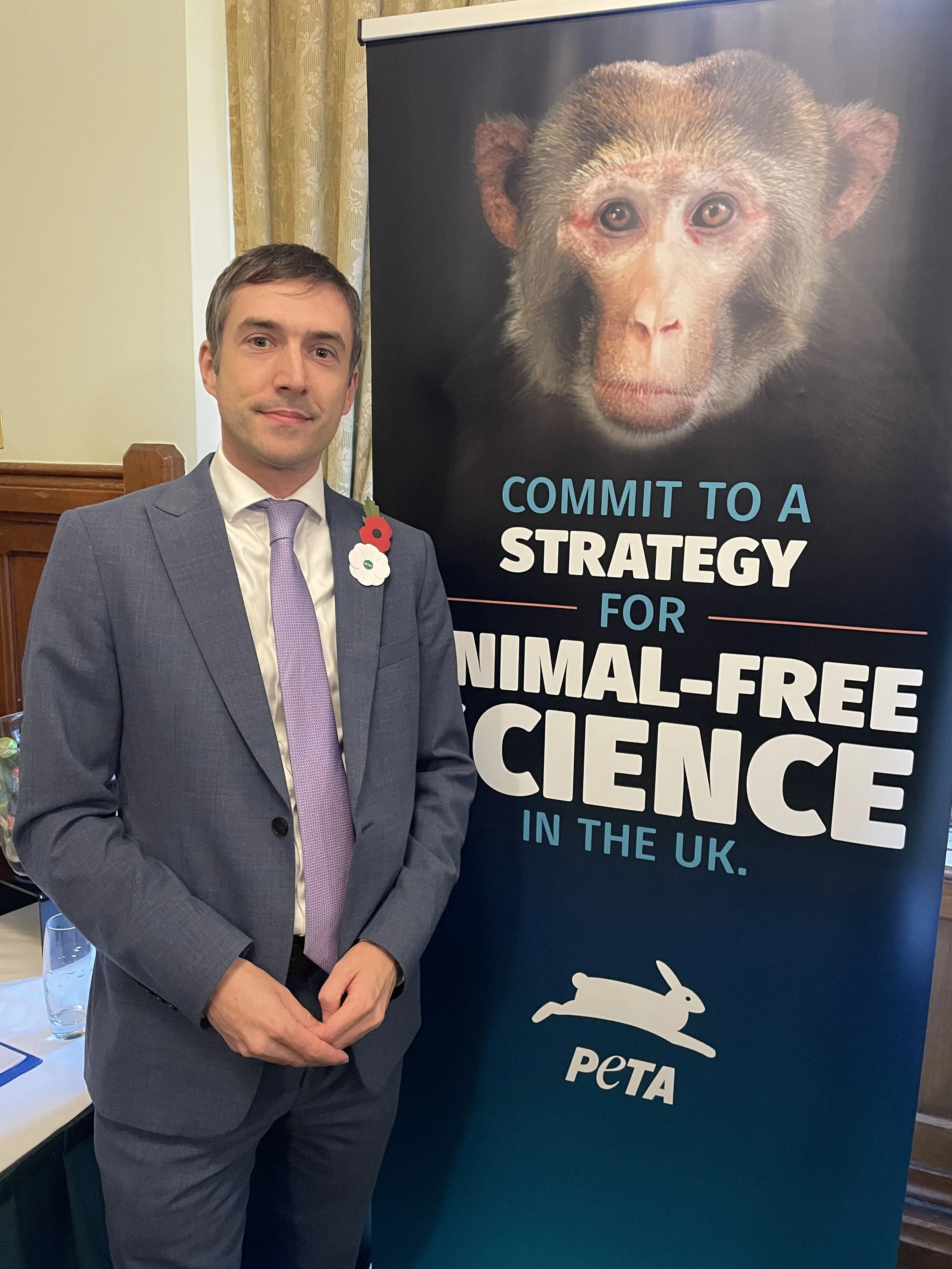
I was recently at an event where the problem was perfectly summed up. A country cannot claim leadership in animal protection while failing to check that its own laws are followed. When violations rarely lead to consequences, poor practice goes unchallenged. We would not tolerate it in any other regulatory area, nor should we accept it when animals are involved.
Alongside these measures, Greens would like to see trade rules reformed so that imports cannot be allowed where they fail to meet the same standards as are required in UK production. This is fundamental to supporting our farmers. We would also like to see action on supermarkets to stop the practice of driving down prices they pay to farmers to levels that stop farmers making a real living.
And of course, there are many other areas where I am advocating for farmers, such as the need for the Sustainable Farming Incentive to be reopened and put on a long-term footing that farmers can rely on – to help advance nature-friendly farming. Plus, I am pressing the Government to rethink its place on Agricultural Property Relief so that ordinary family farms are not impacted.
On my proposals for the Animal Welfare Strategy, many farmers already lead the way, and many more would join them if given the tools to do so. Higher welfare farming is part of a resilient food system because it supports healthier animals, reduces the risk of disease outbreaks and creates steadier supply chains that are less vulnerable to shocks. The Animal Welfare Strategy provides an opportunity to make improvements that reflect who we are as a country, while providing essential support to farmers for this transition. There’s strong public support for these changes and I hope the government delivers.
Cuts to ELMS - and impact on NFM projects in constituency
-
19 May 2025
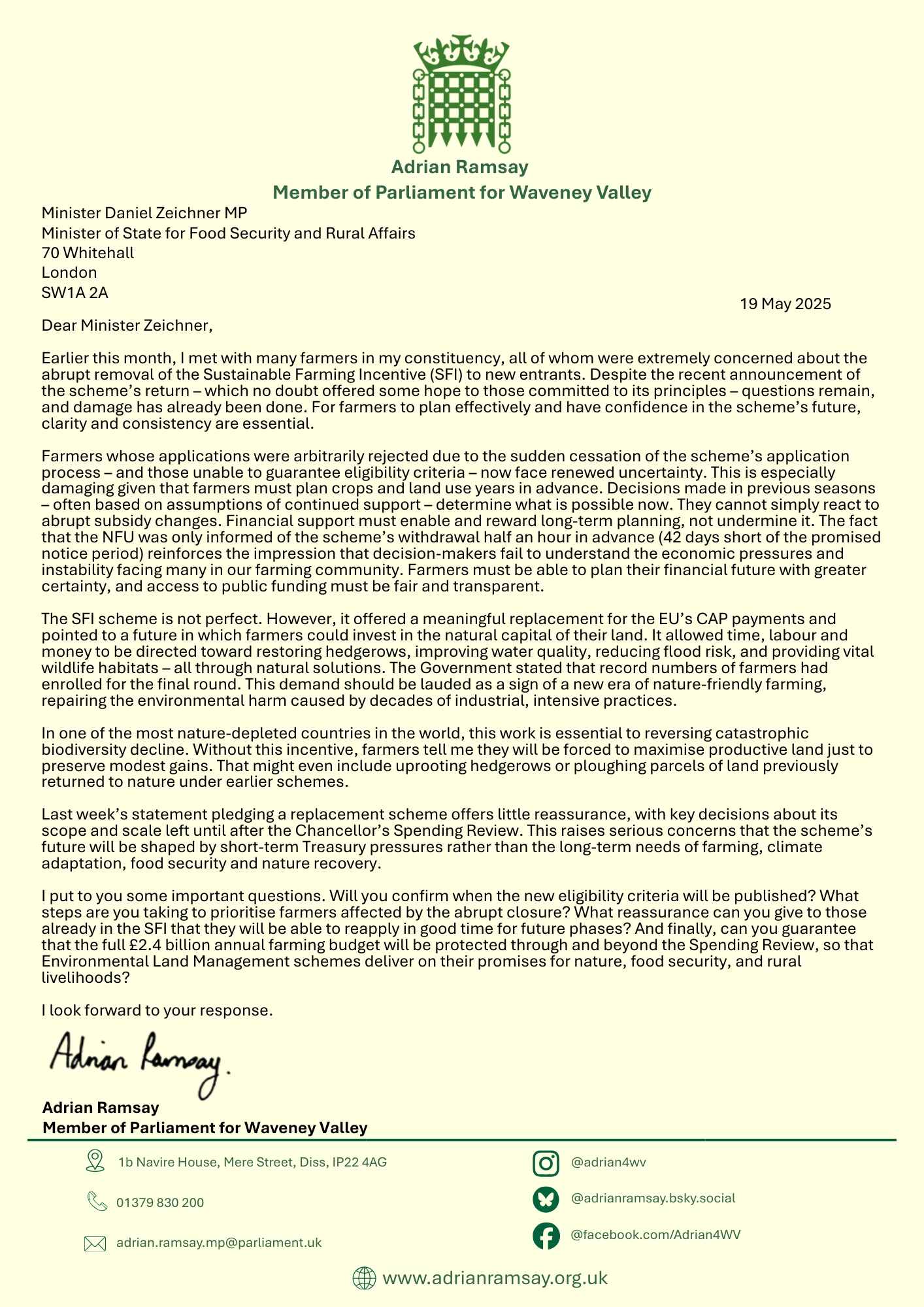
Dear Minister Zeichner,
Earlier this month, I met with many farmers in my constituency, all of whom were extremely concerned about
the abrupt removal of the Sustainable Farming Incentive (SFI) to new entrants. Despite the recent
announcement of the scheme’s return – which no doubt offered some hope to those committed to its principles
– questions remain, and damage has already been done. For farmers to plan effectively and have confidence
in the scheme’s future, clarity and consistency are essential.
Farmers whose applications were arbitrarily rejected due to the sudden cessation of the scheme’s application
process – and those unable to guarantee eligibility criteria – now face renewed uncertainty. This is especially
damaging given that farmers must plan crops and land use years in advance. Decisions made in previous
seasons – often based on assumptions of continued support – determine what is possible now. They cannot
simply react to abrupt subsidy changes. Financial support must enable and reward long-term planning, not
undermine it. The fact that the NFU was only informed of the scheme’s withdrawal half an hour in advance
(42 days short of the promised notice period) reinforces the impression that decision-makers fail to understand
the economic pressures and instability facing many in our farming community. Farmers must be able to plan
their financial future with greater certainty, and access to public funding must be fair and transparent.
The SFI scheme is not perfect. However, it offered a meaningful replacement for the EU’s CAP payments and
pointed to a future in which farmers could invest in the natural capital of their land. It allowed time, labour and
money to be directed toward restoring hedgerows, improving water quality, reducing flood risk, and providing
vital wildlife habitats – all through natural solutions. The Government stated that record numbers of farmers
had enrolled for the final round. This demand should be lauded as a sign of a new era of nature-friendly
farming, repairing the environmental harm caused by decades of industrial, intensive practices.
In one of the most nature-depleted countries in the world, this work is essential to reversing catastrophic
biodiversity decline. Without this incentive, farmers tell me they will be forced to maximise productive land
just to preserve modest gains. That might even include uprooting hedgerows or ploughing parcels of land
previously returned to nature under earlier schemes.
Last week’s statement pledging a replacement scheme offers little reassurance, with key decisions about its
scope and scale left until after the Chancellor’s Spending Review. This raises serious concerns that the
scheme’s future will be shaped by short-term Treasury pressures rather than the long-term needs of farming,
climate adaptation, food security and nature recovery.
I put to you some important questions. Will you confirm when the new eligibility criteria will be published?
What steps are you taking to prioritise farmers affected by the abrupt closure? What reassurance can you give
to those already in the SFI that they will be able to reapply in good time for future phases? And finally, can
you guarantee that the full £2.4 billion annual farming budget will be protected through and beyond the
Spending Review, so that Environmental Land Management schemes deliver on their promises for nature,
food security, and rural livelihoods?
I look forward to your response.