
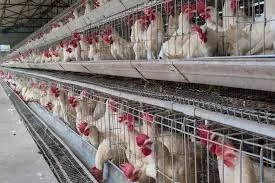
Green MP calls out Government over low-welfare imports
23rd January 2026
Adrian Ramsay says Government is 'importing cruelty' and not allowing British farmers a 'level playing field'
Adrian Ramsay MP, Waveney Valley, has criticised the Government for an incoherent system that undermines British farmers and animal welfare.
Speaking in Parliament, Adrian highlighted the contradiction that the UK rightfully bans many cruel farming practices, yet imports produced in the same way remain legal.
Contributing to the debate, Adrian said:
"What is illegal to produce here because it is too cruel remains legal to import and sell. It undermines public confidence and leaves higher-welfare British farmers facing unfair competition," he said.
UK farmers operate some of the highest animal welfare standards in the world, yet imports of pork, poultry, lamb, and eggs from countries with lower standards have soared. Trade deals risk widening the gap, while public support for banning low-welfare imports is overwhelming.
"According to the RSPCA and Compassion in World Farming, 95 per cent of countries with UK market access have lower animal welfare standards than the UK. HMRC data shows non-EU imports of eggs have more than tripled since 2020, poultry imports have risen by 60%, and pork imports by over 80%. In trade discussions with the United States, Ministers have focused on food safety and sanitary standards, but this narrow focus risks leaving a huge loophole for imports produced in ways that would be illegal here, widening the welfare gap instead of closing it," Adrian added.
Adrian called on the Government to ensure all animal products sold in the UK, domestic or imported, meet British welfare standards and carry clear welfare labelling, closing the loophole once and for all.
Adrian also continues to press for further improvements in UK welfare standards such as ending the use of farrowing crates and cages - with real support for farmers for this transition.
ENDS
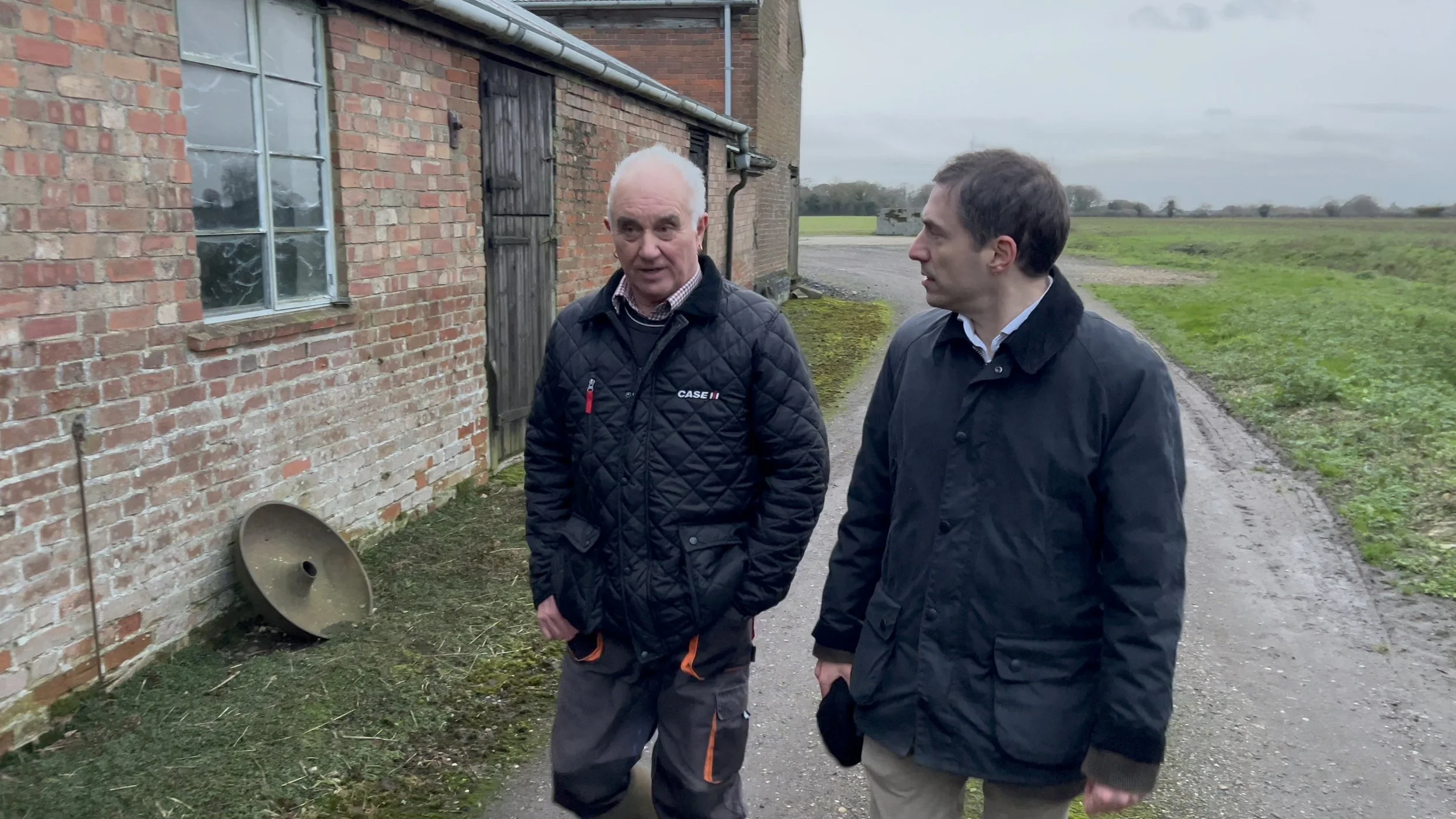
Adrian Ramsay MP Urges Government to Restore Trust After Abrupt SFI Withdrawal
Adrian Ramsay MP, Co-Leader of the Green Party of England and Wales and Member of Parliament for Waveney Valley, has raised serious concerns about the Government’s handling of the Sustainable Farming Incentive (SFI), following its abrupt and unexplained withdrawal for new entrants earlier this year.
Speaking after meeting with farmers across Waveney Valley and writing to the Minister of State for Food Security and Rural Affairs, Adrian Ramsay MP said:
“Farmers in my constituency have told me they feel blindsided by the Government’s decision to close new applications to the SFI without any warning or consultation. Many had invested time, money, and energy into preparing for the scheme only to face sudden rejection and financial uncertainty. This has severely undermined trust in the Government.”
He continued:
“The SFI scheme is not perfect, but it offers a meaningful replacement for the EU’s CAP payments and to a future in which farmers could invest in the natural capital of their land. In one of the most nature-depleted countries in the world, this kind of support is essential for reversing catastrophic biodiversity loss. Without it, farmers say they may be forced to abandon environmental practices just to stay afloat.”
Adrian Ramsay has written to Daniel Zeichner MP, the responsible minister, seeking urgent answers on behalf of those affected. In his letter, he asked:
Will you confirm when the new eligibility criteria will be published?
What steps are you taking to prioritise farmers affected by the abrupt closure?
What reassurance can you give to those already in the SFI that they will be able to reapply in good time for future phases?
Can you guarantee that the full £2.4 billion annual farming budget will be protected through and beyond the Spending Review, so that Environmental Land Management schemes deliver on their promises for nature, food security, and rural livelihoods?
In closing Adrian Ramsay MP said, “The long-term success of environmental land management schemes should not be dictated by short-term Treasury pressures,” Ramsay added. “This is about protecting our countryside, strengthening rural livelihoods, and meeting our climate and biodiversity goals. Farmers deserve clarity — and a government that keeps its promises.”
ENDS
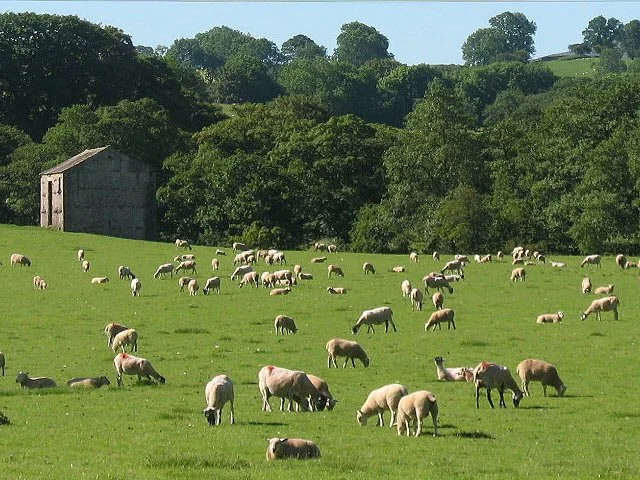
Farming & inheritance tax
If the Government was hoping that the deep concern over its plans for inheritance tax on farmland would go away in the New Year, it was reminded last week that farmers remain as incensed as ever about the changes. About 100 tractors blockaded Oxford city centre when the Environment Secretary was giving a speech at the Oxford Farming Conference.
3rd of February 2025
If the Government was hoping that the deep concern over its plans for inheritance tax on farmland would go away in the New Year, it was reminded last week that farmers remain as incensed as ever about the changes. About 100 tractors blockaded Oxford city centre when the Environment Secretary was giving a speech at the Oxford Farming Conference.
He was honest enough to admit that the changes were “very unwelcome” (that’s quite the under-statement) and not something that the Government had wanted or intended to do.
I’ve spent some of the past few weeks talking to farmers in my constituency who are very worried about the changes. But what they’ve also told me is that the current tax situation isn’t working for them either. In fact, in many ways, it’s harming ordinary working farmers.
I heard about a 350-acre farm in Suffolk which was bought recently by a merchant banker from London who didn’t even visit the property so clearly had no intention of farming it. In fact, he bought it before it even went on the market, to add to his existing property portfolio and minimise his inheritance tax liabilities.
If this was an unusual or exceptional case, that would be bad enough. But it isn’t. According to one nationwide land agency, non-farmers bought more than half of the farms and estates sold on the open market in England in 2023. The amount of land bought by ordinary farmers was the lowest on record. That is an astonishing state of affairs.
What makes it worse is that the interest of very wealthy outside investors is driving up land prices, which are now at a record high. As one farmer told me, when an ordinary working farmer hopes to expand, the last thing he or she wants is high land prices. Yet that is exactly what they’ve got.
So while farmers have genuine fears that their children will not be able to inherit the family farm and continuing producing food, what’s become clear is that they are already being squeezed out of buying more land. If they can’t expand, they can’t increase food production, affecting our food security. It also makes it harder for them to set aside land for environmental benefits.
The current tax situation is not sustainable. It’s not helping ordinary farmers and it’s depriving the Government of tax revenue which is needed to fund our crumbling public services such as schools, health care and public transport. I want to see it changed so that the very wealthy pay their fair share of taxes, while genuine farmers can carry on doing what they do best – growing and producing food for us all.
But the Government’s plans won’t achieve either of these aims. The reduced inheritance tax rate being proposed will still entice wealthy investors who want to limit their inheritance tax liabilities, while farmers will face huge tax bills when they try to pass on a family farm to the next generation. Many will end up having to sell land to meet the tax liability with an impact on our food security.
This policy has been badly drawn up and thrown together without taking into full consideration what’s been happening in the farming sector, in particular the steep rise in land prices which makes the average-sized family farm worth on paper several million pounds, even though the farmer may be earning barely more than the minimum wage.
There is a clear solution to this. Close the tax loophole to deter investors and, hopefully, bring down land prices but protect genuine farmers by raising the threshold much higher than the proposed £1 million. That’s what the farmers and local National Farmers Union reps I’ve spoken to want to see.
Farming is an absolutely critical industry – vital for our food security, the protection of wildlife and our response to climate change. But if we want to protect it, there must be a fair deal for farmers to include: ensuring the funding pots for environmental land management schemes are adequate and easy to access; tackling the power of the supermarkets and stopping them squeezing the prices that farmers receive; and addressing the existing tax loophole.
The Conservatives and others who want to keep the status quo aren’t acting in the interests of genuine farmers – they are protecting the interests of very wealthy investors. I want to see those with the broadest shoulders like these wealthy investors pay their fair share of tax. I also want to family farms to thrive.
The Chancellor should close this tax loophole while raising the inheritance tax threshold to protect ordinary farms. After a very difficult 2024, it would at least bring some relief to farmers for the year ahead.
Adrian Ramsay MP
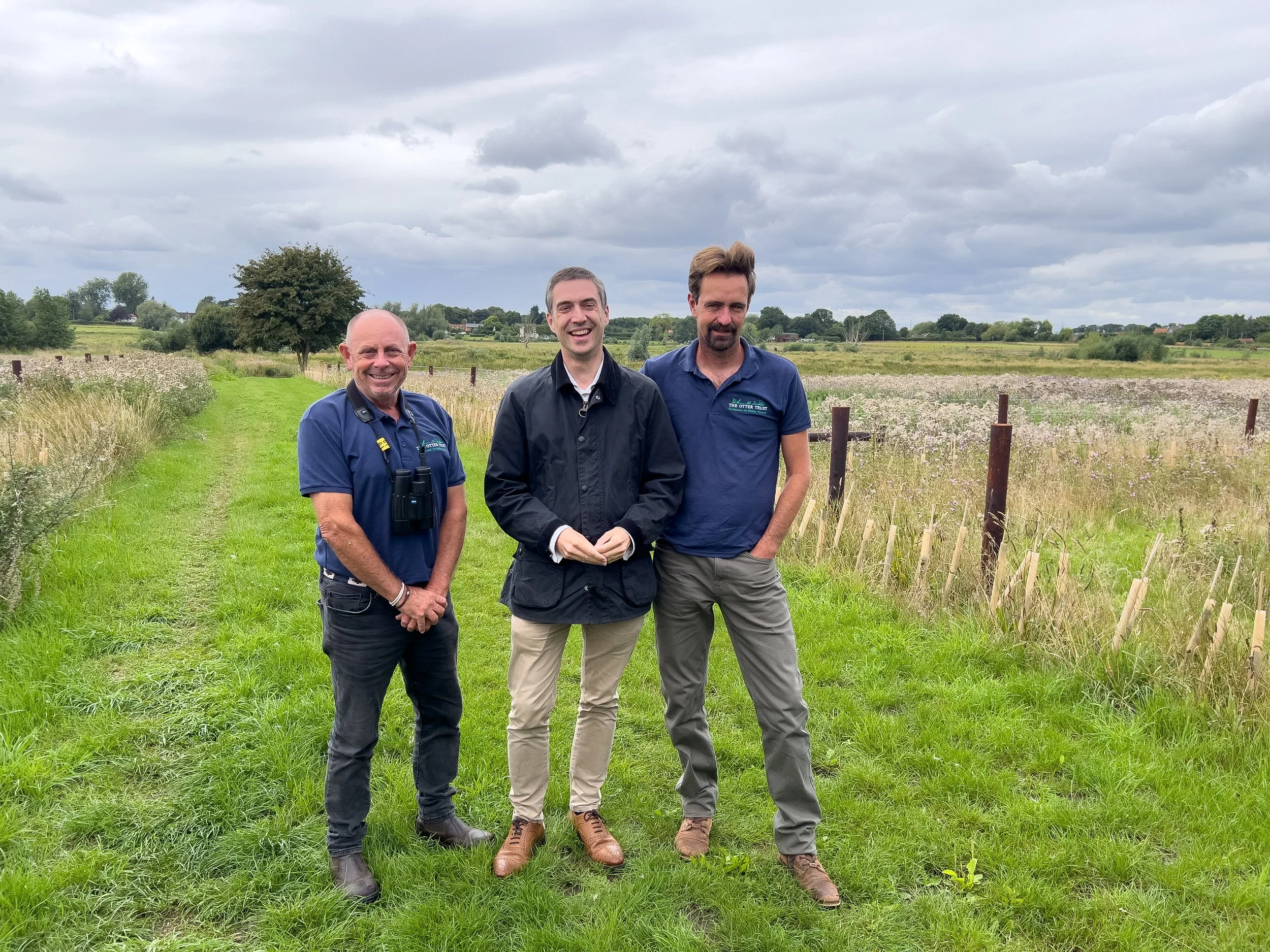
Farming and IHT
20th of December 2024
In the last few weeks I’ve had many conversations with farmers in my constituency about the very difficult year they had last year and their concerns for the future.
As many of us will remember, 2024 was extraordinarily wet, even though East Anglia thankfully escaped the worst of it. Nationwide, 2024 was the second worst harvest on record. On top of that, farmers have faced rising costs which, combined with the injustice of supermarkets squeezing margins evermore, makes it very difficult to make a living.
Then came the October Budget and the proposal to close a tax loophole which exempted farmland and businesses from inheritance tax. The Chancellor is proposing a threshold of £1 million on business and agricultural assets - anything more than that would be subject to inheritance tax of 20 percent. Cue mass protests by farmers at Westminster and a growing tide of concern and anger in farming communities.
This issue has been quickly politicised with opposition parties lining up to attack the Government. There’s no surprise there. Looking for a weakness in the Government’s position is what opposition parties do. It’s part of how our democracy works. But it’s not enough for opposition parties to simply defend the current situation and offer no alternative – as the Conservatives are doing.
Because what’s become clear to me in my conversations with local farmers is that, while the Government’s proposed changes are deeply flawed, the status quo is not working either. More and more farmland is being bought by wealthy investors to avoid inheritance tax, driving up prices and denying ordinary farmers the chance to expand their farms. And these investors often have no interest in farming.
I spoke to one farmer who told me about a 350-acre farm in Suffolk which had been bought by a wealthy London banker who didn’t even visit the property. In fact, he bought it before it even went on the market. In another case, a farmer who was hoping to expand his farm and had set aside the money to buy some neighbouring land saw that land sold for 60 percent above the asking price – again bought by someone taking advantage of tax rules. It’s no wonder that land prices are rising by an average of 14 percent every year.
One nationwide land agency found that non-farmers bought more than half of the farms and estates sold on the open market in England in 2023. The amount of land bought by ordinary farmers was the lowest on record.
This is not good for farmers or for our food security. It’s clear to me that this tax loophole has to be addressed in order to save family farms and the livelihoods of ordinary working farmers.
But the way the Government has framed this policy is going to end up protecting the investors while harming the farmers. The reduced inheritance tax rate will still entice wealthy investors who want to minimise their inheritance tax liabilities, even if they can’t avoid them altogether. But farmers will face huge tax bills when they try to pass on a family farm to the next generation.
The rise in land values isn’t only pricing out many ordinary farmers. It is also driving up the paper value of their farms, pushing many of them way above the £1 million threshold proposed by the Chancellor. An average-sized farm of 300 acres could easily be worth £3 million and that’s just for the land. Then there are the buildings, the farm equipment and the livestock on the farm.
Yet many farmers are earning barely more than the minimum wage, despite working very long hours.
There is a clear solution to this. Close the tax loophole to deter investors and, hopefully, bring down land prices but protect genuine farmers by raising the threshold much higher than the proposed £1 million. That’s what the farmers and local National Farmers Union reps I’ve spoken to want to see.
Farming is an absolutely critical industry – vital for our food security, the protection of wildlife and our response to climate change. But if we want to protect it, there must be a fair deal for farmers to include: ensuring the funding pots for environmental land management schemes are adequate and easy to access; tackling the power of the supermarkets and stopping them squeezing the prices that farmers receive; and addressing the existing tax loophole. This loophole is clearly creating major problems for ordinary working farmers and costing the Treasury millions in lost tax revenue. That money is urgently needed for public services like the NHS, education and public transport – and nature friendly farming schemes.
The Conservatives and others who want to preserve the status quo aren’t acting in the interests of genuine farmers – they are protecting the interests of very wealthy investors. I want to see a huge investment in our public services, funded by taxing those with the broadest shoulders like these wealthy investors. I also want to family farms to thrive.
The Chancellor can do both by closing this tax loophole and raising the inheritance tax threshold to protect ordinary farms. It would be positive way to start the new year.
I wish you all a hopeful and peaceful 2025.