
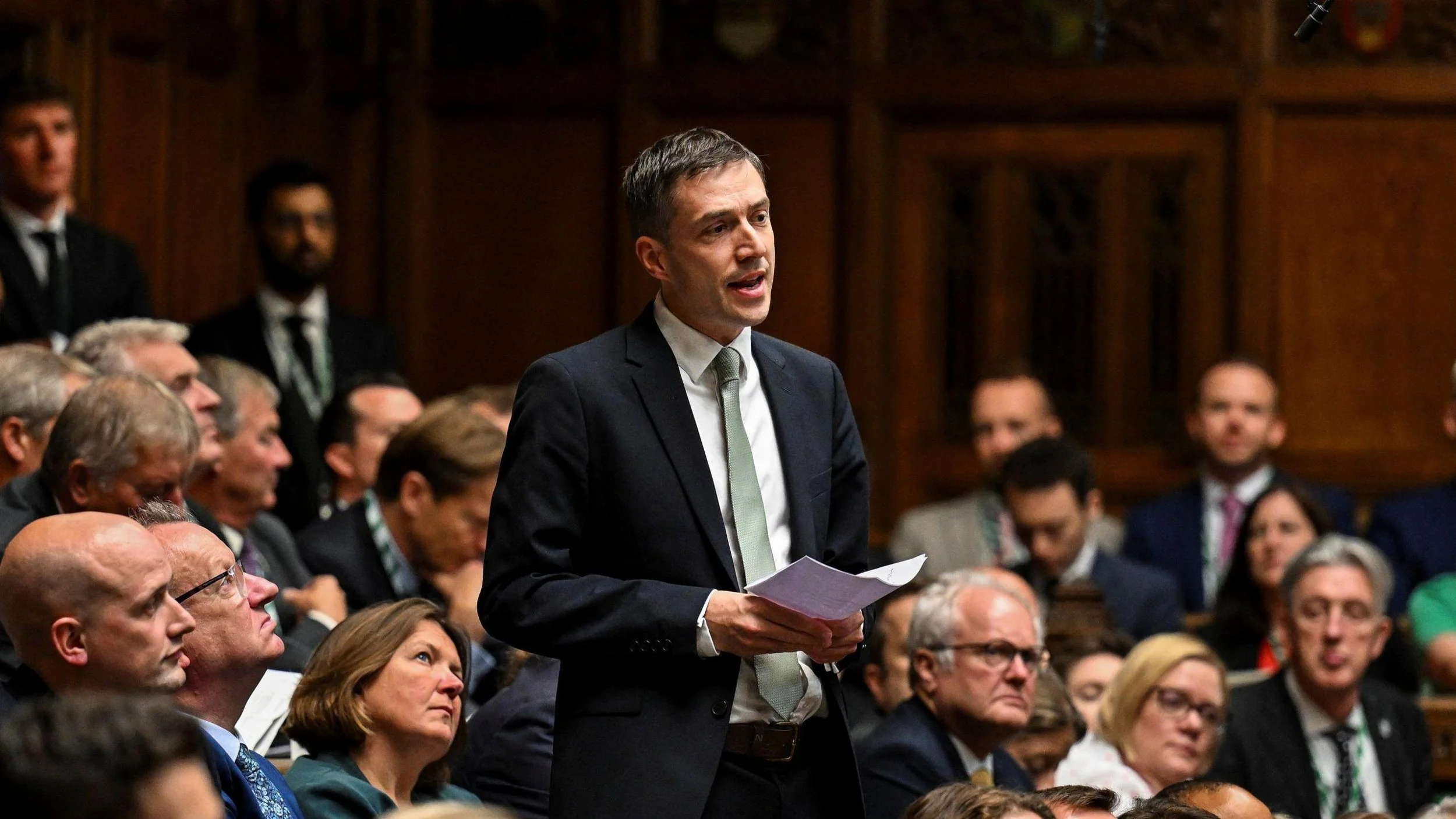
Adrian Ramsay MP statement on the Park hotel, Diss,
22nd of July 2025
What happened in Diss last night was wrong. Groups from outside our community came here to create fear and division. That is not who we are. Diss is a town rooted in compassion and decency. We have a long and proud history of offering sanctuary to those fleeing persecution. People have a right to seek asylum in our country, and they deserve to be treated with dignity and respect, as we would wish to be treated in times of crisis.
We have had an asylum hotel in Diss for two years without any issues. The families staying there have become part of the local community, with many of their children attending local schools. However, late last week we were informed that these families would be told to leave the hotel at short notice. I am frustrated by the lack of communication from the Home Office to the families and to me as constituency MP, and I have raised my concerns with the Minister.
We must reject division and focus on what unites us. I will keep raising questions with the Home Office and work with the town and district councils and local community groups to ensure everyone is treated with respect. Together, we will welcome new arrivals and show what I know Diss to be: a compassionate and inclusive town that helps everyone feel part of our community.
Banning Conversion Practices
-
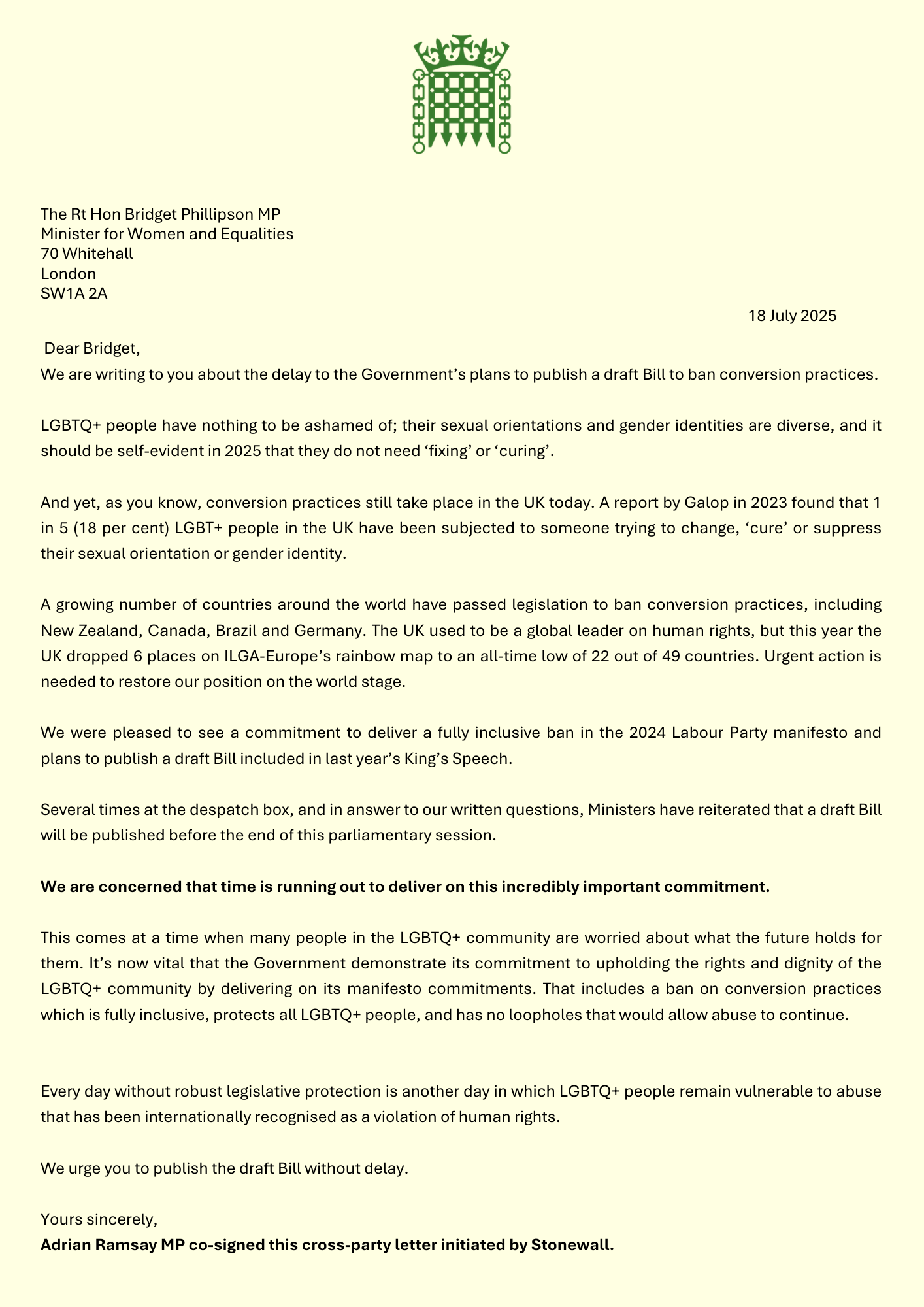
Dear Bridget,
We are writing to you about the delay to the Government’s plans to publish a draft Bill to ban conversion practices.
LGBTQ+ people have nothing to be ashamed of; their sexual orientations and gender identities are diverse, and it should be self-evident in 2025 that they do not need ‘fixing’ or ‘curing’.
And yet, as you know, conversion practices still take place in the UK today. A report by Galop in 2023 found that 1 in 5 (18 per cent) LGBT+ people in the UK have been subjected to someone trying to change, ‘cure’ or suppress their sexual orientation or gender identity.
A growing number of countries around the world have passed legislation to ban conversion practices, including New Zealand, Canada, Brazil and Germany. The UK used to be a global leader on human rights, but this year the UK dropped 6 places on ILGA-Europe’s rainbow map to an all-time low of 22 out of 49 countries. Urgent action is needed to restore our position on the world stage.
We were pleased to see a commitment to deliver a fully inclusive ban in the 2024 Labour Party manifesto and plans to publish a draft Bill included in last year’s King’s Speech. Several times at the despatch box, and in answer to our written questions, Ministers have reiterated that a draft Bill will be published before the end of this parliamentary session.
We are concerned that time is running out to deliver on this incredibly important commitment.
This comes at a time when many people in the LGBTQ+ community are worried about what the future holds for them. It’s now vital that the Government demonstrate its commitment to upholding the rights and dignity of the LGBTQ+ community by delivering on its manifesto commitments. That includes a ban on conversion practices which is fully inclusive, protects all LGBTQ+ people, and has no loopholes that would allow abuse to continue.
Every day without robust legislative protection is another day in which LGBTQ+ people remain vulnerable to abuse that has been internationally recognised as a violation of human rights.
We urge you to publish the draft Bill without delay.
Yours sincerely,
Adrian Ramsay MP co-signed this cross-party letter initiated by Stonewall.
Cross-party letter on phasing out animal experiments
-
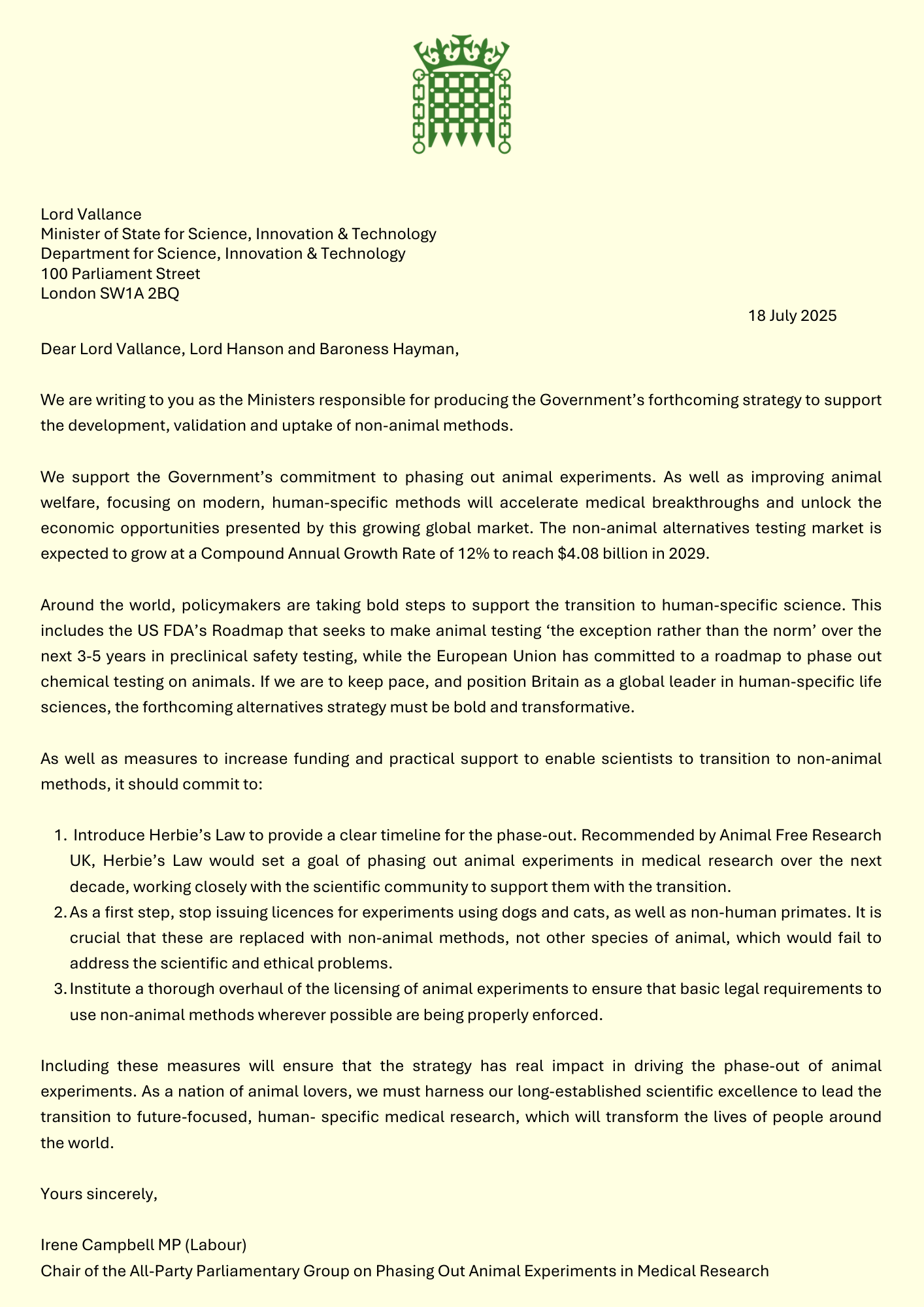
Lord Vallance
Minister of State for Science, Innovation & Technology
Department for Science, Innovation & Technology
100 Parliament Street
London SW1A 2BQ
Dear Lord Vallance, Lord Hanson and Baroness Hayman,
We are writing to you as the Ministers responsible for producing the Government’s forthcoming strategy to support the development, validation and uptake of non-animal methods.
We support the Government’s commitment to phasing out animal experiments. As well as improving animal welfare, focusing on modern, human-specific methods will accelerate medical breakthroughs and unlock the economic opportunities presented by this growing global market. The non-animal alternatives testing market is expected to grow at a Compound Annual Growth Rate of 12% to reach $4.08 billion in 2029.
Around the world, policymakers are taking bold steps to support the transition to human-specific science. This includes the US FDA’s Roadmap that seeks to make animal testing ‘the exception rather than the norm’ over the next 3-5 years in preclinical safety testing, while the European Union has committed to a roadmap to phase out chemical testing on animals. If we are to keep pace, and position Britain as a global leader in human-specific life sciences, the forthcoming alternatives strategy must be bold and transformative.
As well as measures to increase funding and practical support to enable scientists to transition to non-animal methods, it should commit to:
Introduce Herbie’s Law to provide a clear timeline for the phase-out. Recommended by Animal Free Research UK, Herbie’s Law would set a goal of phasing out animal experiments in medical research over the next decade, working closely with the scientific community to support them with the transition.
As a first step, stop issuing licences for experiments using dogs and cats, as well as non-human primates. It is crucial that these are replaced with non-animal methods, not other species of animal, which would fail to address the scientific and ethical problems.
Institute a thorough overhaul of the licensing of animal experiments to ensure that basic legal requirements to use non-animal methods wherever possible are being properly enforced.
Including these measures will ensure that the strategy has real impact in driving the phase-out of animal experiments. As a nation of animal lovers, we must harness our long-established scientific excellence to lead the transition to future-focused, human- specific medical research, which will transform the lives of people around the world.
Yours sincerely,
Irene Campbell MP (Labour)
Chair of the All-Party Parliamentary Group on Phasing Out Animal Experiments in Medical
Research
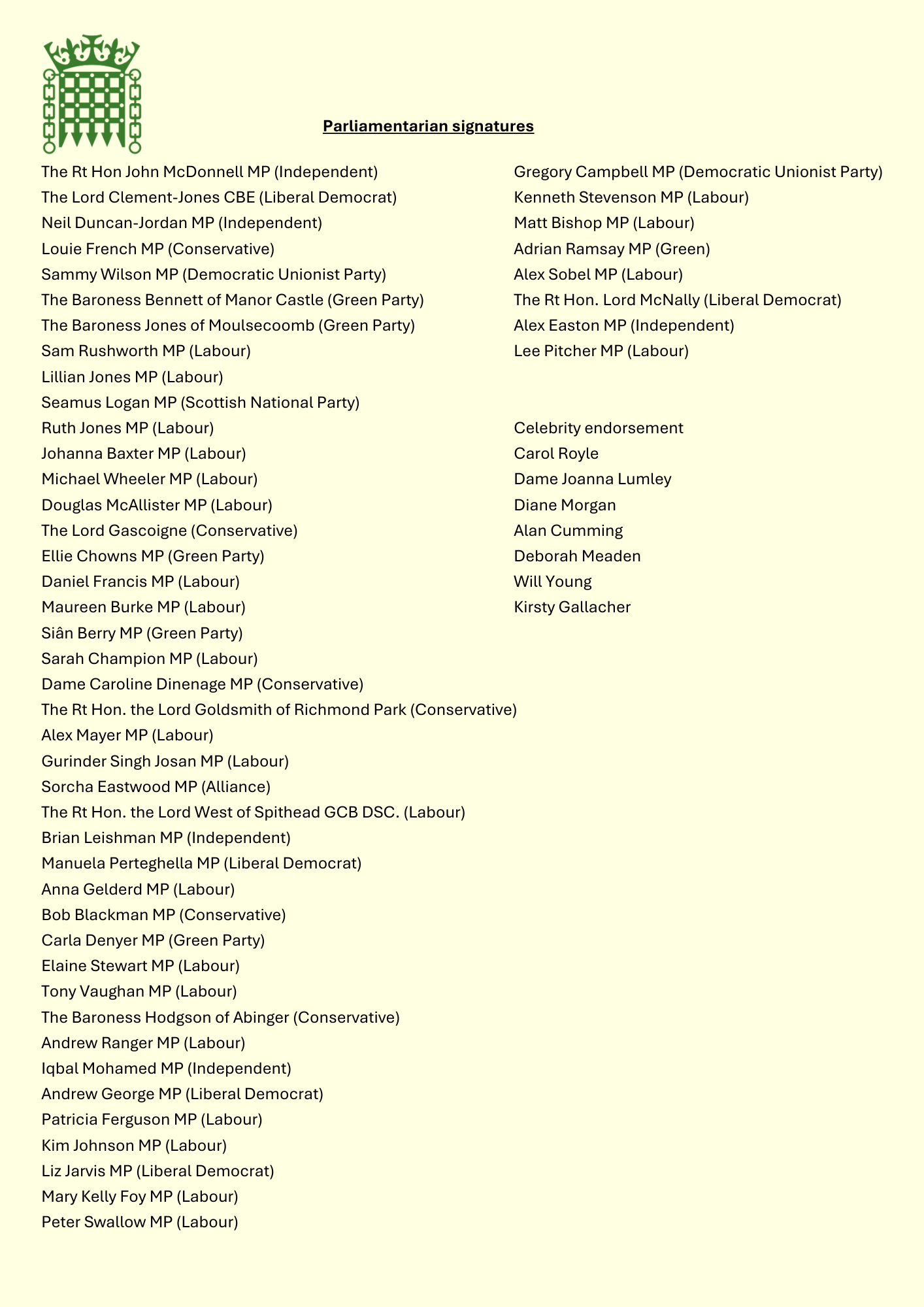
Parliamentarian signatures
The Rt Hon John McDonnell MP (Independent)
The Lord Clement-Jones CBE (Liberal Democrat)
Neil Duncan-Jordan MP (Independent)
Louie French MP (Conservative)
Sammy Wilson MP (Democratic Unionist Party)
The Baroness Bennett of Manor Castle (Green Party)
The Baroness Jones of Moulsecoomb (Green Party)
Sam Rushworth MP (Labour)
Lillian Jones MP (Labour)
Seamus Logan MP (Scottish National Party)
Ruth Jones MP (Labour)
Johanna Baxter MP (Labour)
Michael Wheeler MP (Labour)
Douglas McAllister MP (Labour)
The Lord Gascoigne (Conservative)
Ellie Chowns MP (Green Party)
Daniel Francis MP (Labour)
Maureen Burke MP (Labour)
Siân Berry MP (Green Party)
Sarah Champion MP (Labour)Dame Caroline Dinenage MP (Conservative)
The Rt Hon. the Lord Goldsmith of Richmond Park (Conservative)
Alex Mayer MP (Labour)
Gurinder Singh Josan MP (Labour)
Sorcha Eastwood MP (Alliance)
The Rt Hon. the Lord West of Spithead GCB DSC. (Labour)
Brian Leishman MP (Independent)
Manuela Perteghella MP (Liberal Democrat)
Anna Gelderd MP (Labour)
Bob Blackman MP (Conservative)
Carla Denyer MP (Green Party)
Elaine Stewart MP (Labour)
Tony Vaughan MP (Labour)
The Baroness Hodgson of Abinger (Conservative)
Andrew Ranger MP (Labour)
Iqbal Mohamed MP (Independent)
Andrew George MP (Liberal Democrat)
Patricia Ferguson MP (Labour)
Kim Johnson MP (Labour)
Liz Jarvis MP (Liberal Democrat)
Mary Kelly Foy MP (Labour)
Peter Swallow MP (Labour)
Gregory Campbell MP (Democratic Unionist Party)
Kenneth Stevenson MP (Labour)
Matt Bishop MP (Labour)
Adrian Ramsay MP (Green)
Alex Sobel MP (Labour)
The Rt Hon. Lord McNally (Liberal Democrat)Alex Easton MP (Independent)
Lee Pitcher MP (Labour)
The Baroness Cass OBE FRCP FRCPCH (Crossbench)
The Lord Weir of Ballyholme (Democratic Unionist Party)
Christine Jardine MP (Liberal Democrat)
The Earl of Courtown (Conservative)
Tan Dhesi MP (Labour)
Terry Jermy MP (Labour)
Celebrit y endorsement
Carol Royle
Dame Joanna Lumley
Diane Morgan
Alan Cumming
Deborah Meaden
Will Young
Kirsty Gallacher
Adrian Ramsay MP, calls on the Prime Minister to put climate resilience on a statutory footing
14 of July 2025
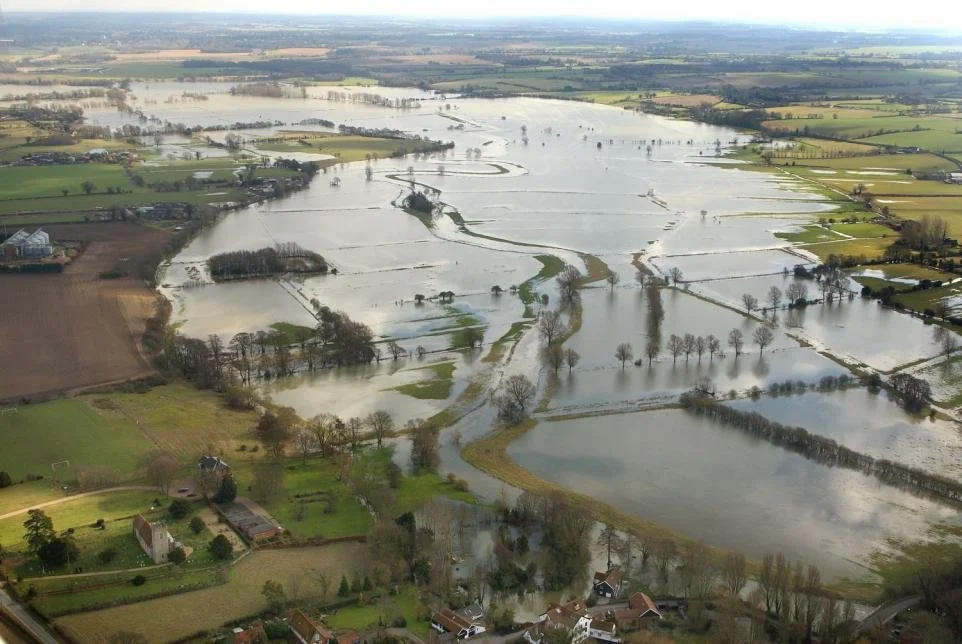
Adrian Ramsay MP, calls on the Prime Minister to put climate resilience on a statutory footing, saying, "England is facing its driest start to a year in my lifetime. Extreme weather is becoming the norm, and we are nowhere near prepared to protect our citizens."
Adrian Ramsay MP, Co-Leader of the Green Party of England and Wales reacting to the Met Office’s State of the Climate Report, published today, which spells out how extreme weather events are increasing. The last three years have been among the top five warmest on record. Extremes are becoming the norm.
Adrian Ramsay MP said:
“Our climate is fuelling extreme weather, and that is having direct and urgent consequences in the here and now. The last three years have been among the top five warmest on record. Extremes are becoming the norm.
He continued ”We had the warmest spring on record, and we are in the middle of this summer’s third heatwave. The Government has not adequately prepared our infrastructure to protect our citizens."
”The Government must outline the steps they are taking to prepare for the increasing threat of extreme temperature. This is not just about this summer, it’s about how we adapt as the climate crisis continues to escalate.”
“We need to safeguard the public from this rising climate threat. That is why the Prime Minister must put climate resilience on a statutory footing, requiring local councils and major infrastructure providers to carry out climate risk assessments for all projects.”
My first year as an MP
4th of July 2025
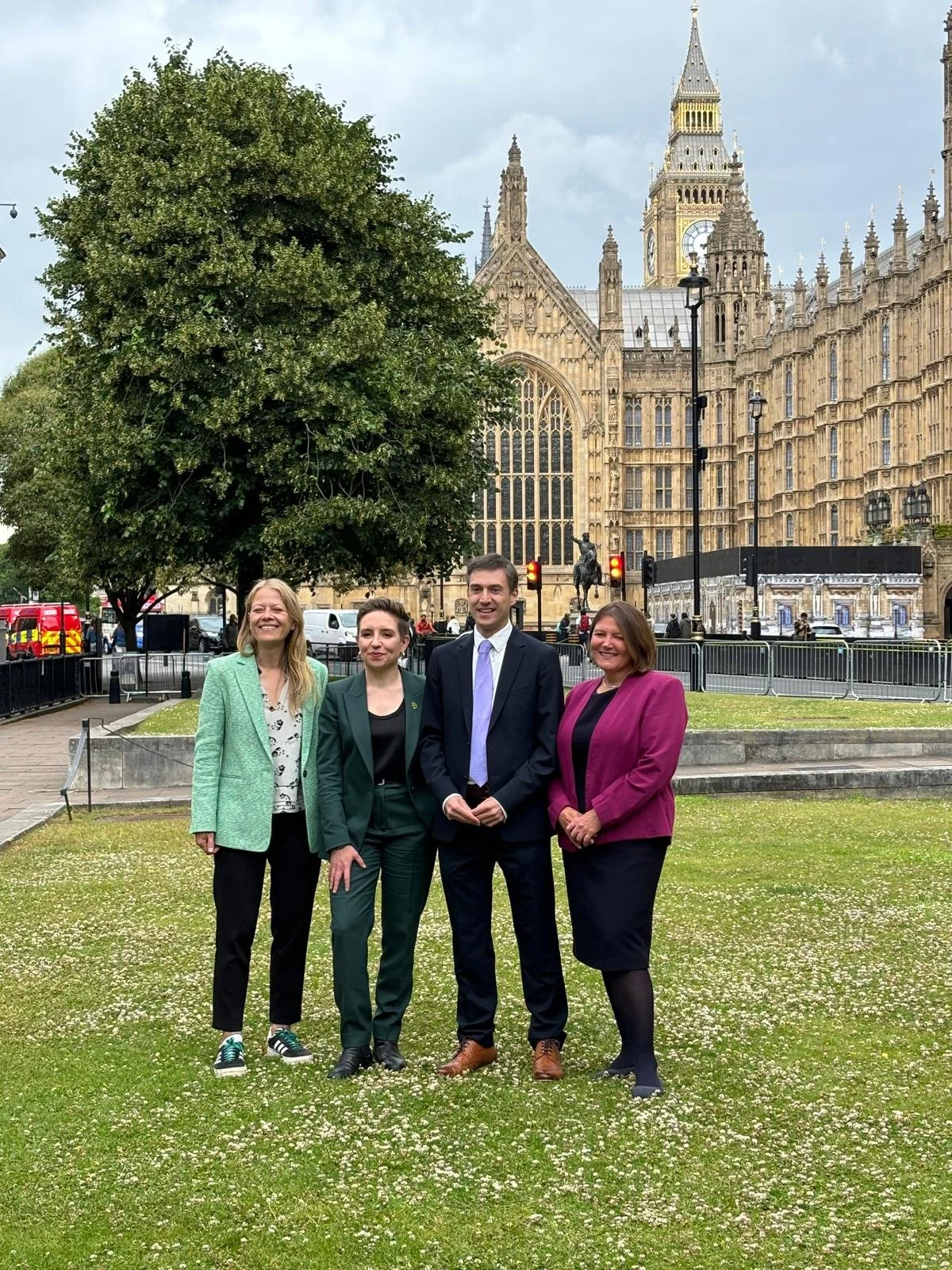
It’s hard to believe that it’s only a year ago that voters went to the polls, threw out the Conservatives and gave Labour its huge majority - and I became the first MP for the new Waveney Valley constituency, and one of four Green MPs, quadrupling our representation in Parliament.
The past 12 months have been a whirlwind and this seems a good moment to reflect on what’s happened since my election.
To start, the fortunes of both Labour and the Conservatives have tumbled. Labour’s promise of change has turned into more of the same brutal cuts to public services, causing them to haemorrhage support, while the Conservatives have slumped even further in opinion polls, to the point where their actual survival as a party is being questioned.
I’m glad to say that, in contrast, the Greens have built up our support across the country, while in Parliament I and my fellow Green MPs continue to hold the Government to account on issues ranging from support for public services to protection of the environment.
I’ve challenged ministers on the disastrous state of NHS dentistry in East Anglia; on cuts in education spending and the pressures on SEND provision; on the failure to address the roots of poverty; on the betrayal of farmers not only with the badly conceived changes to inheritance tax rules but also the abrupt pause to funding for sustainable farming; on the need to listen to residents’ concerns about the proposed new pylons route and properly consider alternatives for much-needed improvements to the electricity grid; and on the Government’s refusal to take a stand on the Israeli government’s attacks on civilians in Gaza – to name but a few of the issues that I know are important to my constituents.
Only last week, during Prime Minister’s Questions, I called on Keir Starmer to scrap the two-child benefit cap and the totally unacceptable cuts to universal credit for ill and disabled people which will push more and more people into poverty.
I’ve spoken about the lack of flood preparedness in Norfolk and Suffolk and given my backing to local natural flood management projects. I’ve highlighted the urgent need to hold water companies to account for the damage they have done to our rivers and beaches. I initiated and led a debate on the welfare of farmed animals and the horrifying increase in industrial factory farming. I believe in working with MPs from other parties in areas where we can agree and I’m glad that in both these areas, there has been cross-party support. Too often, the tribalism of our politics gets in the way of resolving some of the many challenges we face.
That is why I have supported the Government’s commitment to tackling the climate and nature crises – the issue which above all others brought me into politics. I only wish its actions lived up to its ambition, rather than pandering to the interests of the fossil fuel industry by pledging huge public investment in carbon capture and storage and keeping open the option of more oil and gas drilling in the North Sea.
When I was elected last July, I promised to be an active and visible MP in Waveney Valley. And this has been a key focus of my work – holding more than 40 constituency surgeries over the past 12 months and visiting many of the schools, businesses and local organisations across the constituency. I’ve received and replied to more than 4,100 emails from constituents voicing their concerns, whether it’s on national policy or their own difficulty in accessing vital public services.
I know people in Waveney Valley are proud of the area they live in and want to protect it. But I also know you feel let down by the loss of local services and the degradation of the local environment. The lack of NHS dentistry is a prime example of the erosion of public services so it’s disappointing that each time I have raised this with ministers, and the Prime Minister himself, I am fobbed off with promises of addressing the issue – but no firm date for reforming the NHS dental contract which is the root cause of the problem. I will keep up the pressure on this crucial issue.
I knew when I stood for Parliament that Waveney Valley was a remarkable place with a real sense of community. The people I’ve met over the last 12 months and the organisations I’ve visited have only made me even more proud of our great communities. It is a huge honour to be your MP.
I promised when I was elected that I would be Waveney Valley’s voice at Westminster, not Westminster’s voice in Waveney Valley. I hope I am fulfilling that promise as I continue to fight for the interests of all my constituents and ensure your voice is heard in the corridors of power.
Reflecting on his first year as an MP.
3rd of July 2025
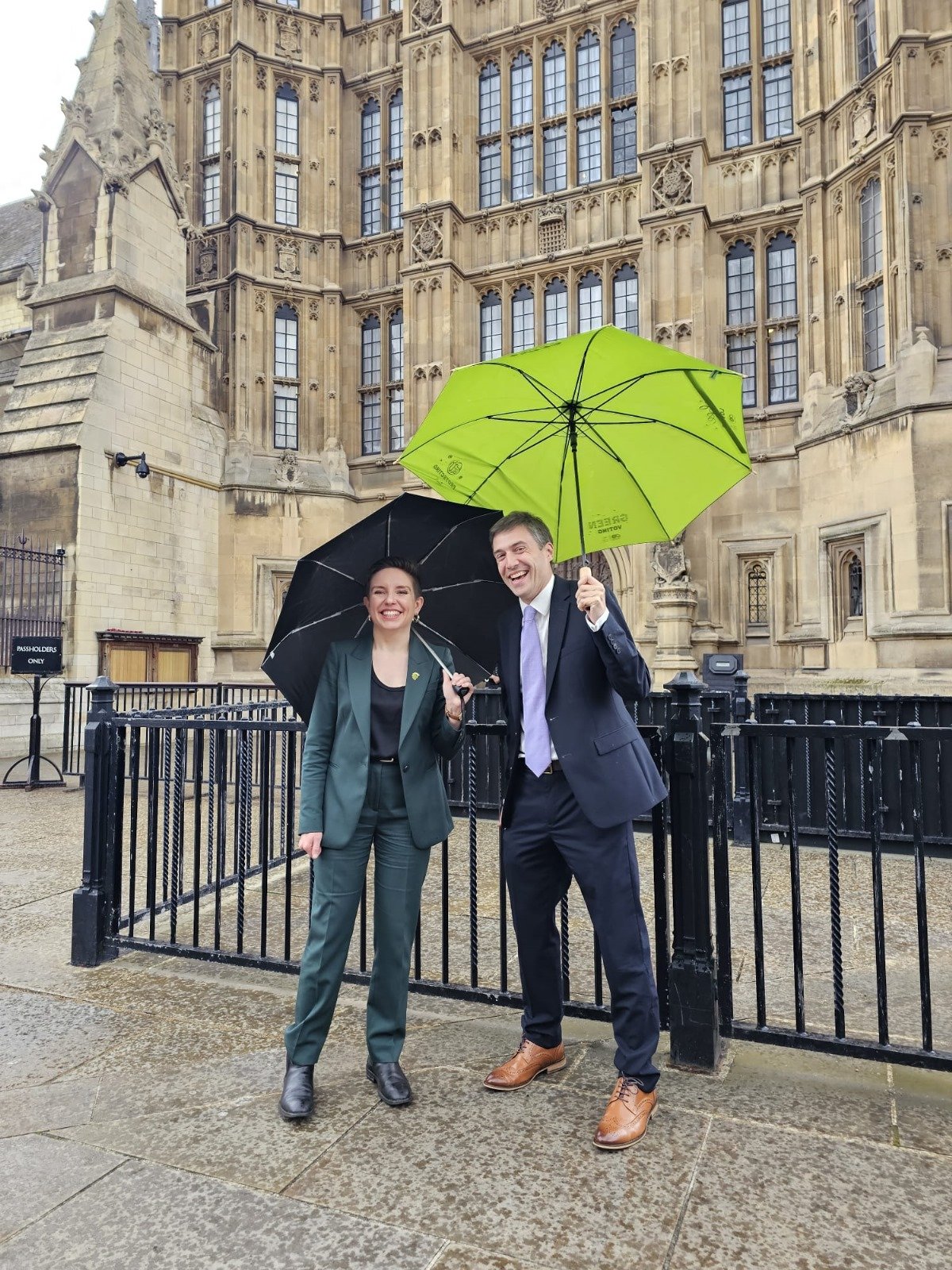
Reflecting on his first year as an MP, Adrian Ramsay says his focus is on being active and visible in Waveney Valley while also championing local concerns in Parliament.
“As a proud East Anglian, it’s a real honour to serve as the MP for Waveney Valley. From day one, I’ve worked to be a visible voice for Waveney Valley. As I said in my maiden speech, I’ve sought to be Waveney Valley’s voice in Westminster and not Westminster’s voice in Waveney Valley.”
One year on, he says he remains committed to that promise.
"I’ve championed a wide range of local concerns in Parliament, from the need to restore NHS dentistry and other health services to pressing for more affordable housing and adequate funding for local schools and for nature friendly farming.”
He continued
“I’ve also been very active and visible in the constituency – which was the main thing residents told me they wanted when I was campaigning for election. I’ve visited businesses, charities, community groups and schools across the constituency and given support to a wide range of excellent local initiatives from natural flood management to the indoor marketplace in Diss and supporting Waveney Foodbank.”
In closing he said
“I’ve also taken up a wide range of issues. My team and I have supported hundreds of constituents with individual cases, responded to over 4,000 pieces of correspondence from constituents, and I’ve held more than 40 surgeries.
“It’s a huge privilege to represent such a wonderful area.”
ENDS
Letter to Commons Leader requesting time to ratify the Global Oceans Treaty
-
Dear Leader of the House of Commons,
We are writing to you as cross-party members of the All-Party Parliamentary Group on the
Environment to ask you to find parliamentary time to ratify the Global Oceans Treaty. Taking this
action is critical to maintaining the UK’s global leadership on international biodiversity and protecting
the oceans beloved by the British public.
The Global Oceans Treaty - also known as the Biodiversity Beyond National Jurisdictions agreement -
is crucial to establishing marine protected areas in parts of the ocean that lie beyond national
maritime borders. Whilst the treaty was agreed in 2023, it must be formally ratified by each
participating nation, which in the UK requires primary legislation. 28 states have now formally
ratified the agreement, including France, Spain and Portugal. If the UK fails to ratify quickly it will risk
losing its seat at the table for ongoing international negotiations.
Governments had aimed to ratify the treaty by this month’s UN Ocean Conference, to ensure it
enters into force quickly enough to protect 30% of oceans by 2030. This is a core goal of the Global
Ocean Alliance, a 77-country group led by the UK.
The treaty is within the remit of the Foreign, Commonwealth and Development Office, who have
continually expressed their support for ratifying it. However, time must now urgently be found in the
Commons for this business to take place.
The ocean produces at least 50% of the planet’s oxygen, is home to most of earth’s biodiversity, and
globally more than 40 million people will be employed by ocean-based industries by 2030. Yet
society is taking more from the ocean than can be replenished, with 90% of big fish populations
depleted and 50% of coral reefs destroyed.
International waters that will be protected by the Global Oceans are vulnerable to exploitation,
including from industrial fishing and oil drilling. Currently, less than 1% of the high seas – which
comprises almost two-thirds of the world’s ocean – is fully or highly protected from human activities.
As an issue supported by politicians from all major parties, where lack of actions risks damaging the
UK’s international reputation for marine conservation, we hope you can find time for this important
piece of parliamentary business.
Yours sincerely,
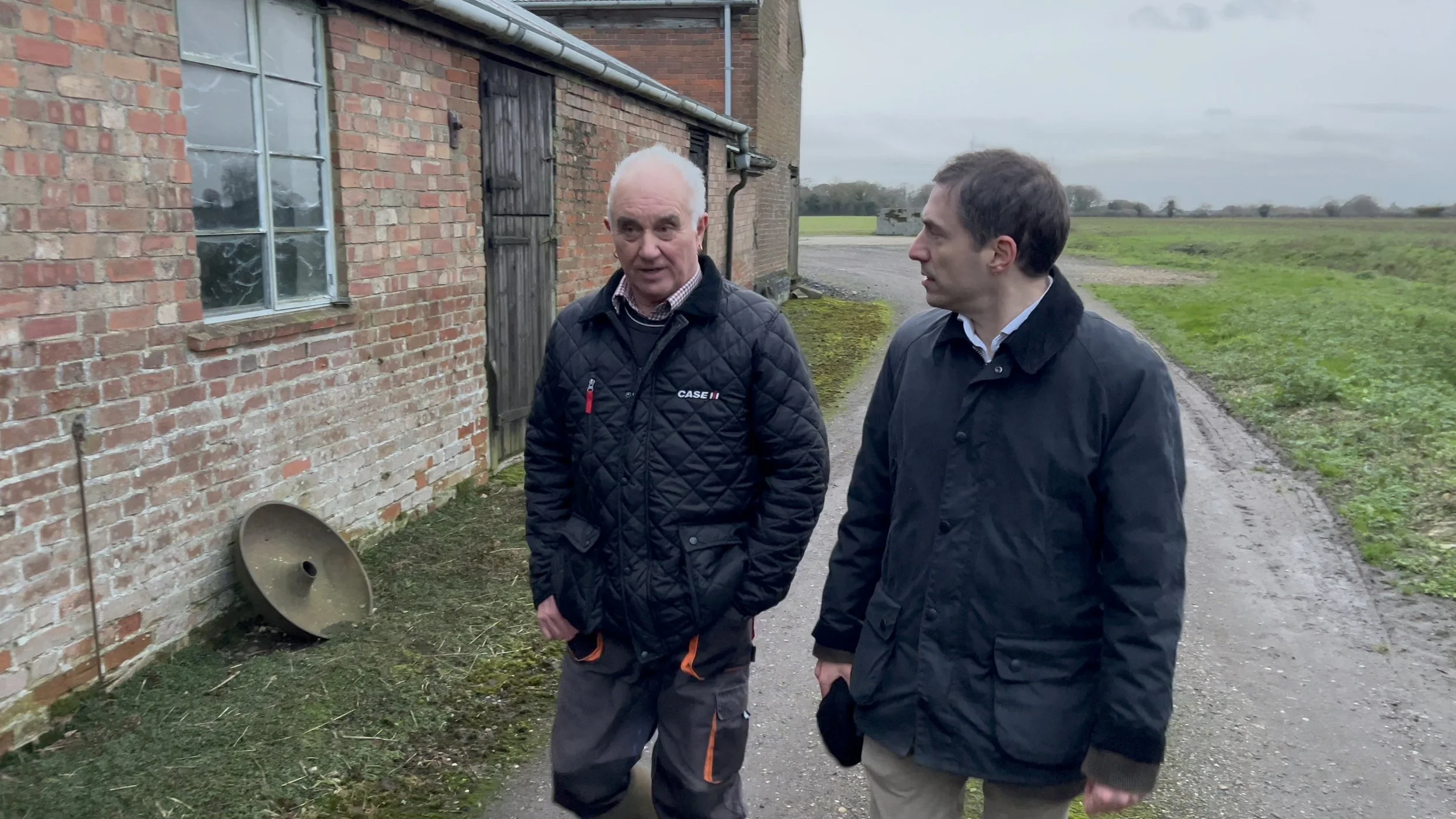
Adrian Ramsay MP Urges Government to Restore Trust After Abrupt SFI Withdrawal
Adrian Ramsay MP, Co-Leader of the Green Party of England and Wales and Member of Parliament for Waveney Valley, has raised serious concerns about the Government’s handling of the Sustainable Farming Incentive (SFI), following its abrupt and unexplained withdrawal for new entrants earlier this year.
Speaking after meeting with farmers across Waveney Valley and writing to the Minister of State for Food Security and Rural Affairs, Adrian Ramsay MP said:
“Farmers in my constituency have told me they feel blindsided by the Government’s decision to close new applications to the SFI without any warning or consultation. Many had invested time, money, and energy into preparing for the scheme only to face sudden rejection and financial uncertainty. This has severely undermined trust in the Government.”
He continued:
“The SFI scheme is not perfect, but it offers a meaningful replacement for the EU’s CAP payments and to a future in which farmers could invest in the natural capital of their land. In one of the most nature-depleted countries in the world, this kind of support is essential for reversing catastrophic biodiversity loss. Without it, farmers say they may be forced to abandon environmental practices just to stay afloat.”
Adrian Ramsay has written to Daniel Zeichner MP, the responsible minister, seeking urgent answers on behalf of those affected. In his letter, he asked:
Will you confirm when the new eligibility criteria will be published?
What steps are you taking to prioritise farmers affected by the abrupt closure?
What reassurance can you give to those already in the SFI that they will be able to reapply in good time for future phases?
Can you guarantee that the full £2.4 billion annual farming budget will be protected through and beyond the Spending Review, so that Environmental Land Management schemes deliver on their promises for nature, food security, and rural livelihoods?
In closing Adrian Ramsay MP said, “The long-term success of environmental land management schemes should not be dictated by short-term Treasury pressures,” Ramsay added. “This is about protecting our countryside, strengthening rural livelihoods, and meeting our climate and biodiversity goals. Farmers deserve clarity — and a government that keeps its promises.”
ENDS
Joint letter sent to the Prime Minister re Alaa Abd el-Fattah
-
Dear Prime Minister,
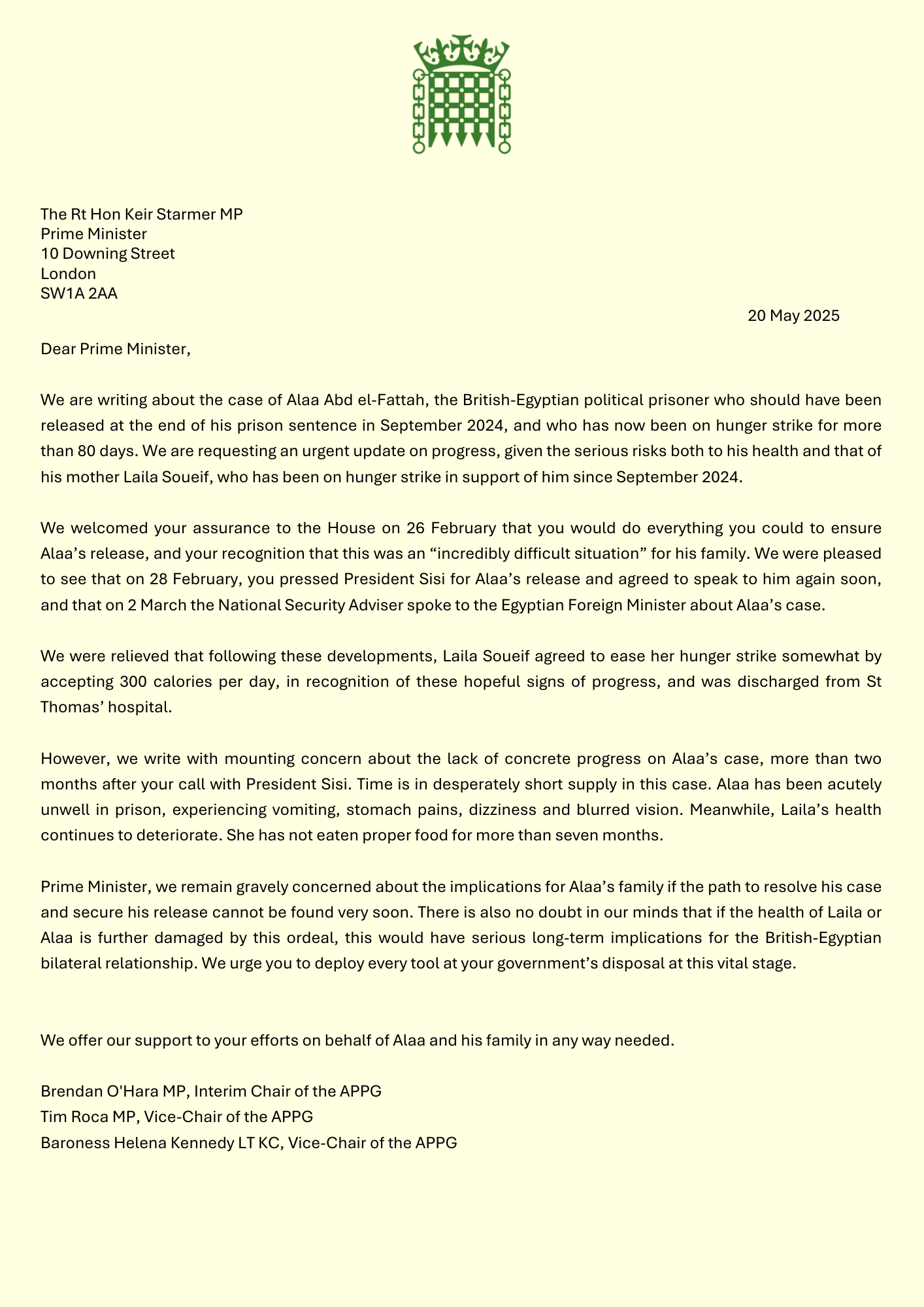
We are writing about the case of Alaa Abd el-Fattah, the British-Egyptian political prisoner who should have been released at the end of his prison sentence in September 2024, and who has now been on hunger strike for more than 80 days. We are requesting an urgent update on progress, given the serious risks both to his health and that of his mother Laila Soueif, who has been on hunger strike in support of him since September 2024.
We welcomed your assurance to the House on 26 February that you would do everything you could to ensure Alaa’s release, and your recognition that this was an “incredibly difficult situation” for his family. We were pleased to see that on 28 February, you pressed President Sisi for Alaa’s release and agreed to speak to him again soon, and that on 2 March the National Security Adviser spoke to the Egyptian Foreign Minister about Alaa’s case.
We were relieved that following these developments, Laila Soueif agreed to ease her hunger strike somewhat by accepting 300 calories per day, in recognition of these hopeful signs of progress, and was discharged from St Thomas’ hospital.
However, we write with mounting concern about the lack of concrete progress on Alaa’s case, more than two months after your call with President Sisi. Time is in desperately short supply in this case. Alaa has been acutely unwell in prison, experiencing vomiting, stomach pains, dizziness and blurred vision. Meanwhile, Laila’s health continues to deteriorate. She has not eaten proper food for more than seven months.
Prime Minister, we remain gravely concerned about the implications for Alaa’s family if the path to resolve his case and secure his release cannot be found very soon. There is also no doubt in our minds that if the health of Laila or Alaa is further damaged by this ordeal, this would have serious long-term implications for the British-Egyptian bilateral relationship. We urge you to deploy every tool at your government’s disposal at this vital stage.
We offer our support to your efforts on behalf of Alaa and his family in any way needed.
Brendan O'Hara MP, Interim Chair of the APPG
Tim Roca MP, Vice-Chair of the APPG
Baroness Helena Kennedy LT KC, Vice-Chair of the APPG
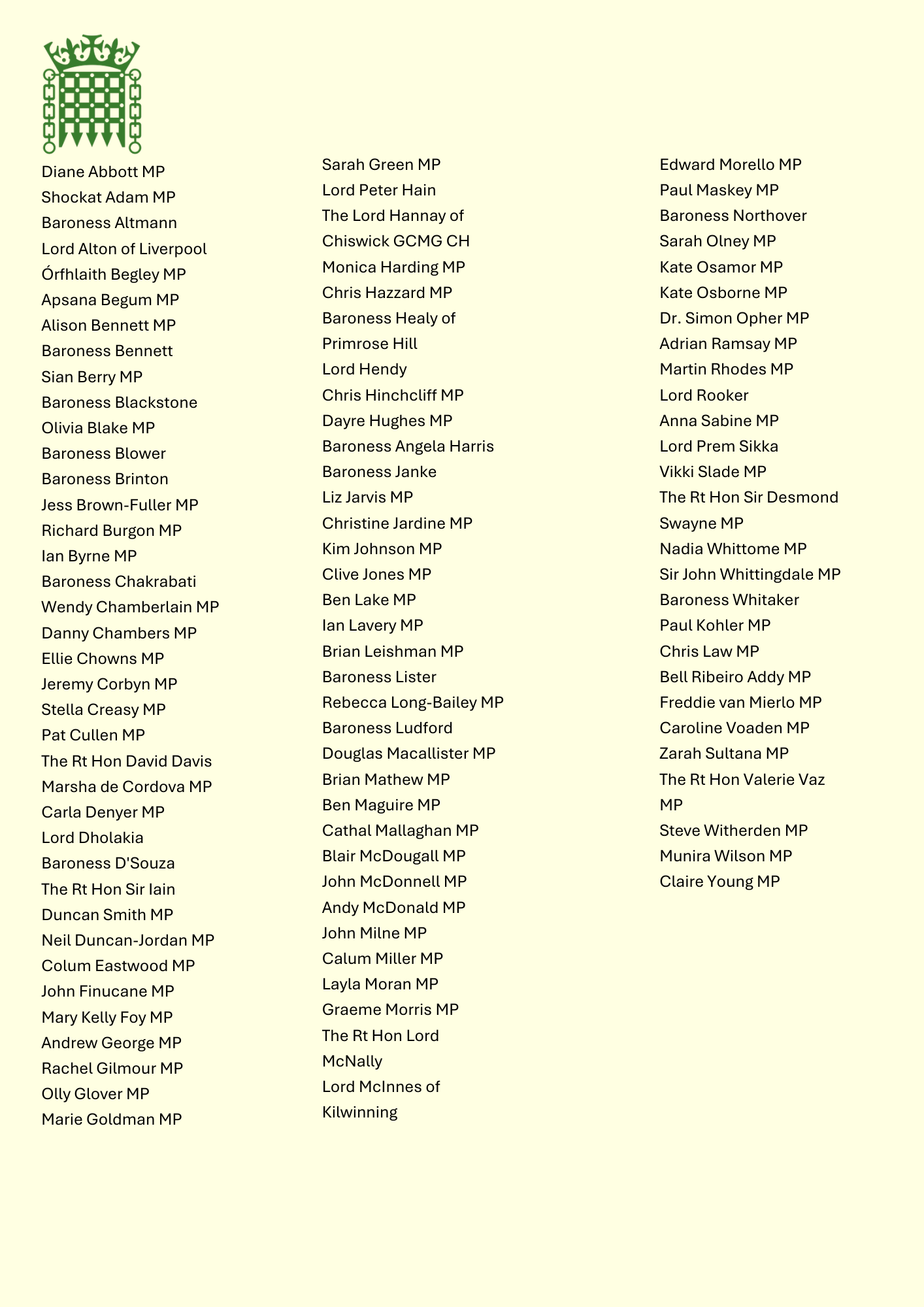
Diane Abbott MP
Shockat Adam MP
Baroness Altmann
Lord Alton of Liverpool
Órfhlaith Begley MP
Apsana Begum MP
Alison Bennett MP
Baroness Bennett
Sian Berry MP
Baroness Blackstone
Olivia Blake MP
Baroness Blower
Baroness Brinton
Jess Brown-Fuller MP
Richard Burgon MP
Ian Byrne MP
Baroness Chakrabati
Wendy Chamberlain MP
Danny Chambers MP
Ellie Chowns MP
Jeremy Corbyn MP
Stella Creasy MP
Pat Cullen MP
The Rt Hon David Davis
Marsha de Cordova MP
Carla Denyer MP
Lord Dholakia
Baroness D'Souza
The Rt Hon Sir Iain
Duncan Smith MP
Neil Duncan-Jordan MP
Colum Eastwood MP
John Finucane MP
Mary Kelly Foy MP
Andrew George MP
Rachel Gilmour MP
Olly Glover MP
Marie Goldman MP
Sarah Green MP
Lord Peter Hain
The Lord Hannay of
Chiswick GCMG CH
Monica Harding MP
Chris Hazzard MP
Baroness Healy of
Primrose Hill
Lord Hendy
Chris Hinchcliff MP
Dayre Hughes MP
Baroness Angela Harris
Baroness Janke
Liz Jarvis MP
Christine Jardine MP
Kim Johnson MP
Clive Jones MP
Ben Lake MP
Ian Lavery MP
Brian Leishman MP
Baroness Lister
Rebecca Long-Bailey MP
Baroness Ludford
Douglas Macallister MP
Brian Mathew MP
Ben Maguire MP
Cathal Mallaghan MP
Blair McDougall MP
John McDonnell MP
Andy McDonald MP
John Milne MP
Calum Miller MP
Layla Moran MP
Graeme Morris MP
The Rt Hon Lord
McNally
Lord McInnes of
Kilwinning
Edward Morello MP
Paul Maskey MP
Baroness Northover
Sarah Olney MP
Kate Osamor MP
Kate Osborne MP
Dr. Simon Opher MP
Adrian Ramsay MP
Martin Rhodes MP
Lord Rooker
Anna Sabine MP
Lord Prem Sikka
Vikki Slade MP
The Rt Hon Sir Desmond
Swayne MP
Nadia Whittome MP
Sir John Whittingdale MP
Baroness Whitaker
Paul Kohler MP
Chris Law MP
Bell Ribeiro Addy MP
Freddie van Mierlo MP
Caroline Voaden MP
Zarah Sultana MP
The Rt Hon Valerie Vaz
MP
Steve Witherden MP
Munira Wilson MP
Claire Young MP
Cuts to ELMS - and impact on NFM projects in constituency
-
19 May 2025
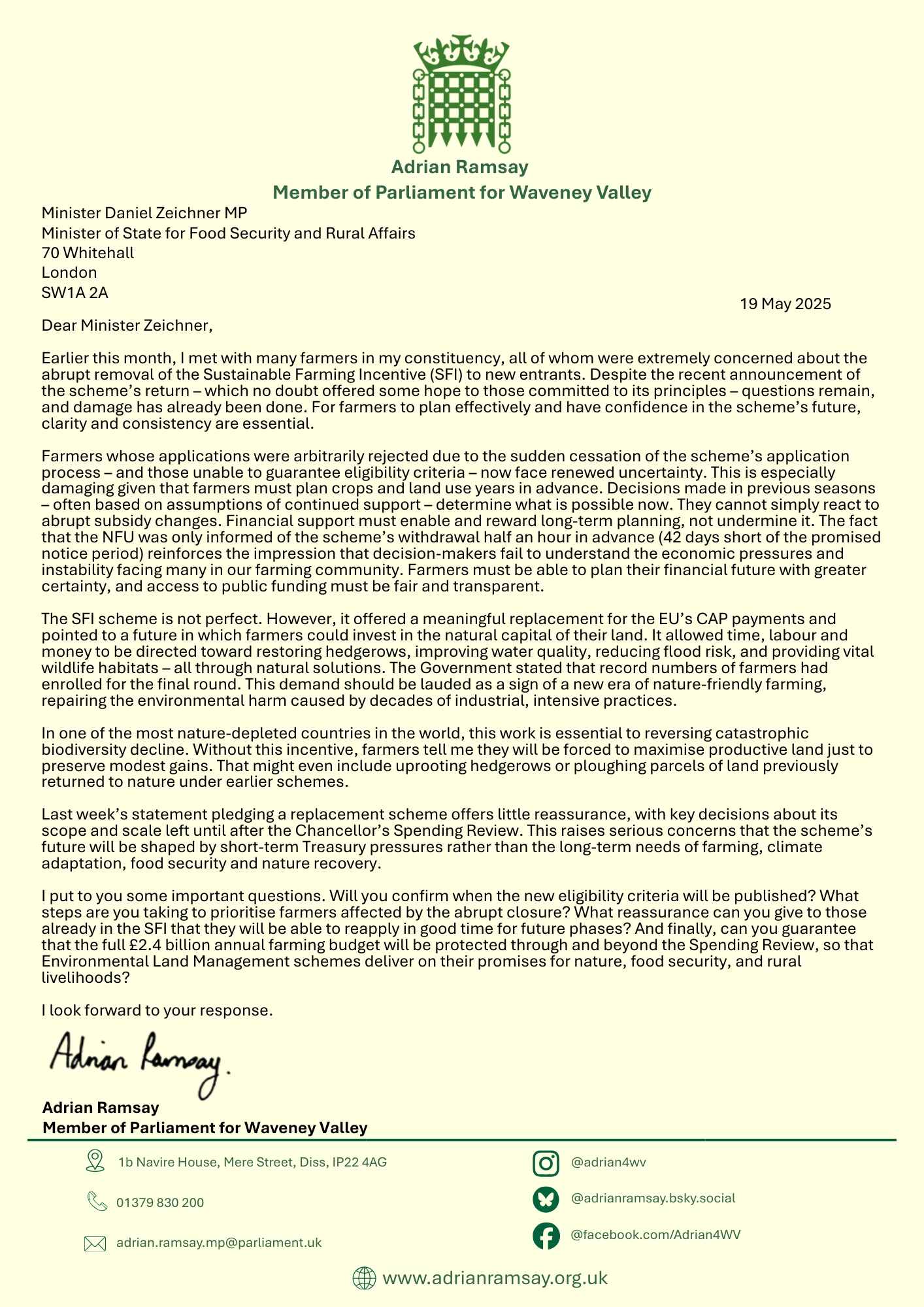
Dear Minister Zeichner,
Earlier this month, I met with many farmers in my constituency, all of whom were extremely concerned about
the abrupt removal of the Sustainable Farming Incentive (SFI) to new entrants. Despite the recent
announcement of the scheme’s return – which no doubt offered some hope to those committed to its principles
– questions remain, and damage has already been done. For farmers to plan effectively and have confidence
in the scheme’s future, clarity and consistency are essential.
Farmers whose applications were arbitrarily rejected due to the sudden cessation of the scheme’s application
process – and those unable to guarantee eligibility criteria – now face renewed uncertainty. This is especially
damaging given that farmers must plan crops and land use years in advance. Decisions made in previous
seasons – often based on assumptions of continued support – determine what is possible now. They cannot
simply react to abrupt subsidy changes. Financial support must enable and reward long-term planning, not
undermine it. The fact that the NFU was only informed of the scheme’s withdrawal half an hour in advance
(42 days short of the promised notice period) reinforces the impression that decision-makers fail to understand
the economic pressures and instability facing many in our farming community. Farmers must be able to plan
their financial future with greater certainty, and access to public funding must be fair and transparent.
The SFI scheme is not perfect. However, it offered a meaningful replacement for the EU’s CAP payments and
pointed to a future in which farmers could invest in the natural capital of their land. It allowed time, labour and
money to be directed toward restoring hedgerows, improving water quality, reducing flood risk, and providing
vital wildlife habitats – all through natural solutions. The Government stated that record numbers of farmers
had enrolled for the final round. This demand should be lauded as a sign of a new era of nature-friendly
farming, repairing the environmental harm caused by decades of industrial, intensive practices.
In one of the most nature-depleted countries in the world, this work is essential to reversing catastrophic
biodiversity decline. Without this incentive, farmers tell me they will be forced to maximise productive land
just to preserve modest gains. That might even include uprooting hedgerows or ploughing parcels of land
previously returned to nature under earlier schemes.
Last week’s statement pledging a replacement scheme offers little reassurance, with key decisions about its
scope and scale left until after the Chancellor’s Spending Review. This raises serious concerns that the
scheme’s future will be shaped by short-term Treasury pressures rather than the long-term needs of farming,
climate adaptation, food security and nature recovery.
I put to you some important questions. Will you confirm when the new eligibility criteria will be published?
What steps are you taking to prioritise farmers affected by the abrupt closure? What reassurance can you give
to those already in the SFI that they will be able to reapply in good time for future phases? And finally, can
you guarantee that the full £2.4 billion annual farming budget will be protected through and beyond the
Spending Review, so that Environmental Land Management schemes deliver on their promises for nature,
food security, and rural livelihoods?
I look forward to your response.
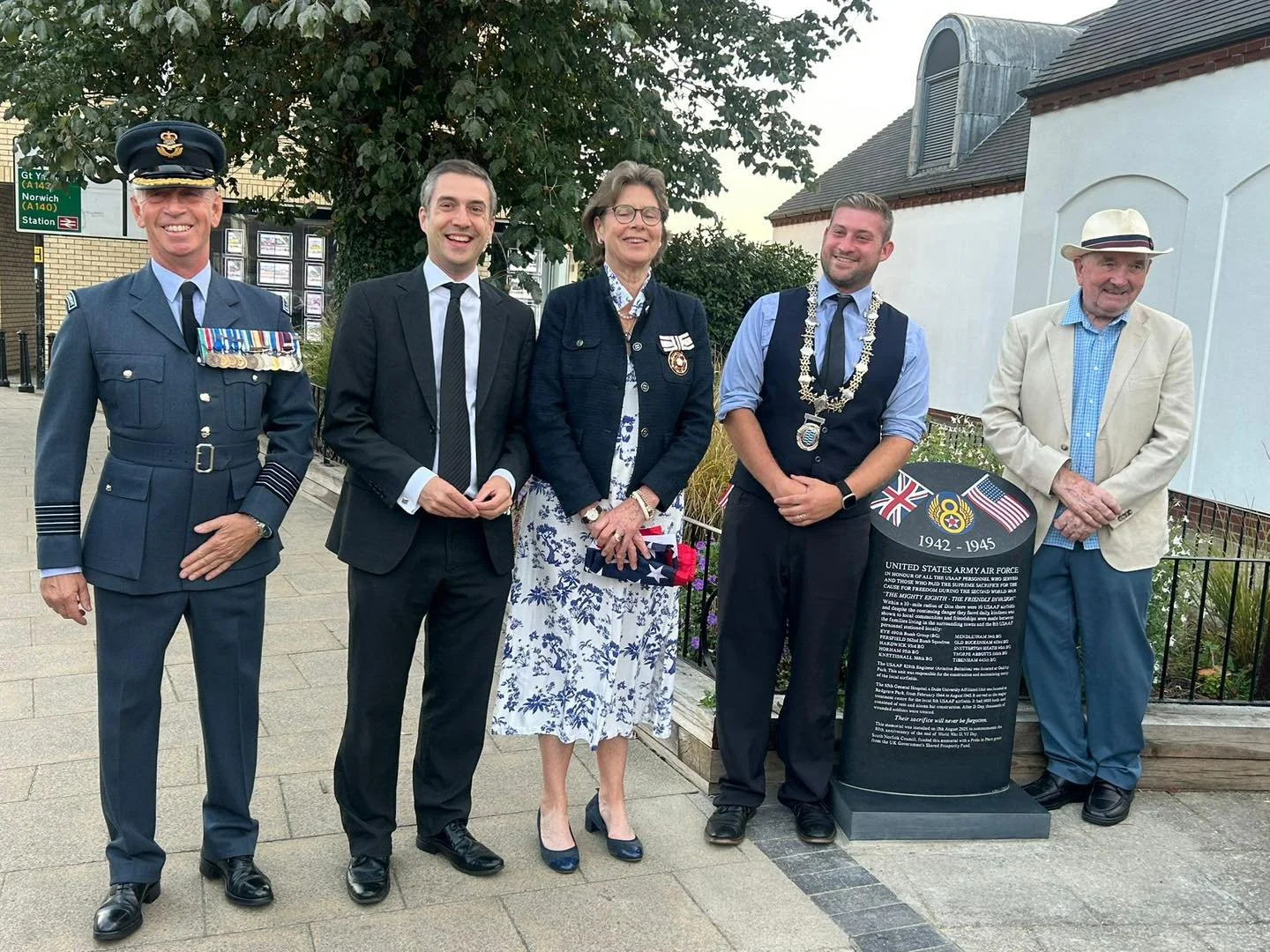
Adrian Ramsay MP Marks VE Day at Westminster Abbey and Across Waveney Valley
12th of May 2025
Adrian Ramsay MP, Co-Leader of the Green Party of England and Wales and Member of Parliament for Waveney Valley, marked VE Day by attending the national commemoration ceremony at Westminster Abbey, followed by local events across his constituency.
Adrian Ramsay MP said:
“It was an enormous honour to represent the Green Party at Westminster Abbey to mark 80 years since the end of the Second World War in Europe. VE Day is a time to reflect on the significant sacrifices made in the pursuit of peace. As we commemorate that hard-won peace, I am reminded that we, as Members of Parliament, have a duty to promote and protect peace in the world today.”
Later that evening, Adrian joined residents at events in Diss and Harleston to commemorate VE Day locally:
"It was a privilege to attend VE Day events in Diss and Harleston, following the ceremony at Westminster Abbey. It brought home the fact that, at its heart, VE Day is about community and remembrance. Eighty years ago, people across the country came together to celebrate the end of the war with their neighbours, while also mourning the fallen who made the ultimate sacrifice. I was proud to stand alongside our communities in Diss and Harleston as they gathered once again in that same spirit. As we honour the past, it is also a moment to reflect on the enduring values of peace, unity, and resilience."
ENDS
Cross Party Letter re Nature Protection
-
Dear Angela,
We are writing in response to the Government’s recent impact assessment of the Planning and Infrastructure Bill, which finds that there is almost no evidence that existing environmental protections have significantly impeded development. This directly undermines the core justification Ministers have used to weaken safeguards for nature— namely, that they hinder house building and infrastructure delivery.
The publication of this impact assessment confirms what many of us across parties have long argued: the notion that nature and development are in fundamental conflict is reductive, misleading, and unhelpful.
The framing of housing versus nature is a false choice, and one that distracts from the pressing issues we must address to achieve sustainable and affordable development. We believe it is not only possible but essential to deliver the affordable homes and national infrastructure people need in a way that works with nature, not against it. Our planning system should support thriving ecosystems, climate resilience, and access to green space—not treat them as secondary concerns to be compromised.
The Government’s own analysis makes it clear that the current version of the Planning and Infrastructure Bill fails to meet this test. This concern is echoed by the Office for Environmental Protection, whose legal opinion warns that the Bill in its current form would remove critical safeguards for nature and put protected sites at risk.
Together, these assessments highlight the danger of entrenching short-term thinking at the expense of long-term social, environmental, and economic resilience. Those dangers are particularly apparent this spring—confirmed by the Environment Agency as the driest start to the season since 1956—with rivers running dry and farmers expressing concern about how they will keep crops watered. We cannot afford to ride roughshod over the increasingly fragile natural world we all depend on.
We urge you to champion a more constructive approach—one that aligns ambition for house building and infrastructure with a genuine commitment to nature protection. In this Bill, you have a powerful opportunity to set a different direction and show that strong environmental standards are not a barrier to progress, but a foundation for it.
We would welcome the chance to meet and discuss how we might work across parties to secure a planning system that delivers for both people and nature.
Dear Angela,
We are writing in response to the Government’s recent impact assessment of the Planning and Infrastructure Bill, which finds that there is almost no evidence that existing environmental protections have significantly impeded development. This directly undermines the core justification Ministers have used to weaken safeguards for nature— namely, that they hinder house building and infrastructure delivery.
The publication of this impact assessment confirms what many of us across parties have long argued: the notion that nature and development are in fundamental conflict is reductive, misleading, and unhelpful.
The framing of housing versus nature is a false choice, and one that distracts from the pressing issues we must address to achieve sustainable and affordable development. We believe it is not only possible but essential to deliver the affordable homes and national infrastructure people need in a way that works with nature, not against it. Our planning system should support thriving ecosystems, climate resilience, and access to green space—not treat them as secondary concerns to be compromised.
The Government’s own analysis makes it clear that the current version of the Planning and Infrastructure Bill fails to meet this test. This concern is echoed by the Office for Environmental Protection, whose legal opinion warns that the Bill in its current form would remove critical safeguards for nature and put protected sites at risk.
Together, these assessments highlight the danger of entrenching short-term thinking at the expense of long-term social, environmental, and economic resilience. Those dangers are particularly apparent this spring—confirmed by the Environment Agency as the driest start to the season since 1956—with rivers running dry and farmers expressing concern about how they will keep crops watered. We cannot afford to ride roughshod over the increasingly fragile natural world we all depend on.
We urge you to champion a more constructive approach—one that aligns ambition for house building and infrastructure with a genuine commitment to nature protection. In this Bill, you have a powerful opportunity to set a different direction and show that strong environmental standards are not a barrier to progress, but a foundation for it.
We would welcome the chance to meet and discuss how we might work across parties to secure a planning system that delivers for both people and nature.
Adrian Ramsay MP co-signed this cross-party letter initiated by Dr Ellie Chowns MP.
Letter to the Secretary of State for Transport to ensure that the upcoming Integrated National Transport Strategy delivers for people
-
The Rt Hon Heidi Alexander MP
Secretary of State for Transport
By Email
May 2025
Dear Heidi,
We are writing to you about the urgent need for the government to rethink its transport priorities and to ensure that the upcoming Integrated National Transport Strategy delivers for people, communities and the climate. It is not fair that, because of a broken transport system, so many people are paying through the nose to get to work or simply can’t get to the shops by public transport.
Under our current transport system—particularly in rural areas where public transport is sparse or non-existent—many people are relying on cars not out of choice, but because they have no alternative. We urgently need to plan a transport future that prioritises people over cars.
We believe that your Department’s Transport Strategy is an opportunity to change that by providing reliable, affordable and low-carbon options, thereby giving people a genuine choice in how they travel. This will only be possible if the strategy is also accompanied by the significant investment needed to create accessible and sustainable alternatives to car travel in areas that do not already have them.
Where public transport infrastructure is in place, it is increasingly unaffordable. Train travel has become a luxury, and the price of fares has made regular bus travel inaccessible for many, made worse by your government’s decision to scrap the £2 bus fare. If we want people to choose sustainable travel, it has to be the cheapest and most convenient option. That means shifting investment away from road expansion and into properly funded, affordable and accessible public transport for all.
The Transport Strategy must set clear targets to increase the number of journeys made using clean and healthy modes of transport—such as walking, wheeling, cycling and public, shared or public transport—whether used alone or in combination, with the aim of making these options not only more affordable but also more convenient than driving wherever possible.
It must include commitments for central government to work closely with local authorities to give them the necessary support and confidence to plan for safer and more accessible walking in their areas. It should also provide the investment needed to develop cycling infrastructure that supports safe journeys by bike for everyone from 8 to 80 years old, and which forms part of a joined-up transport network.
We urge you to ensure that the Transport Strategy addresses the injustices embedded in our current car-dependent transport system by:
(i) delivering reliable public transport services in rural and underserved areas;
(ii) reducing the unequal burden of pollution and road danger on low-income communities;
(iii) ensuring all transport infrastructure and services are fully accessible;
(iv) increasing participation in active travel among groups currently underrepresented but likely to benefit most, such as disabled people and those with health conditions.
We further urge you to develop the Strategy with a clear recognition that a well-functioning transport system is essential to achieving net zero targets and cutting air pollution in line with what the scientific and health evidence demands. According to the government’s most recent statistics, cars, trucks and vans accounted for 28% of total domestic greenhouse gas (GHG) emissions. These vehicles produced twice as many total GHG emissions as from all fossil fuels burned to generate electricity in the UK during the same period. Building an integrated transport system with affordable, accessible and varied options is essential to reducing both car reliance and cutting emissions, easing pressure on both people and planet.
As well as the benefits to individuals, communities and the environment, transport investment provides excellent value for money, aligning with your government’s core mission of economic growth. Every £1 the government spends on bus services and infrastructure returns £4.55 in economic benefit; and for every £1 spent on the rail network, £2.50 value is delivered in the wider economy.
Road building, by contrast, increases congestion, which is estimated to cost the UK economy £7.5 billion every year in lost productivity. It’s therefore especially worrying that according to recent reports, the new £3 bus cap is going to be scrapped—and we hope you will work hard to get the Chancellor to protect this lifeline by making a strong case for the wider economic benefits.
We hope you will acknowledge that including clear and effective measures to encourage a modal shift in the Transport Strategy would support a strong economy while addressing many of the most immediate crises your government is tackling, including pollution, road danger, inactivity-related ill-health, energy dependence, and the climate emergency.
As the lead on transport within our Parliamentary group, Sian would like to meet with you to explore this further. We would be grateful if you would make time for this discussion.
We look forward to your response.
Adrian Ramsay MP co-signed this cross-party letter along with Sian Berry MP, Carla Denyer MP and Dr Ellie Chowns MP.
Open letter to DEFRA Minister on issue of male chick cullingInbox
-
Adrian Ramsay MP co-signed this cross-party letter initiated by The Vegetarian Society.
Dear Minister,
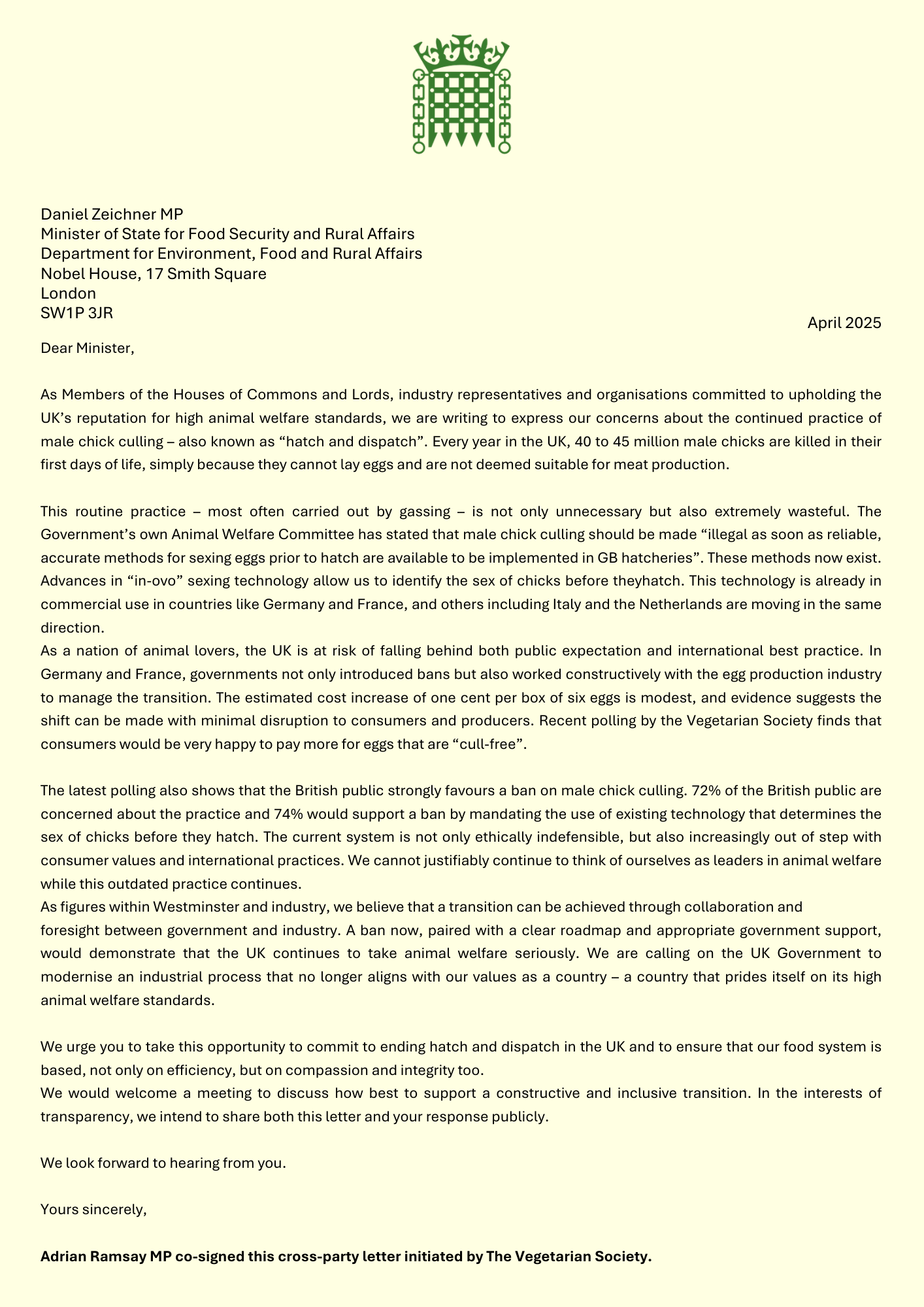
As Members of the Houses of Commons and Lords, industry representatives and organisations committed to upholding the UK’s reputation for high animal welfare standards, we are writing to express our concerns about the continued practice of male chick culling – also known as “hatch and dispatch”. Every year in the UK, 40 to 45 million male chicks are killed in their first days of life, simply because they cannot lay eggs and are not deemed suitable for meat production.
This routine practice – most often carried out by gassing – is not only unnecessary but also extremely wasteful. The Government’s own Animal Welfare Committee has stated that male chick culling should be made “illegal as soon as reliable, accurate methods for sexing eggs prior to hatch are available to be implemented in GB hatcheries”. These methods now exist. Advances in “in-ovo” sexing technology allow us to identify the sex of chicks before theyhatch. This technology is already in commercial use in countries like Germany and France, and others including Italy and the Netherlands are moving in the same direction.
As a nation of animal lovers, the UK is at risk of falling behind both public expectation and international best practice. In Germany and France, governments not only introduced bans but also worked constructively with the egg production industry to manage the transition. The estimated cost increase of one cent per box of six eggs is modest, and evidence suggests the shift can be made with minimal disruption to consumers and producers. Recent polling by the Vegetarian Society finds that consumers would be very happy to pay more for eggs that are “cull-free”.
The latest polling also shows that the British public strongly favours a ban on male chick culling. 72% of the British public are concerned about the practice and 74% would support a ban by mandating the use of existing technology that determines the sex of chicks before they hatch. The current system is not only ethically indefensible, but also increasingly out of step with consumer values and international practices. We cannot justifiably continue to think of ourselves as leaders in animal welfare while this outdated practice continues.
As figures within Westminster and industry, we believe that a transition can be achieved through collaboration and
foresight between government and industry. A ban now, paired with a clear roadmap and appropriate government support, would demonstrate that the UK continues to take animal welfare seriously. We are calling on the UK Government to modernise an industrial process that no longer aligns with our values as a country – a country that prides itself on its high animal welfare standards.
We urge you to take this opportunity to commit to ending hatch and dispatch in the UK and to ensure that our food system is based, not only on efficiency, but on compassion and integrity too.
We would welcome a meeting to discuss how best to support a constructive and inclusive transition. In the interests of transparency, we intend to share both this letter and your response publicly.
We look forward to hearing from you.
Yours sincerely,
Adrian Ramsay MP co-signed this cross-party letter initiated by The Vegetarian Society.

"We are woefully unprepared for the impacts of climate breakdown"
30 April 2025.
Adrian Ramsay, MP for Waveney Valley and Co-leader of the Green Party of England and Wales said "We are woefully unprepared for the impacts of climate breakdown"
Reacting to the Climate Change Committee Adaptation Progress Report Adrian Ramsay MP said;
The Climate Change Committee report could not be clearer: We are woefully unprepared for the impacts of climate breakdown as a country.
I urge the Government to fully implement the Climate Change Committee’s recommendations and produce a comprehensive plan to prepare for increasingly extreme weather events.
I've called on the Chancellor to ensure that the spending review allows for an additional £7 billion per year in climate adaptation and resilience funding. This investment is critical to protecting vital public infrastructure and ensuring that essential services like transport, energy, and healthcare can continue to function as climate impacts intensify.
The CCC highlights that over half of England’s top-quality agricultural land is already at risk of flooding, jeopardising our food security. Meanwhile, a third of our railways are at risk from flooding and extreme heat; without serious investment, we risk widespread disruption and failure of services that people rely on daily. The Government must act now to future-proof the UK’s infrastructure and protect communities from the worsening impacts of the climate crisis.
Alongside decarbonising our economy to meet net-zero goals, the Government is responsible for protecting our communities from climate impacts. That means acting now.
Adrian Ramsay, MP for Waveney Valley, Urges the Government to Increase Funding for Rural Schools.
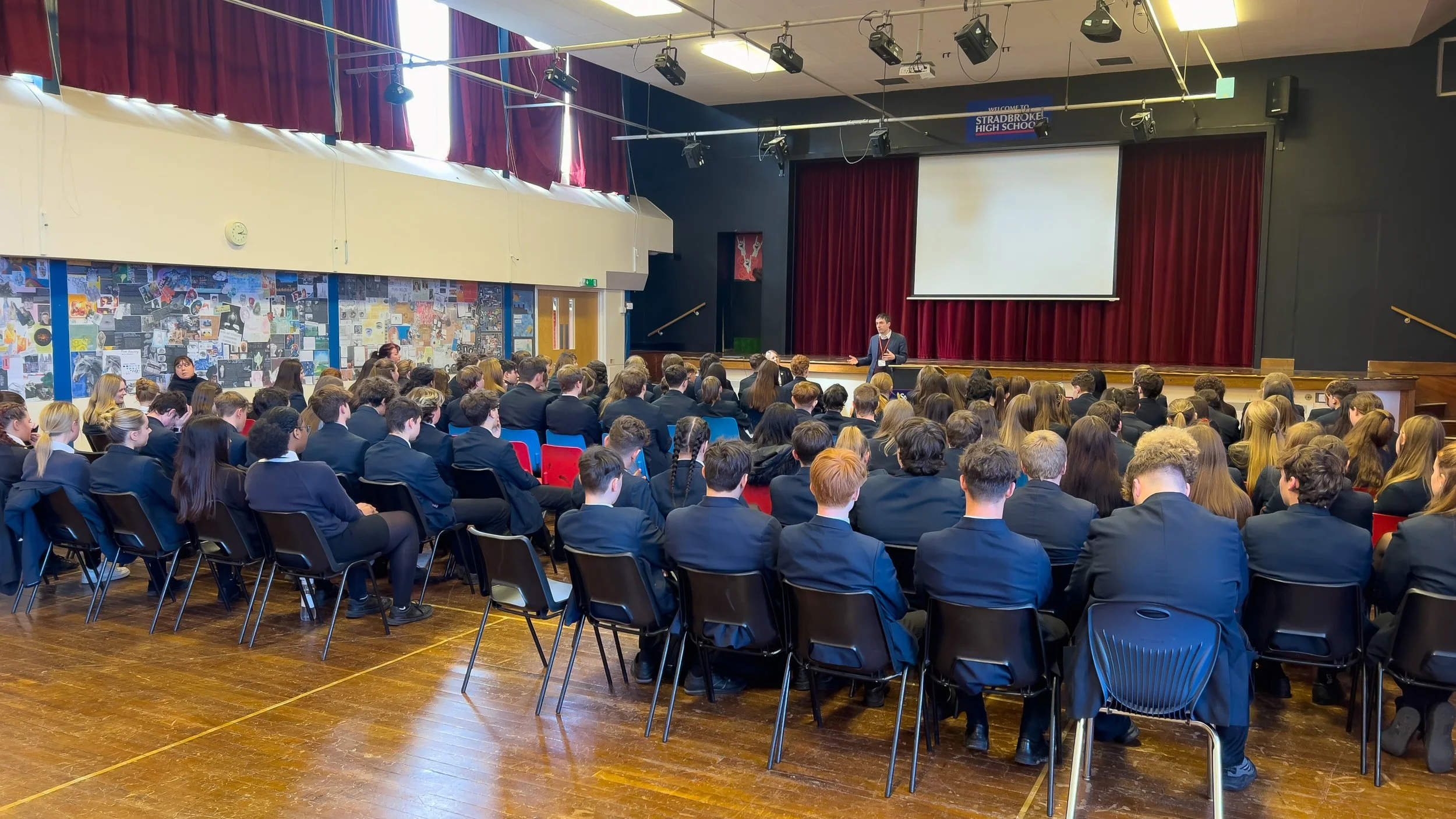
Adrian Ramsay, MP for Waveney Valley, Urges the Government to Increase Funding for Rural Schools.
Adrian Ramsay MP has called on the Secretary of State for Education to urgently address the funding crisis affecting rural schools in Norfolk and Suffolk.
In a letter sent to the Secretary of State for Education, Adrian Ramsay MP highlighted the mounting challenges schools in the Waveney Valley face due to insufficient funding.
Waring that "Schools are struggling to maintain the same level of educational provision with reduced resources."
He continued, "While national pay rises for staff are to be welcomed, the fact that they have been only partly funded by the government is putting further pressure on school budgets, resulting in a reduced staffing model, larger class sizes, and diminished support for students. Schools are facing difficult decisions about staffing levels, redundancies, and service reductions, along with the concomitant impact on staff wellbeing and morale."
The letter also pointed to the deteriorating condition of school buildings, saying, "I am aware of one school which has a leaking science block roof. This has been a health and safety risk while negatively impacting lesson delivery and student morale."
ENDS
Call for review, update and consolidation of wildlife law
-
The Rt Hon Steve Reed OBE MP
Secretary of State for Environment, Food and Rural Affairs
Cc Mary Creagh MP
Parliamentary Under-Secretary of State for Environment, Food and Rural Affairs
Cc Baroness Hayman of Ullock
Parliamentary Under-Secretary of State for Environment, Food and Rural Affairs
Dear Secretary of State,
RE: Call for review, update and consolidation of wildlife law
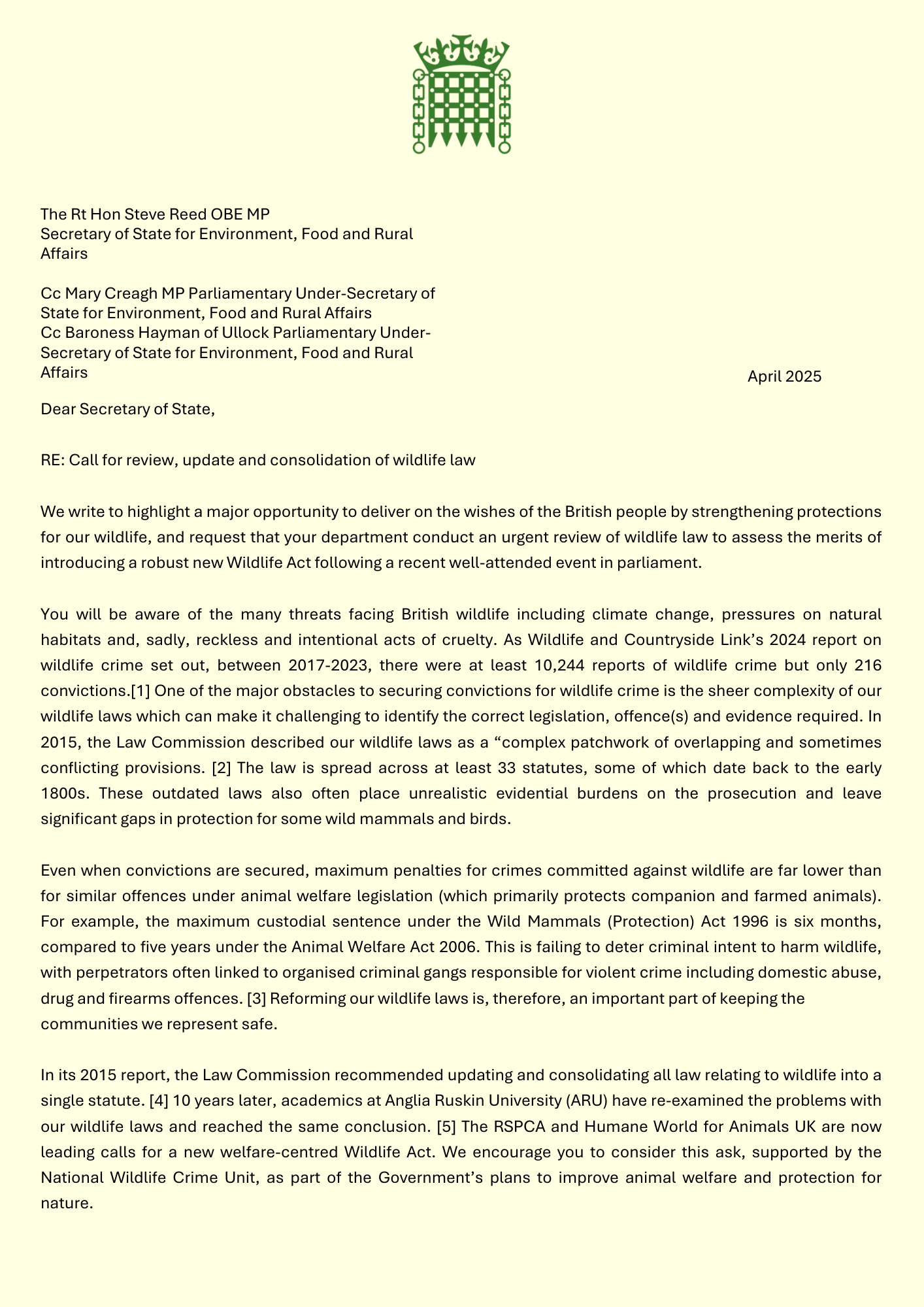
We write to highlight a major opportunity to deliver on the wishes of the British people by
strengthening protections for our wildlife, and request that your department conduct an urgent
review of wildlife law to assess the merits of introducing a robust new Wildlife Act following a
recent well-attended event in parliament.
You will be aware of the many threats facing British wildlife including climate change, pressures
on natural habitats and, sadly, reckless and intentional acts of cruelty. As Wildlife and
Countryside Link’s 2024 report on wildlife crime set out, between 2017-2023, there were at least
10,244 reports of wildlife crime but only 216 convictions.[1] One of the major obstacles to
securing convictions for wildlife crime is the sheer complexity of our wildlife laws which can
make it challenging to identify the correct legislation, offence(s) and evidence required. In 2015,
the Law Commission described our wildlife laws as a “complex patchwork of overlapping and
sometimes conflicting provisions. [2] The law is spread across at least 33 statutes, some of which
date back to the early 1800s. These outdated laws also often place unrealistic evidential
burdens on the prosecution and leave significant gaps in protection for some wild mammals and
birds.
Even when convictions are secured, maximum penalties for crimes committed against wildlife
are far lower than for similar offences under animal welfare legislation (which primarily protects
companion and farmed animals). For example, the maximum custodial sentence under the Wild
Mammals (Protection) Act 1996 is six months, compared to five years under the Animal Welfare
Act 2006. This is failing to deter criminal intent to harm wildlife, with perpetrators often linked to
organised criminal gangs responsible for violent crime including domestic abuse, drug and
firearms offences. [3] Reforming our wildlife laws is, therefore, an important part of keeping the
communities we represent safe.
In its 2015 report, the Law Commission recommended updating and consolidating all law
relating to wildlife into a single statute. [4] 10 years later, academics at Anglia Ruskin University
(ARU) have re-examined the problems with our wildlife laws and reached the same
conclusion. [5] The RSPCA and Humane World for Animals UK are now leading calls for a new
welfare-centred Wildlife Act. We encourage you to consider this ask, supported by the National
Wildlife Crime Unit, as part of the Government’s plans to improve animal welfare and protection
for nature.
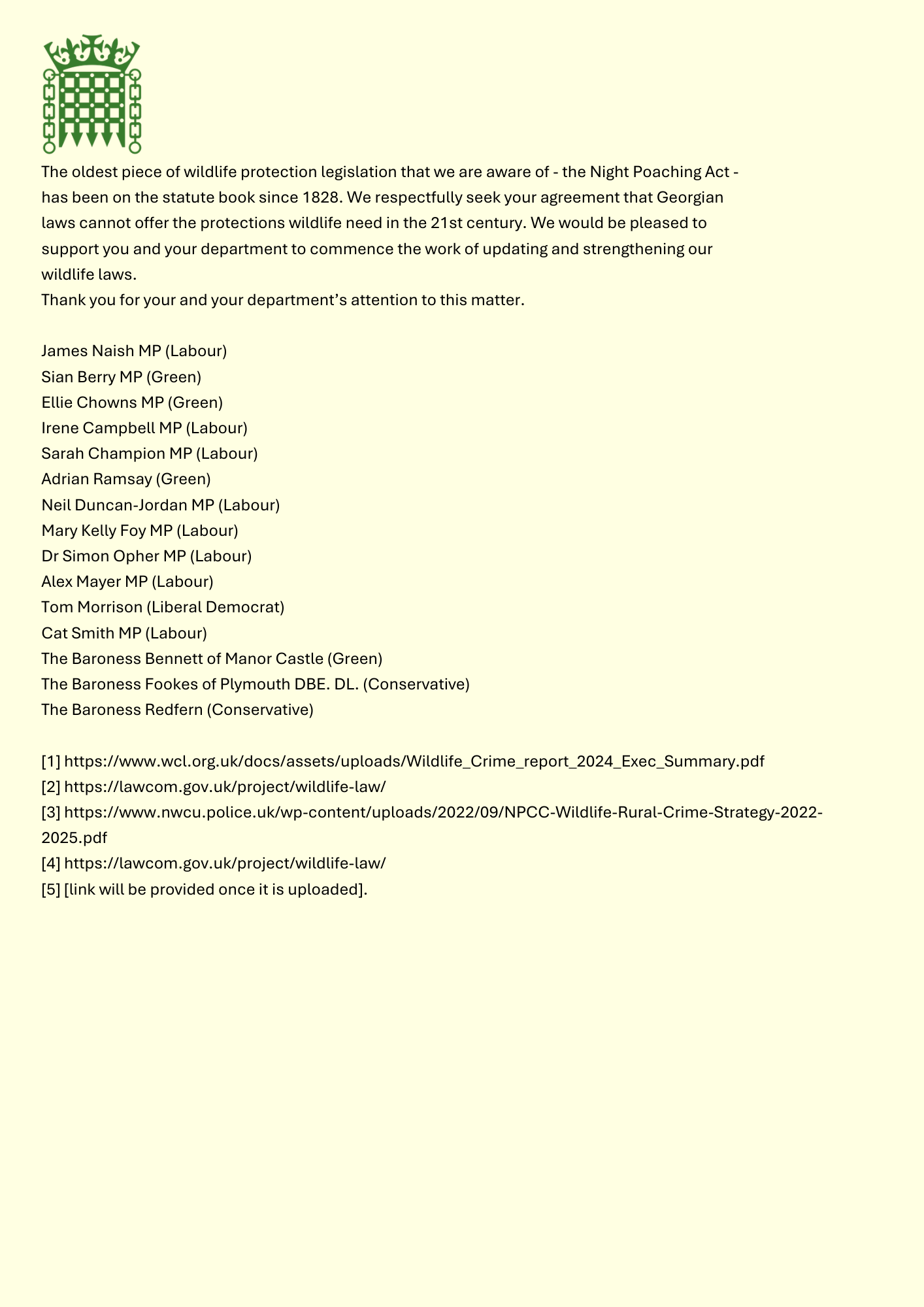
The oldest piece of wildlife protection legislation that we are aware of - the Night Poaching Act -
has been on the statute book since 1828. We respectfully seek your agreement that Georgian
laws cannot offer the protections wildlife need in the 21st century. We would be pleased to
support you and your department to commence the work of updating and strengthening our
wildlife laws.
Thank you for your and your department’s attention to this matter.
James Naish MP (Labour)
Sian Berry MP (Green)
Ellie Chowns MP (Green)
Irene Campbell MP (Labour)
Sarah Champion MP (Labour)
Adrian Ramsay (Green)
Neil Duncan-Jordan MP (Labour)
Mary Kelly Foy MP (Labour)
Dr Simon Opher MP (Labour)
Alex Mayer MP (Labour)
Tom Morrison (Liberal Democrat)
Cat Smith MP (Labour)
The Baroness Bennett of Manor Castle (Green)
The Baroness Fookes of Plymouth DBE. DL. (Conservative)
The Baroness Redfern (Conservative)
[1] https://www.wcl.org.uk/docs/assets/uploads/Wildlife_Crime_report_2024_Exec_Summary.pdf
[2] https://lawcom.gov.uk/project/wildlife-law/
[3] https://www.nwcu.police.uk/wp-content/uploads/2022/09/NPCC-Wildlife-Rural-Crime-Strategy-2022-
2025.pdf
[4] https://lawcom.gov.uk/project/wildlife-law/
[5] [link will be provided once it is uploaded].
Letter to the Secretary of State for Education on school funding
-
The Right Honourable Bridget Phillipson MP
Secretary of State for Education
Department for Education
Sanctuary Buildings
Great Smith Street
London
SW1P 3BTOur Ref: AR03094
23 April 2025
Dear Secretary of State,
I am writing to express my concerns about the inadequate level of funding available for schools in my constituency. I request that the Government explores options to increase that funding and to ensure that pupils in my constituency are able to access the education that they need and deserve. I would particularly like to highlight the following issues which are particularly affecting rural schools in Norfolk and Suffolk.
Real-Term Budget Reductions:
Ongoing economic challenges and rising inflation have increased operational costs, while funding has not kept pace. Schools are struggling to maintain the same level of educational provision with reduced resources. While national pay rises for staff are to be welcomed, the fact that they have been only partly funded by government is putting further pressure on school budgets, resulting in a reduced staffing model, larger class sizes, and diminished support for students. Schools are facing difficult decisionsabout staffing levels, redundancies, and service reductions along with the concomitant impact on staff wellbeing and morale.
Lack of Capital Spending on Physical Infrastructure:
School buildings are increasingly difficult to maintain as they age. They require substantial maintenance and repair, but there is insufficient capital investment to address these needs. I am aware of one school which has a leaking science block roof. This has been a health and safety risk while negatively impacting lesson delivery and student morale. Additionally, rising energy costs are placing further strain on school budgets and aging heating systems are leaving pupils cold during some lessons. Adequate funding for critical maintenance and repairs is essential to ensure that students can learn in a safe, secure, and comfortable environment.
Insufficient SEND funding:
Schools have seen a significant rise in the number of students with special educational needs, but the funding allocated for SEND support has not kept pace with the growing demand. This shortfall hinders the ability of a school to provide appropriate staffing, resources, and specialized interventions. Without sufficient funding, schools in rural areas like the Waveney Valley struggle to secure the expertise and support that every child with SEND deserves.
Reduction of Support Services and Increased Waiting Times:
Vulnerable students requiring support services such as CAMHS and SEN assessments are facing extended waiting times, negatively impacting their education and well-being. Meanwhile, the number of students requiring Education, Health, and Care Plans (EHCPs) has risen, but funding for SEND support has not increased accordingly. Local authorities are struggling to meet their statutory obligations, leaving schools to supplement inadequate SEND funding from their core budgets, which is simply not sustainable. While the focus is rightly on supporting children to be in mainstream schools as far as possible, this situation is compounded by a lack of alternative provision for those students for whom the traditional classroom environment is not beneficial.
In summary, schools in Waveney Valley need increased capital funding to repair and upgrade their aging buildings, additional SEND funding and specialized support services so that all learners, regardless of their needs, have fair access to education, and improved alternative provision. Meanwhile, core budgets for staffing and operational costs need to be protected to ensure that the basic needs of pupils can be met.
I hope you will consider these points carefully and expand funding for rural schools.
Yours sincerely,
Adrian Ramsay MP
Member of Parliament for Waveney Valley
Calling for the UK Government to support a United Nations Convention on the Rights of Older Persons
-
Dear Secretary of State for Foreign, Commonwealth and Development Affairs,
We, the undersigned, are writing to express our support for the creation of a new United Nations Convention on the Rights of Older Persons, and to call on you to offer your support as well.
As you may be aware, the need for strengthening the protection of the rights of older persons has been agreed by UN Member States, UN Agencies, National Human Rights Institutions, civil society organisations, experts, and importantly, older persons themselves. The UN Open-Ended Working Group on Ageing agreed by consensus, after 14 years of evidence gathering, that gaps in the protections of older persons’ rights exist internationally, and that an internationally binding human rights instrument should be among the responses to those gaps. You may also be aware that this understanding was further reinforced by a UN General Assembly Resolution in August 2024 that accepted the Open-Ended Working Group on Ageing’s decision by consensus and invited other bodies of the UN to consider and act upon its findings.
As a result of this, it is now anticipated that a resolution will be put to the 58th Session of the Human Rights Council (expected to take place February – March 2025) to agree a process for drafting the contents of a Convention on the Rights of Older Persons.
Therefore, in your capacity as Secretary of State for Foreign, Commonwealth and Development Affairs, we would like to ask you to support this internationally agreed treaty. Establishing a global minimum standard of legal protections for older people is essential to ensuring the rights of older people are protected. While many Member States may already have domestic legal protections in place for the rights of older people that exceed those set forth in this Convention, their role in providing universality and clarity cannot be ignored. It is therefore our belief that the United Kingdom should be forthcoming and enthusiastic in our support for a new United Nations Convention on the Rights of Older Persons.
We have much to be proud of in the United Kingdom when it comes to respecting and protecting older persons, from institutions such as the NHS, which offers comprehensive care from cradle to grave, to our state pension system. Indeed, it is a point of pride for many in the UK that if one has worked their life, then as they age, they can expect to enjoy security in their older years. As a nation that upholds these values and institutions, it is only right that we offer our support to this new United Nations Convention on the Rights of Older Persons. To that end, we urge you to support this convention.
We look forward to your response.
Yours sincerely,
Adrian Ramsay MP co-signed this cross-party letter initiated by Blair McDougall MP.
Secretary of State for Health and Social Care refuses to commit that there will not be cuts in frontline services
13th of March 2025
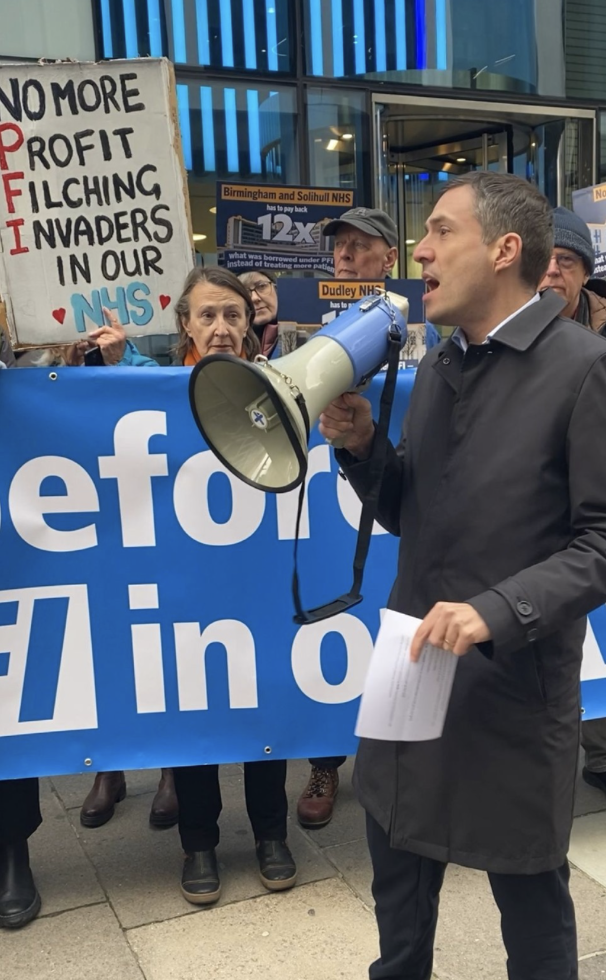
Secretary of State for Health and Social Care refuses to commit that there will not be cuts in frontline services
Today Adrian Ramsay, Co-Leader of the Green Party of England and Wales and MP for Waveney Valley, asked the government to reassure the House that concerning media reports in the last week—suggesting plans for £7 billion of cuts to services and for ICBs to be asked to cut costs by 50%—will not result in cuts to frontline services.
Adrian Ramsay MP said:
“We currently have a situation where patients are being treated in corridors, staff are severely overstretched, and too many people can't get access to a GP and dentist when they need one.
So it's in that context that I read with concern in the media in the last week plans for there to be £7 billion of cuts to services, for ICBs to be asked to cut costs by 50%. So can the Secretary of State give us reassurance that as we go into the new financial year, we won't see cuts to frontline services? When I meet with the Chief Executive of local ICB next week, will I hear that there are cuts to frontline services being considered as a result of government budgets?”
In response, the Secretary of State said:
“I think the reports relate to the deficits that have been sent into NHS England ahead of the 2025-26 financial year. These are completely unaffordable for the NHS and completely unrealistic. Those are the financial plans that are being revised as we speak, which is why leaders have been gathered in London today to receive that message and a set of instructions. I am asking frontline leaders to improve services and reform ways of working. They will have my support in doing that.”
Speaking after his intervention, Adrian Ramsay said:
“I am hugely concerned by the non-committal answer to my question. I know that many people are deeply worried about the prospect of cuts to frontline services when the NHS frontline is already severely overstretched. I again ask the Secretary of State to assure me, my constituents, and the country that there will be no cuts to frontline services next year. I look forward to his reply.”