
Re. Sanctioning the government of Israel for the systematic torture and ill-treatment of Palestinians in Israeli detention
-
Dear Foreign Secretary,
Re. Sanctioning the government of Israel for the systematic torture and ill-
treatment of Palestinians in Israeli detention
We write to express our deep concern that the government has yet to sanction
members of the Israeli government for the systematic torture and ill-treatment of
Palestinian detainees, including children, in Israeli detention.
Responsibility for the systematic and well-documented torture of Palestinian civilians
lies with the government of Israel, including Prime Minister Netanyahu.
While the sanctions announced in June 2025 against ministers Itamar Ben-Gvir and
Bezalel Smotrich remain welcome, they have done little to change the government of
Israel’s approach to Palestinian detainees. Since the sanctions were announced, the
systematic torture of Palestinians, including children, has escalated, with near total
impunity. For example:
• In February 2026, a report by the UN Special Rapporteur found that “torture
has become integral to the domination of and punishment inflicted on
[Palestinian] men, women and children, both through custodial abuse and
through a relentless campaign of forced displacement, mass killings,
deprivation and the destruction of all means of life”.
• On 12 March 2026, the Military Advocate dropped charges in a case involving
the alleged rape of a Palestinian detainee by Israeli soldiers, a decision praised
by Prime Minister Netanyahu. The rape was partially captured on CCTV
footage.
• On 29 April and 18-19 May 2026, Israeli naval forces violently intercepted
Global Sumud Flotilla and Freedom Flotilla Coalition vessels in international
waters, subsequently detaining members of the flotilla and subjecting them to
ill-treatment, including beatings. British nationals allege they were beaten, with
one shot in the leg. Footage of some of the degrading treatment flotilla
members were subjected to was published by Minister Itamar Ben-Gvir.
The above is illustrative of the impunity with which the government of Israel is able to
treat civilians. We urge you to take further steps to help end this impunity by
sanctioning the government of Israel’s Minister of Justice, Yariv Levin and Prime
Minister Benjamin Netanyahu.
Yours sincerely,
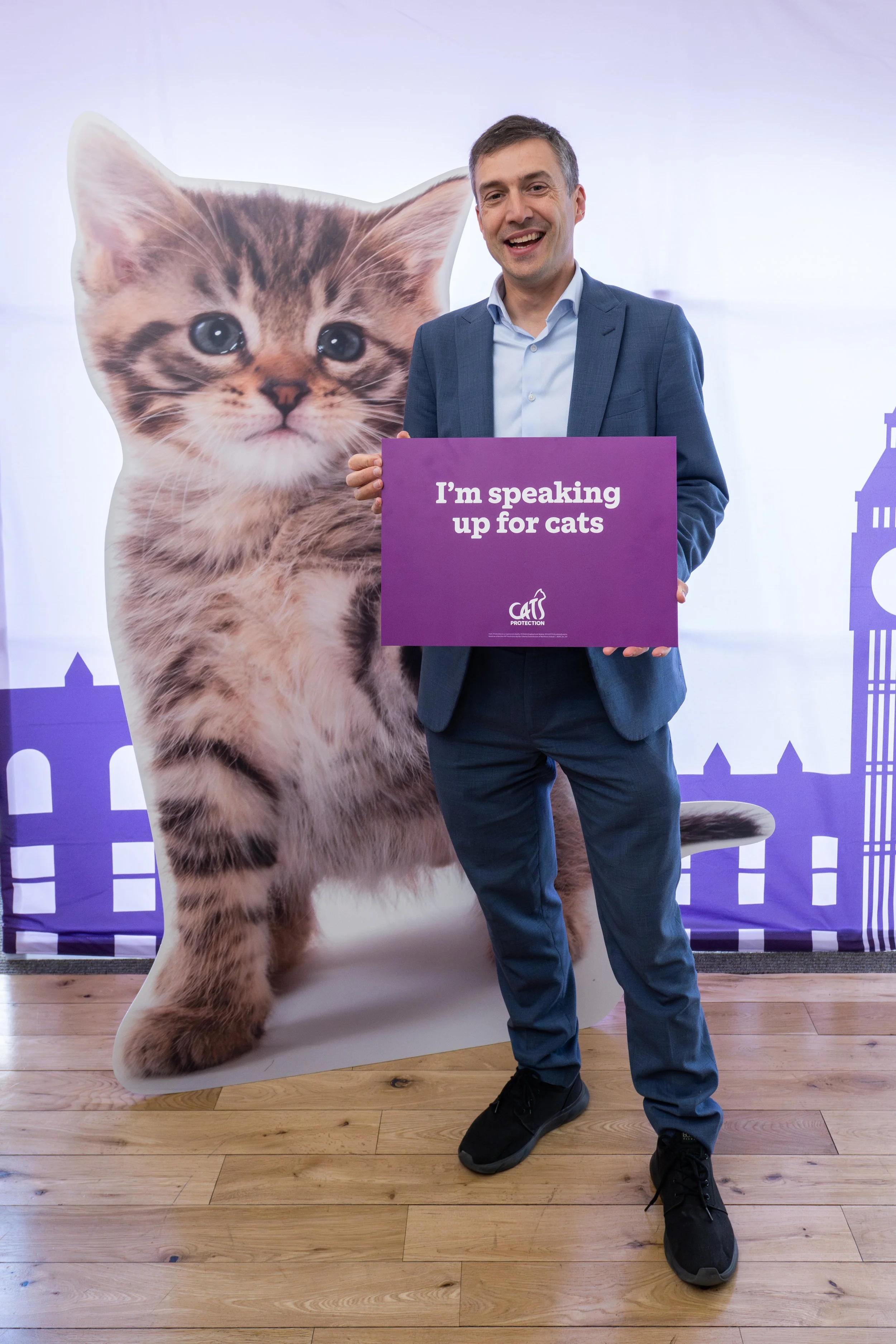
Adrian Ramsay joins Cats Protection in Parliament to discuss cat welfare
Adrian Ramsay joins Cats Protection in Parliament to discuss cat welfare
Adrian Ramsay MP for Waveney Valley joined fellow MPs and members of the House of Lords this week at a Cats Protection reception to discuss the UK’s most pressing cat welfare issues.
The UK’s leading cat charity hosted the parliamentary reception to raise awareness of many of the issues affecting the UK’s 10.4 million pet cats and the people who care for them.
A key issue raised at the event was exploitative cat breeding practices. According to Cats Protection, 36% of owned cats in the UK are pedigrees, which is up from 23% just five years ago1, and this includes an increasing number of “designer cats” with extreme characteristics like folded ears, flat faces or hairless bodies which will cause them chronic health problems and an extremely poor quality of life.
The charity is calling for a ban on the breeding of these cats with extreme characteristics, as well as a crackdown on sick and suffering cats being sold online and recently delivered a petition with over 60,000 signatures to 10 Downing Street calling for cat breeding regulations.
Other topics raised at the reception included a Cats Protection call to ban electric shock collars and to restrict fireworks to minimize stress to cats while Adrian Ramsay also spoke to the charity’s volunteers and staff about their essential cat rehoming, neutering and education work.
Adrian Ramsay said: “It was a privilege to meet Cats Protection’s volunteers and staff and hear about their vital work rehoming, neutering and caring for cats across the country. Sharing my home with our rescue cat, Bella, I know first-hand the joy that cats bring to families.
The Cats Protection reception was invaluable in shining a light on serious welfare issues still facing cats, from the rise of ‘designer cats’ bred with extreme characteristics that cause lifelong suffering, to the stress caused by fireworks and the cruelty of electric shock collars. I support Cats Protection’s calls for much tighter regulation of cat breeding and ending kitten smuggling, and I’ll continue to back their work to improve the lives of cats up and down the country.”
Madison Rogers, Associate Director of Advocacy, Campaigns and External Affairs said:
“We were delighted to bring MP and Peers together at our parliamentary reception to shine a light on some of the most pressing issues affecting cats today.
“From the urgent need for effective cat breeding regulations to prevent exploitation and suffering, to calls for a ban on electronic shock collars and stronger restrictions on fireworks, it’s clear that more must be done to protect cat welfare.
“Cats Protection is proud to make a difference nationally and in local constituencies through the dedication of our employees and volunteers. We look forward to working closely with parliamentarians to ensure cats and the people who care for them receive the protection and support they deserve.”
Cats Protection is the UK’s leading cat welfare charity and helps 191,000 cats through a national network of 182 volunteer-run teams and 31 centres.
Ends
Notes to Editors:
Picture of Adrian at the Cats Protection reception & with his Cat bella are avalible for use at this link https://drive.google.com/drive/folders/1fM9VDfgxD748HqyxQrMP8ovC7PhBYkw_?usp=sharing
Cats Protection is Charity No. 203644 (England and Wales) and SC037711 (Scotland). A company limited by guarantee registered in England and Wales (06772997). Registered office National Cat Centre, Chelwood Gate, Haywards Heath, Sussex, RH17 7TT.
Founded as the Cats Protection League in 1927, the charity adopted the name Cats Protection in 1998. We ask that you use the name Cats Protection when referring to the charity in all published material.
More information about the work of Cats Protection can be found at www.cats.org.uk
Britain-Palestine APPG Letter RE Great Israeli Real EstateEvent in London
-
Britain-PalestineAPPGLetter
Great Israeli Real EstateEvent inLondon
14.06.2026
DearForeignSecretary,
ThisSunday,the‘Great Israeli Real EstateEvent’ is set to takeplace inLondon. Land incities andtownsbuiltontheforceddisplacementofthePalestinianpeople, includingproperties in Israeli settlements across the occupied West Bank, will be available for purchase. One settlement among them is Gush Etzion, which is regarded by the UK government as part of
the occupied territory of the State of Palestine, as well as land in Jerusalem, encompassing occupied East Jerusalem, which has been illegally annexed by Israel.
Furthermore, the website advertising the event has made clear that its organisers are working with Bank Leumi, an Israeli bank financing construction in illegal settlements. As such, the event is firmly embedded in Israel’s project of colonial expansion, by facilitating the sale of land that has been stolen from Palestinians, a practice which has contributed to the fragmentation and dispossession of the Palestinian people for over a century. While inviting new settlers to purchase stolen Palestinian land, Palestinian refugees who have been displaced by Israel, and their descendants, are denied the ability to exercise their inalienable, legally-enshrined right of return.
At Tuesday’s ministerial statement announcing asset freezes of a handful of organisations and individuals involved in illegal Israeli settlement activity and Israeli state-sponsored violence against Palestinians, a number of MPs from across the House raised concerns about Sunday’s event. In response to these questions, you stated that ministers are “pursuing that particular event”, but there was no commitment from you to take action to prevent it from taking place.
Allowing the event to proceed would not only be inconsistent with current UK Government guidance on settlement-related economic activity, it would stand in opposition to the government’s obligations under international law.
As you will know, on 19 July 2024, the International Court of Justice (ICJ) issued a landmark advisory opinion, declaring that Israel’s presence and civilian settlement policies in the Occupied Palestinian state are illegal under international law. The ICJ found that Israel's settlement policy breaches Article 49 of the Fourth Geneva Convention, which prohibits an occupying power from transferring parts of its civilian population into occupied territory, a practice that amounts to the crime of pillage, which is a war crime under the Rome Statute of the International Criminal Court (ICC).
Britain-Palestine APPG Letter
Great Israeli Real Estate Event in London
14.06.2026
The ICJ also determined that land confiscation, exploitation of natural resources, and settlement expansion amount to de facto annexation of Palestinian land. In turn, by fragmenting Palestinian territory, the opinion stated Israel's policies actively violate the right of the Palestinian people to self-determination.
The ICJ ruled that Israel is obligated to end its unlawful presence in the occupied territories as rapidly as possible, cease all new settlement activity, and pay full reparations to Palestinians for damages caused by the occupation.
Beyond the duties incumbent upon Israel, the Court emphasised that all United Nations member states are under an obligation not to recognise the occupation as legal and must not render aid or assistance in maintaining the situation created by Israel's presence.
Accordingly, in order to uphold its obligations under international law, as well as to maintain consistency with its own guidance on settlement-related economic activity, the UK government must now take all necessary steps to ensure Sunday’s planned event promoting illegal activities does not proceed in our capital city.
We look forward to your response setting out the action that the government will take to address the matter.
Yours sincerely,
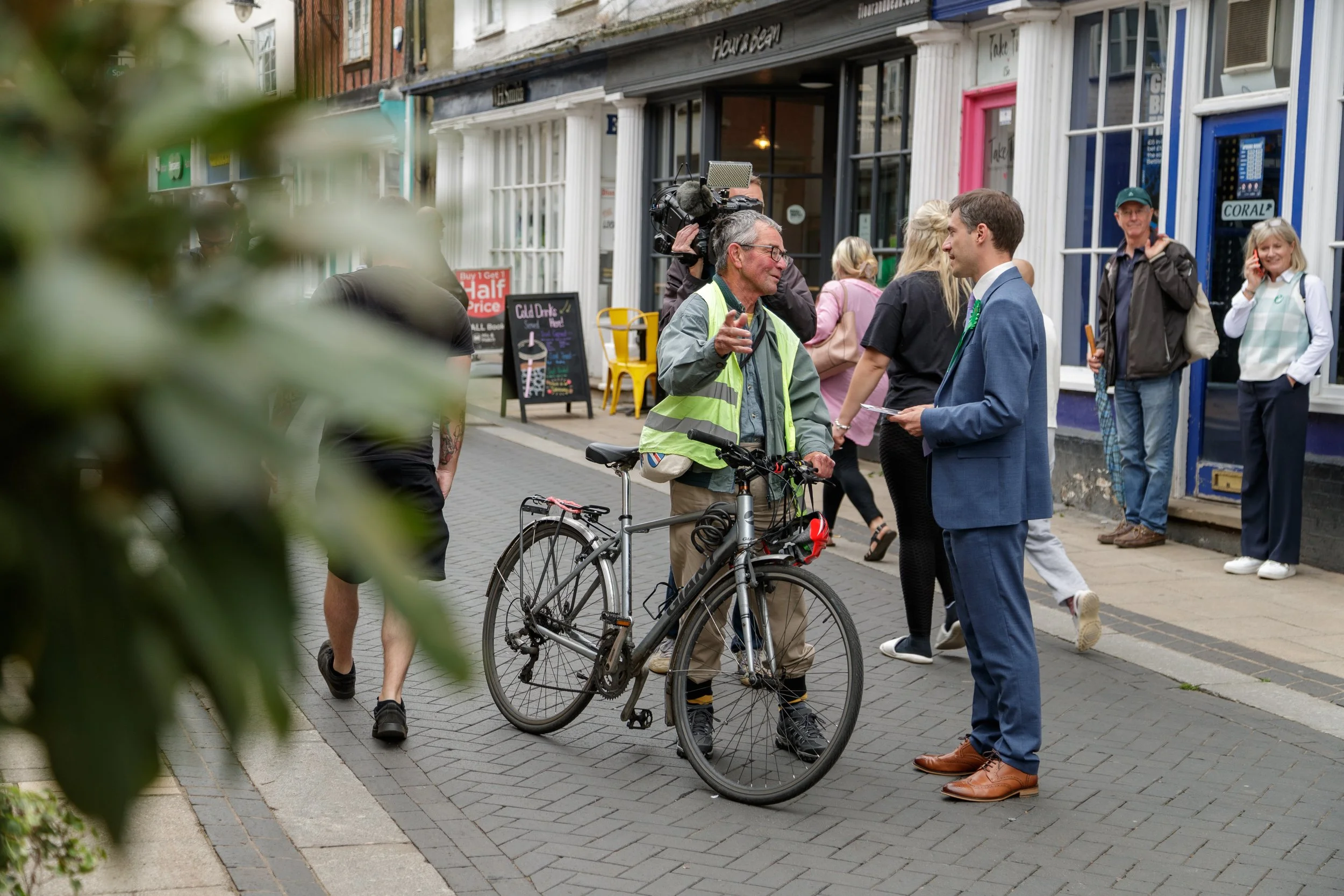
Adrian Ramsay MP asks the Department for Justice why there is a £2m by-election for the Norfolk Police and Crime Commissioner when the role will be abolished in 2028.
Adrian Ramsay MP asks the Department for Justice why there is a £2m by-election for the Norfolk Police and Crime Commissioner when the role will be abolished in 2028.
In a written question to the minister, Adrian asked 'To ask the Secretary of State for the Home Department, if she will take steps to a) remove the requirement for the Norfolk Police and Crime Commissioner post to be filled, b) provide for the necessary functions of that role to be carried out by the County Council Police and Crime Panel prior to the abolition of the Police and Crime Commissioner post in 2028, and c) ensure that the Council Police and Crime Panel have the necessary i) support ii) recourses to undertake these additional tasks.'
Adrian added
"Holding a £2m by-election for the Norfolk Police and Crime Commissioner makes little sense when that role will be abolished in 2028.
I’ve asked the Government to remove the requirement for the role to be filled and to allow the Police and Crime Panel to take over."
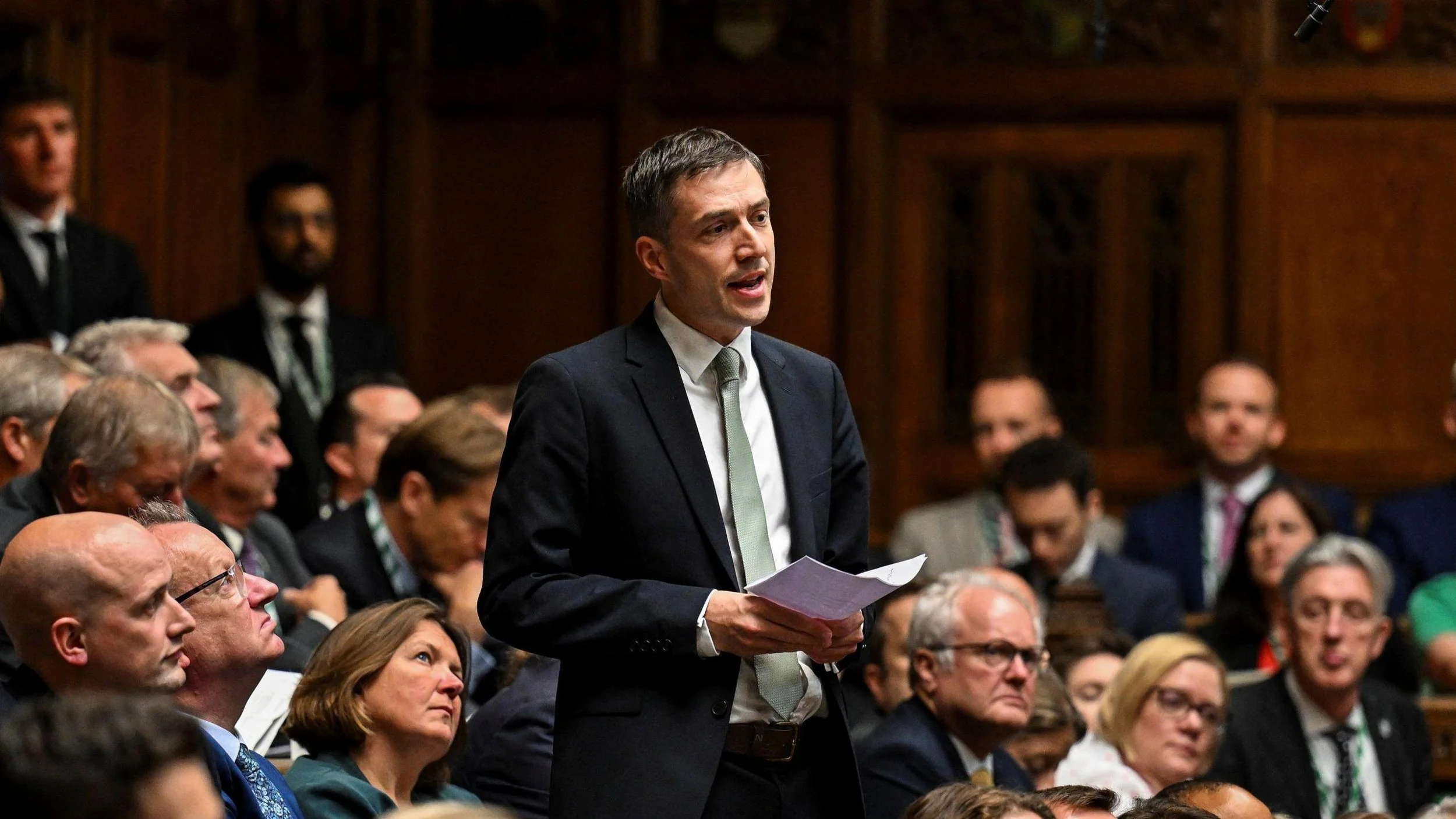
Green MP Adrian Ramsay asks the Prime Minister to commit to publishing two vital reports warning that our food and water systems are on course for catastrophic failure.
Green MP Adrian Ramsay asks the Prime Minister to commit to publishing two vital reports warning that our food and water systems are on course for catastrophic failure.
Adrian asked the Prime Minister.
‘A suppressed DEFRA report concluded that, without transformational change, our food and water systems are on course for catastrophic failure from 2030.
Another suppressed Joint Intelligence Committee assessment concluded there is a ‘high likelihood’ of ecosystem collapse, putting food production at risk.
Does the Prime Minister recognise that many of us across the House are committed to working collaboratively to address these urgent challenges - and will he commit to the publication of these two reports in full?’
In response, the Prime Minister said.
‘Well, I agree that we must act to protect ecosystems that underpin our food supply and our way of life, and I’m really proud that under this Government the UK is back playing a leading part on climate change and restoring nature. ’
Reacting to the Prime Minister's response, Adrian said: “I am deeply disappointed that the Prime Minister did not commit to publishing the reports in full.”
Ends
Notes to the editor
The suppressed report, entitled “The status of Defra’s critical systems to 2030 and beyond,” was written by the now-disbanded DEFRA futures civil servant unit for the incoming Government. It warns that there is a realistic possibility that, by 2030, the UK’s food systems, water supplies and natural ecosystems could collapse.
The report is ‘almost certain’ that DEFRA’s critical systems are on a ‘decline and collapse trajectory’, meaning that without transformational change, there is a realistic possibility that by 2030 our food, water and natural ecosystems are at risk of catastrophic collapse with a high degree of confidence.
The report was commissioned to inform the then incoming Government but was not included in ministerial handover briefings.
A separate report, the Joint Intelligence Committee’s National Security Assessment, stated that biodiversity loss and ecosystem collapse pose a threat to national security. The report lays out how regional instability throughout the world will affect the UK.
A delayed redacted version of the report was published in January only after a Freedom of Information request from Green Alliance. Adrian Ramsay has repeatedly called for a Commons debate in its contents.
Green MP warns Health Bill could silence patients' voices
Green MP warns Health Bill could silence patients' voices
Adrian Ramsay, Green MP for Waveney Valley, voices concern over the proposed abolition of independent patient and public voices such as Healthwatch.
Speaking during the Health Bill debate earlier this week, Adrian highlighted concerns from local health groups. He said
“It beggars’ belief that, as currently drafted, the Health Bill abolishes the statutory duty that underpins independent patient and public voice, including the entire network of Local Healthwatch organisations.
“The Bill risks weakening accountability across the health and care system. It removes clear protections for independent scrutiny, including powers to conduct visits to health and social care settings. The Bill fails to specify who will be responsible for maintaining these vital functions in future.
“For more than 50 years, Governments of all stripes have recognised the importance of an independent voice for patients. Organisations such as Healthwatch in Norfolk and Suffolk play a crucial role in ensuring that patients are heard, and services are held to account.
“This bill risks ending that long-standing commitment. The Government must rectify this and guarantee that patients continue to have a strong, independent voice at the heart of our health and care system.”
ENDS
Full intervention is available here https://hansard.parliament.uk/Commons/2026-06-01/debates/A2EAF490-72AB-4F7E-998F-3108BD40F89A/HealthBill - contribution-72F15BB3-2F18-418D-923A-CEF45E2B982E
Green MP forces the Government to acknowledge reports which warn of serious risks to the UK's national security.
Green MP forces the Government to acknowledge reports which warn of serious risks to the UK's national security.
Adrian Ramsay, Green Party MP for Waveney Valley, said.
"While Westminster obsesses over by-elections and leadership contests, a suppressed civil service report warns that within years our food and water systems could fail. I've forced the Government to acknowledge a suppressed report on ecosystem collapse. But Ministers still aren't facing up to the gravity and scale of the crisis."
Adrian Ramsay MP has challenged Ministers in Parliament over two suppressed Government-commissioned reports warning of serious risks to the UK's national security, including ecosystem collapse, biodiversity loss, food security and water supplies.
During the exchange, Adrian highlighted a report revealed byThe Times, produced by DEFRA civil servants, which warned that there is a realistic possibility that by 2030 the UK's food systems, water supplies and natural ecosystems could face collapse. The report was commissioned to inform the then incoming Government but was not included in ministerial handover briefings.
Questioning Ministers in the Chamber, Adrian said:
"Turning to a second report setting out grave risks to our national security, DEFRA civil servants have set out there's a realistic possibility that by 2030 our food, water and natural ecosystems are at risk of collapse. This could not be more stark. An article in The Times states that this was the conclusion of a 2024 report commissioned to inform the new Government, but it was not included in handover briefings. So can the Minister confirm if she has seen this second report, and what action is her department taking to address its stark findings?"
The Minister confirmed that she had not seen the report, although the Farming Minister had.
Adrian challenged the adequacy of that response, saying:
"I'm afraid the Minister's reply does not get to grips with either the scale or the gravity of these issues. The report makes clear that environmental policies on their own will not address the dire nature of these systemic issues. We need transformational change, which is about cross-Government work to address the risks outlined in the reports."
Adrian continued:
"This is not simply an environmental issue. It is a matter of national resilience and security. The systems that provide our food, clean water and healthy natural environment underpin every aspect of our economy and society. When official Government assessments warn that these systems are at risk of collapse, Ministers must respond with a serious cross-government plan.
"I will continue to raise these issues until the Government and Parliament are addressing them with the urgency they demand."
ENDS
Notes to the editor
Times article https://www.thetimes.com/article/381266e2-4282-4b0b-ab68-c2beb36fe75c?shareToken=9866f130f6bcc1b627d973b510a762ad
The full question and answer is available here.
https://parliamentlive.tv/Download/Index/733d1ffa-e428-44a7-bb08-44062a48babc
The first report referred to is the Joint Intelligence Committee’s National Security Assessment published in January 2026 which stated that biodiversity loss and ecosystem collapse pose a threat to national security. This report was only published after a Freedom of Information request by Green Alliance. Since January, Adrian Ramsay MP has repeatedly called for a debate in Parliament on its findings.
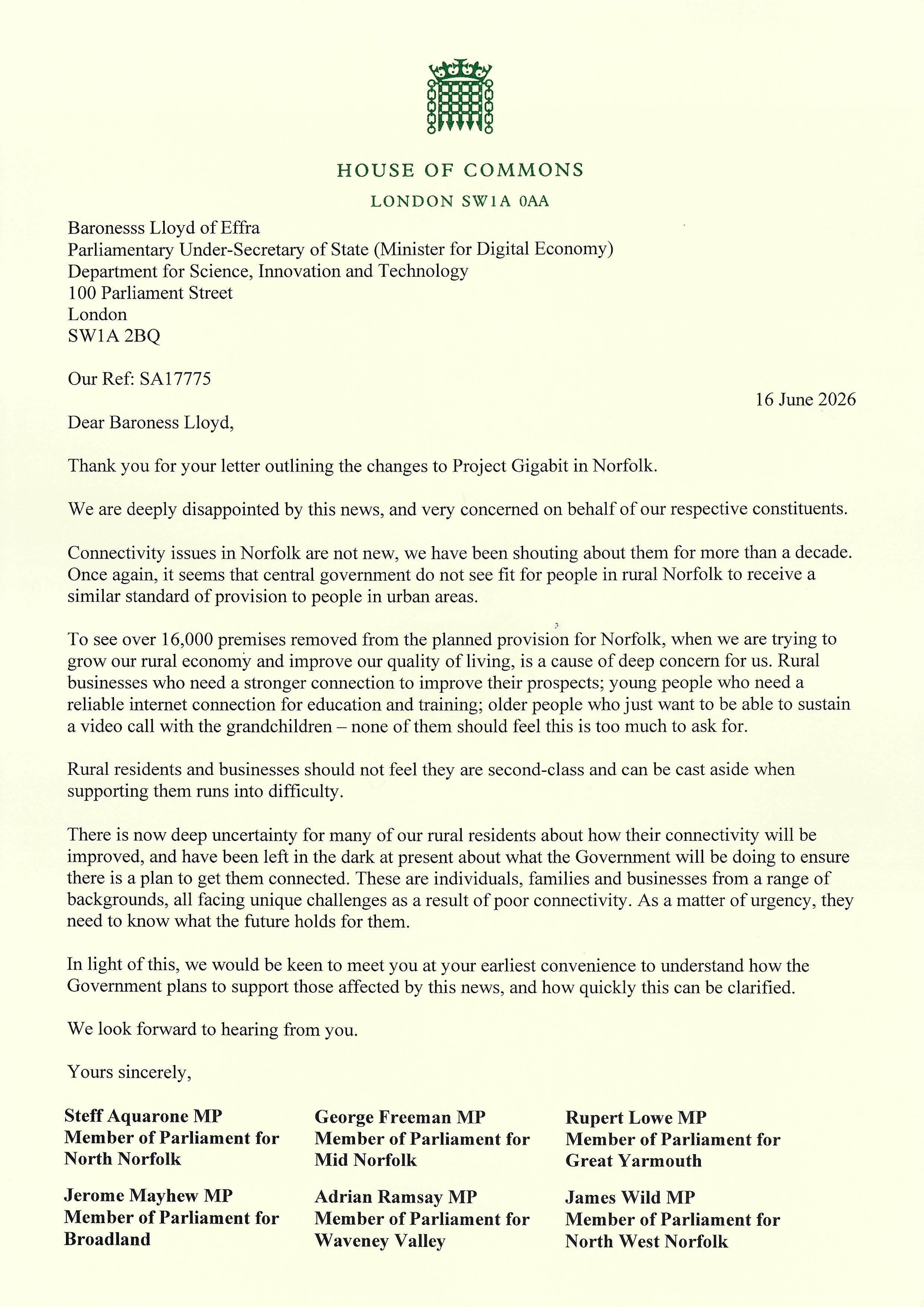
Project Gigabit Letter
-
Baronesss Lloyd of Effra
Parliamentary Under-Secretary of State (Minister for Digital Economy) Department for Science, Innovation and Technology
100 Parliament Street
London
SWIA 2BQ
Our Ref: SA17775
16 June 2026
Dear Baroness Lloyd,
Thank you for your letter outlining the changes to Project Gigabit in Norfolk.
We are deeply disappointed by this news, and very concerned on behalf of our respective constituents.
Connectivity issues in Norfolk are not new, we have been shouting about them for more than a decade.
Once again, it seems that central government do not see fit for people in rural Norfolk to receive a similar standard of provision to people in urban areas.
To see over 16,000 premises removed from the planned provision for Norfolk, when we are trying to grow our rural economy and improve our quality of living, is a cause of deep concern for us. Rural businesses who need a stronger connection to improve their prospects; young people who need a reliable internet connection for education and training; older people who just want to be able to sustain a video call with the andchildren - none of them should feel this is too much to ask for.
Rural residents and businesses should not feel they are second-class and can be cast aside when supporting them runs into difficulty.
There is now deep uncertainty for many of our rural residents about how their connectivity will be improved, and have been left in the dark at present about what the Government will be doing to ensure there is a plan to get them connected. These are individuals, families and businesses from a range of backgrounds, all facing unique challenges as a result of poor connectivity. As a matter of urgency, they need to know what the future holds for them.
In light of this, we would be keen to meet you at your earliest convenience to understand how the Government plans to support those affected by this news, and how quickly this can be clarified.
We look forward to hearing from you.
Medical Evacuation of Children in Gaza
-
The Rt Hon Yvette Cooper MP
Secretary of State for Foreign and Commonwealth Affairs of the United Kingdom
The Rt Hon James Murray MP
Secretary of State for Health and Social Care
The Rt Hon Shabana Mahmood MP
Secretary of State for the Home Department
22nd May 2026
Dear Secretaries of State,
RE: Medical Evacuation of Children in Gaza
We write to you as a cross-party group of MPs to urge you to reopen and scale up the UK’s medical evacuation programme for patients from Gaza, particularly children.
The war has devastated Gaza’s health sector. Hospitals have been decimated, essential medicines and medical equipment are in short supply, and critical services including oncology, advanced trauma care, cardiac treatment and neurology are largely unavailable. Ongoing restrictions on the entry of supplies continue to exacerbate shortages.
As a result, thousands of critically ill patients in Gaza have no viable pathway to life‑saving treatment, nor is there any realistic prospect that this will change in the near future.
Over 18,500 patients, including approximately 4,000 children, are estimated by the World Health Organization and Gaza’s Ministry of Health to require urgent medical evacuation. Both organisations warn that the true number is likely to be significantly higher due to mass displacement, poor documentation, and severely restricted access to functioning hospitals. Between July 2024 and March 2026, at least 1,092 patients died while waiting for evacuation, an average of 65 preventable deaths every month.
While we acknowledge the medical evacuation of 51 children for treatment in the UK last autumn, this figure remains vanishingly small when set against the scale of need, which continues to grow as conditions in Gaza further deteriorate.
Since October 2025, only 793 patients have been evacuated, compared with 1,700 during the much shorter January–March 2025 ceasefire. Following recent regional escalations, medical evacuations are again suspended entirely, leaving thousands in limbo as their conditions deteriorate. The burden of responding to this crisis has fallen overwhelmingly on a small number of regional states. Egypt, Jordan and the UAE have received 84% of evacuated patients. The regional countries have the expertise, but the needs outstrip any possible capacity to treat those who need it. The UK has the clinical capacity, expertise and moral obligation to do more.
Gaza’s health system cannot be rebuilt overnight, and critically ill patients cannot afford to wait.
We therefore urge you to reopen the UK’s medical evacuation pathway from Gaza without delay, working with international partners to ensure evacuations are predictable, scaled up, and delivered at pace.
Yours sincerely,
Dr Simon Opher MP
Dr Peter Prinsley MP
Dr Scott Arthur MP
Patricia Ferguson MP
Anneliese Dodds MP
Lee Dillon MP
Alex Sobel MP
James Naish MP
Peter Lamb MP
Kirsteen Sullivan MP
Zarah Sultana MP
Chris Hinchcliff MP
Clive Lewis MP
Susan Murray MP
Steve Darling MP
Ian Sollom MP
Layla Moran MP
Colum Eastwood MP
Grahame Morris MP
Andy McDonald MP
Ben Lake MP
Liz Saville Roberts MP
Ann Davies MP
Llinos Medi MP
Afzal Khan MP
Tris Osborne MP
Nadia Whittome MP
Cat Smith MP
Lorraine Beavers MP
Martin Rhodes MP
Iqbal Mohamed MP
Cat Eccles MP
Ian Roome MP
Ian Byrne MP
Bell Ribeiro-Addy MP
Claire Hanna MP
Marsha de Cordova MP
Jeremy Corbyn MP
Rachael Maskell MP
Diane Abbott MP
John McDonnell MP
Andrew George MP
Mary Glindon MP
Apsana Begum MP
Neil Duncan-Jordan MP
Kim Johnson MP
Paula Barker MP
Torcuil Crichton MP
Órfhlaith Begley MP
Pat Cullen MP
John Finucane MP
Chris Hazzad MP
Dáire Hughes MP
Cathal Mallaghan MP
Paul Maskey MP
Tom Gordon MP
Shockat Adam MP
Alison Hume MP
Lizzi Collinge MP
Imran Hussain MP
Chris Murray MP
Andrew Slaughter MP
Kate Osborne MP
Brian Leishman MP
Vikki Slade MP
Uma Kamaran MP
Graham Leadbitter MP
Brendan O’Hara MP
Tracy Gilbert MP
Emma Lewell MP
Sarah Champion MP
Lee Barron MP
Rupa Huq MP
Ben Maguire MP
Bambos Charalambous MP
Rosie Duffield MP
Hannah Spencer MP
Adrian Ramsay MP
Ellie Chowns MP
Sian Berry MP
Carla Denyer MP
Jas Athwal MP
Dr Beccy Cooper MP
Manuela Perteghella MP
Brian Mathew MP
Monica Harding MP
Matt Western MP
Joe Morris MP
Roz Savage MP
Cameron Thomas MP
Abtisam Mohamed MP
Richard Burgon MP
Stella Creasy MP
Ian Lavery MP
Yasmin Qureshi MP
Josh Babarinde MP
Tahir Ali MP
Debbie Abrahams MP
Steve Witherden MP
Clive Efford MP
Warinder Juss MP
Alison Bennett MP
Liz Jarvis MP
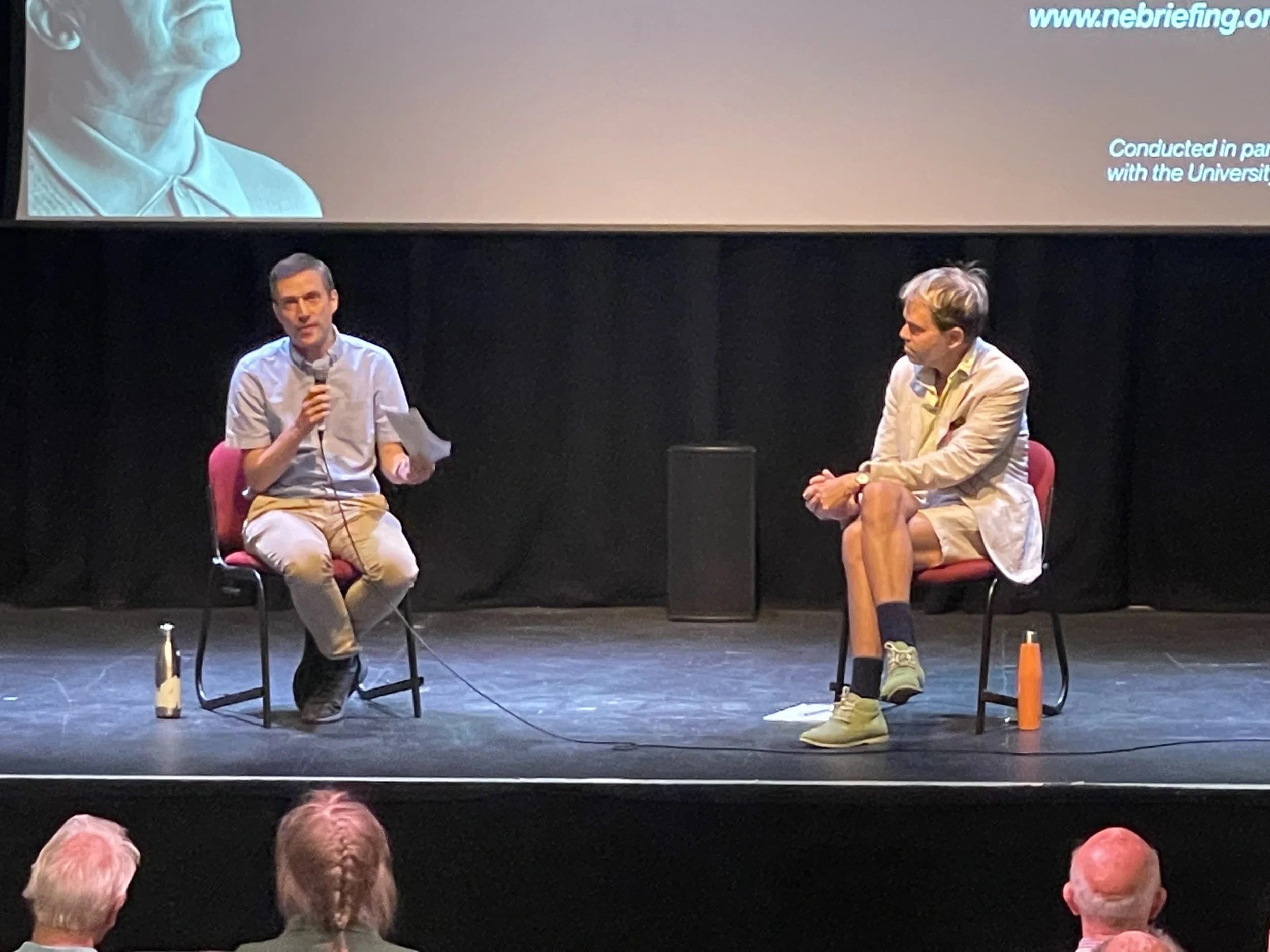
Green Party MP Adrian Ramsay calls for a dedicated Climate Protection Unit in Number 10 in response to government watchdog warning way of life is under threat from heat, flooding and drought
Green Party MP Adrian Ramsay calls for a dedicated Climate Protection Unit in Number 10 in response to government watchdog warning way of life is under threat from heat, flooding and drought
Reacting to the Climate Change Committee (CCC) Report ‘A Well-Adapted UK’ , Adrian Ramsay MP said:
“The most fundamental duty of any government is to keep the public safe, and yet today’s CCC report shows we are sleepwalking towards catastrophe and the government is failing to meet the moment.
“The impacts of the climate and nature emergency are already being felt by communities across the UK, with increased food prices, more severe flooding and dangerous heatwaves. From our food and water supply to daily essential services, continued inaction is putting us all at risk. By 2050, the CCC’s report warns that up to 92% of homes could face overheating, peak river flows could rise by up to 45%, and water supply shortfalls could exceed 5 billion litres a day. Our children will not forgive us if the Government and Parliament fail to take these fundamental risks seriously due to being distracted by current political dramas.
“That is why today I am calling on the Prime Minister to establish a dedicated Climate Protection Unit in Number 10, with the sole purpose of working cross-department to drive forward the recommendations in this report.
“Because this report must mark a turning point. The Government must take concrete steps now to protect people’s lives and ensure our country is properly prepared for the growing risks posed by extreme heat, flooding and food shortages. That means investing in flood defences and nature-based solutions, preparing for extreme heat with a big focus on adapting our homes and workplaces, providing tangible support for farmers to ensure farming remains viable, and urgently adapting our infrastructure to prevent snowballing disruption across every facet of daily life. If ministers fail to take real action and deliver before the next general election, they will knowingly be putting lives at risk. The Government has been handed a plan. It is now vital they deliver it.”
ENDS
Cross-Party Letter on Fur Sale and Imports May 2026

-
Rt Hon Emma Reynolds MP
Secretary of State for Environment, Food and Rural Affairs
Department for Environment, Food and Rural Affairs
2 Marsham Street
London
SW1P 4DF
19 May 2026
Dear Secretary of State,
We welcome the Government’s publication of the Animal Welfare Committee’s (AWC) opinion on the
responsible sourcing of fur, and Defra’s summary of responses to the 2021 Call for Evidence on the fur
trade. In light of this growing body of evidence and public support, we are writing to encourage the
Government to now make swift progress on introducing a UK ban on fur sales and imports.
The AWC’s opinion is clear that the welfare needs of animals farmed for fur cannot be met within
existing commercial production systems. It also raises serious concerns about the welfare impacts of
trapping, and concludes that existing assurance schemes and market mechanisms are not sufficient
to safeguard animal welfare. More than 96% of the almost 30,000 respondents to the 2021 Call for
Evidence strongly agreed that killing animals for their fur is wrong. Despite banning fur farming more
than two decades ago, the UK imports millions of pounds worth of animal fur from overseas every
year, creating a double standard.
We are concerned by recent media reports indicating that the EU reset could compromise the UK
Government’s ability to ban fur imports and sales. We would welcome your confirmation that
processed fur articles will not be treated as within scope of the UK-EU Sanitary and Phytosanitary (SPS)
Agreement. The proposed working group on fur should now be convened without delay and asked to
recommend a pathway for a ban on the import and sale of fur.
We urge the Government to deliver on its recent Animal Welfare Strategy commitment to ‘uphold high
animal welfare standards in trade’ by ending the UK’s role in the global fur trade for good.
We should be grateful to receive your response to this letter.
Yours sincerely,
Ruth Jones
MP for Newport West & Islwyn
Paula Barker MP
Baroness Bakewell of Hardington Mandeville
Lorraine Beavers MP
Baroness Bennett of Manor Castle
Siân Berry MP
Bob Blackman CBE MP
Richard Burgon MP
Irene Campbell MP
Danny Chambers MP
Sarah Champion MP
Dr Ellie Chowns MP
Daisy Cooper MP
Alex Davies-Jones MP
Neil Duncan-Jordan MP
Sarah Dyke MP
Cat Eccles MP
Alex Easton MP
Patricia Ferguson MP
Baroness Fookes DBE
Mary Kelly Foy MP
Baroness Gale
Lord Gascoigne
Lord Goldsmith of Richmond Park
Wera Hobhouse MP
Baroness Helic
Baroness Hussein-Ece OBE
Alison Hume MP
Liz Jarvis MP
Terry Jermy MP
Baroness Jones of Moulsecoomb
Kim Johnson MP
Clive Lewis MP
Seamus Logan MP
Douglas McAllister MP
Kerry McCarthy MP
Rachael Maskell MP
Abtisam Mohamed MP
Iqbal Mohamed MP
Navendu Mishra MP
Josh Newbury MP
Adrian Ramsay MP
Baroness Redfern
Bell Ribeiro-Addy MP
Vikki Slade MP
Hannah Spencer MP
Lord Watts
Jo White MP
Nadia Whittome MP
Steve Witherden MP
Baroness Young of Old Scone
Supported by:
Claire Bass, Senior Director Campaigns and Public Affairs, Humane World for Animals UK
Sonul Badiani-Hamment, Country Director, FOUR PAWS UK
David Bowles, Head of Campaigns & Public Affairs, RSPCA
Elisa Allen, Vice President of Programmes and Operations, People for the Ethical Treatment of
Animals UK
Iain Green, Director, Animal Aid
Lorraine Platt, Co-founder, CAWF
Mark Glover, Campaigns Director, Respect for Animals
Richard Bissett, Executive Committee, Labour Animal Welfare Society
Green Party MPs’ Response to SEND Reform Consultation
-
The Rt Hon Bridget Phillipson MP
Secretary of State for Education
Dear Bridget,
We are writing as Green Party Members of Parliament in response to the latest consultation
on proposed reforms to the Special Educational Needs and Disabilities (SEND) system.
Every child has the right to dignity, respect and the support they need to develop their full
potential. But the current SEND system is leaving far too many children and young people
unsupported and forcing countless families into a constant struggle just to access the help
their child needs. We therefore welcome the government’s ambitions for educational
reform, including earlier intervention and more inclusive mainstream education.
However, aspiration is not enough. Meaningful reform to the SEND system requires
sustained investment in people, capacity and culture. SEND reform will only succeed in
building a genuinely inclusive education system if the government protects legal rights and
provides urgent clarity on the details of implementation. Above all, the success of these
reforms will depend on whether they are accompanied by a bold workforce strategy that
delivers real staffing support on the ground.
Below, we have set out some specific concerns with the current plan for SEND reform.
Prioritise workforce capacity
The success of any attempt to reform the SEND system will depend on the capacity of the
workforce that delivers it. The number of children with Special Educational Needs continues
to rise rapidly (DfE, 2025), placing increased pressure on already stretched school staff. At
the same time, there are well-documented workforce shortages across the entire SEND
system, with the demand for teaching assistants, specialist staff and educational
psychologists significantly outstripping supply. Recent analysis by the Education Policy
Institute suggests that local authorities (LAs) in England would need to hire 1,400 additional
educational psychologists just to meet current levels of need (EPI, 2026), far exceeding the
extra 200 per year proposed in the government’s current plan. Meanwhile, there is a
longstanding nationwide teacher shortage, particularly in further education colleges, with
high workload and stress driving many staff to leave the profession (DfE, 2025; NAO, 2025).
While proposals such as Experts at Hand and Inclusion Bases have the potential to
significantly strengthen SEND support in mainstream schools, they will require a well-
resourced, highly motivated and appropriately trained workforce with sufficient capacity to
deliver them. As part of its plan for SEND reform, the government must therefore urgently
set out a long-term coherent workforce strategy that addresses the interlinked crises of
recruitment, retention, pay, training, wellbeing and workload.Protect legal rights
Children and young people with SEND must retain strong and enforceable legal rights
to the support they need. We are deeply concerned that the newly proposed
Individual Support Plans (ISPs) will not carry the same statutory duty to deliver the
provision laid out in them as Education, Health and Care Plans (EHCPs), which under
current proposals would be reserved only for children with the most complex needs.
This represents a fundamental shift away from enforceable legal rights towards a
system where support is increasingly at schools’ discretion, with significant
consequences for consistency and equality of provision.
While we welcome efforts to provide support for a wider group of pupils, this must
not come at the expense of accountability for those pupils. We echo the Education
Committee’s warning that “SEND reforms must not be based on any withdrawal of
statutory entitlements for children and young people” (Education Committee, 2025).
Watering down legal protections risks undermining parental confidence and
weakening families’ ability to secure appropriate support for their children.
We are particularly concerned that these changes may disproportionately affect
those least able to advocate for themselves within the system. The new ISPs must
therefore be supported by a clear statutory duty to deliver the provision they
specify, and it is vital that families retain a robust right of appeal.
We are also concerned that where legal duties do exist, structural bottlenecks across
education and health services mean that they will continue to be inconsistently
implemented. The principles set out in this plan must therefore be accompanied by
more detailed operational plans for ensuring compliance and delivery, including
timely assessments, diagnosis and early intervention.
‘Complex needs’ and EHCPs
The government’s current plan for SEND reform would restrict access to EHCPs and
highly specialised provision to those with ‘complex needs.
’ We are concerned that the
meaning of this term is not currently clear enough to enable adequate scrutiny or
confidence.
At present, there is no definition of what constitutes ‘complex needs,
’ nor how
decisions will be made about who qualifies for specialist support. The current plan
suggests that forthcoming need profiles within ‘Specialist Provision Packages’ will
define complex needs going forward. But the draft outline of Specialist Provision
Packages simply raises further questions about how these will work, particularly since
some children may require elements of support from multiple packages. Without
detailed examples and transparent criteria, there is a significant risk of inconsistency,
exclusion and increased local disputes.This lack of clarity also makes it difficult for families, schools, teachers and indeed
Parliament to adequately assess the likely impact of the reforms. The government must
urgently publish detailed guidance on who will qualify for EHCPs and Specialist Provision
Packages, including worked case studies. Clear definitions and operational detail are
essential to ensure the system is fair, consistent and trusted by families.
Culture change and co-production
Progress towards greater inclusion must be driven as much by culture and practice as by
structural reform. Too many children and young people continue to face barriers created
by inflexible behaviour policies, limited understanding of neurodiversity and
environments that do not meet their sensory needs. Without addressing these issues,
changes to systems and funding will have limited impact in the classroom.
We therefore welcome the proposed investment in new guidance, National Inclusion
Standards and SEND training for all staff in schools, colleges and early years settings. This
must include evidence-based guidance on how to design accessible and inclusive sensory
environments and how to embed inclusive practice in behaviour and classroom
management policies. It is essential that this guidance and the National Inclusion
Standards are genuinely co-produced. Tokenistic engagement and consultation are not
enough: the government needs to ensure that children and young people with SEND,
alongside their parents, carers and educators, are treated as equal partners in the design,
delivery and evaluation of SEND policy at every level. Lived experience must not be an
afterthought but a guiding principle of the system.
Special school capacity
While we support the government’s ambition to make mainstream education more
inclusive, this must be accompanied by a sufficient supply of special school places for
those children and young people whose needs cannot be met in mainstream settings. At
present, many areas face acute shortages of special school places and around two thirds
of special schools are at or over capacity (DfE, 2026), leaving families without appropriate
local provision. Increasing specialist support within mainstream, including through
Specialist Bases, will help to reduce reliance on special school placements. However, even
with these improvements in mainstream settings, demand for special school places is
likely to continue to outstrip capacity in some places, especially in the short term.
We are concerned that a rigid national push towards mainstream inclusion risks
overlooking this reality and failing those children for whom mainstream settings are not
suitable. Provision must be flexible, locally planned and responsive to need, rather than
driven by a one-size-fits-all national model.Tackle profiteering
At present, exploitative private companies are profiting from the SEND crisis by buying up
special schools and services and charging excessively high placement fees to LAs,
exacerbating an already unsustainable situation. Urgent action is desperately needed to
address this blatant profiteering.
While the government’s proposal to introduce national funding bands for independent
special school placements is a welcome step in the right direction, the current plans are
lacking in detail on what constitutes a “reasonable price” or how these bands will be set.
Without such clarity, it is difficult to be confident that these measures will meaningfully
curb excessive costs or protect public funds. We urge the government to be bold:
independent providers must not be allowed to continue charging, on average, more than
double the cost of state-funded special school provision (NAO, 2024).
Alongside stronger regulation and scrutiny of the independent sector, there must be a
rapid expansion of state-funded special school capacity to reduce reliance on
independent special schools. While the current plan for SEND reform proposes a total
£3.7 billion of capital investment, we are concerned by the lack of detail concerning how
much of this money will be invested in new special school capacity and how many new
state-funded special school places will be created. To ensure that special school provision
does not become increasingly dominated by the private sector, the government must
urgently proceed with building the state-funded special schools that are currently
planned for construction.
LAs must also be empowered with streamlined access to funding for increasing state-
funded special school capacity. We are concerned that requiring LAs to provide detailed
justification for using SEND payments to invest in new special school places instead of
mainstream settings will only create unnecessary delays. The government should trust
councils to exercise local democratic oversight and make data-led decisions based on the
local situation.
Reform admissions
Narrow attainment-focused performance pressures are currently disincentivising some
schools from admitting or retaining pupils with SEND. This is exacerbating inequities in
access and requires urgent government intervention. In a recent survey, 41% of senior
school leaders reported that some local schools actively discourage applications from
children and young people with SEND (Sutton Trust, 2026). The gap in access to high-
performing schools is especially large for children with SEND who are eligible for Free
School Meals and do not have an EHCP , with top schools taking in around 36% fewer
pupils in this category than live locally (Sutton Trust, 2026).We are concerned that the current proposals for SEND reform do not do enough to
strengthen fair admissions or ensure genuine accountability across all types of school,
including academies, faith schools and free schools. Restricting access to EHCPs risks
weakening accountability in admissions even further, since EHCPs are currently one of the
main mechanisms by which LAs can direct a maintained school to admit a child or young
person with SEND.
LAs must be given stronger levers to ensure equitable access across all state-funded
schools. They should have the ability to direct placements for children with ISPs as well as
EHCPs, including at academies, faith schools and free schools where necessary.
Accountability and performance frameworks for schools must also be rebalanced so that
inclusion and wellbeing metrics are treated as equal in importance to academic
outcomes, not as secondary considerations. We desperately need a new approach that
moves away from the current high-stakes testing and exam-driven accountability culture,
which incentivises exclusion and indirect selection, towards a broader, child-centred
assessment system.
We urge the government to match its ambitions with decisive action by safeguarding legal
rights, investing in workforce and school capacity and delivering a transparent,
accountable SEND system that meets the needs of every child and family it is meant to
serve. We would welcome the opportunity to discuss these proposals further with your
Department.
Yours sincerely,
Adrian Ramsay MP , Waveney Valley
Dr Ellie Chowns MP , North Herefordshire
Siân Berry MP , Brighton Pavilion
Carla Denyer MP , Bristol Central
Hannah Spencer MP , Gorton & Denton
Green Party Members of Parliament
Adrian Ramsay MP reacts to worrying El Niño news
Adrian Ramsay, Green MP for Waveney Valley, reacts to today's news that record global temperatures are likely as the chance of a very strong El Niño grows.
Adrian said
"It is becoming increasingly clear that El Niño is stronger than previously expected. While its immediate impacts are being felt across the Pacific, we are likely to feel the consequences here through colder and harsher autumn and winter in the months ahead.
This is not just about the weather. Changing climate patterns will have serious long-term impacts on farming and food security. Warmer and more unstable seasons affect crop yields and growing conditions, all against the backdrop of food inflation already reaching historic highs due to the war in Iran.
The Government must come to Parliament next week and set out clearly how it is preparing for the impact on farmers, our food supply chain and households."
ENDS
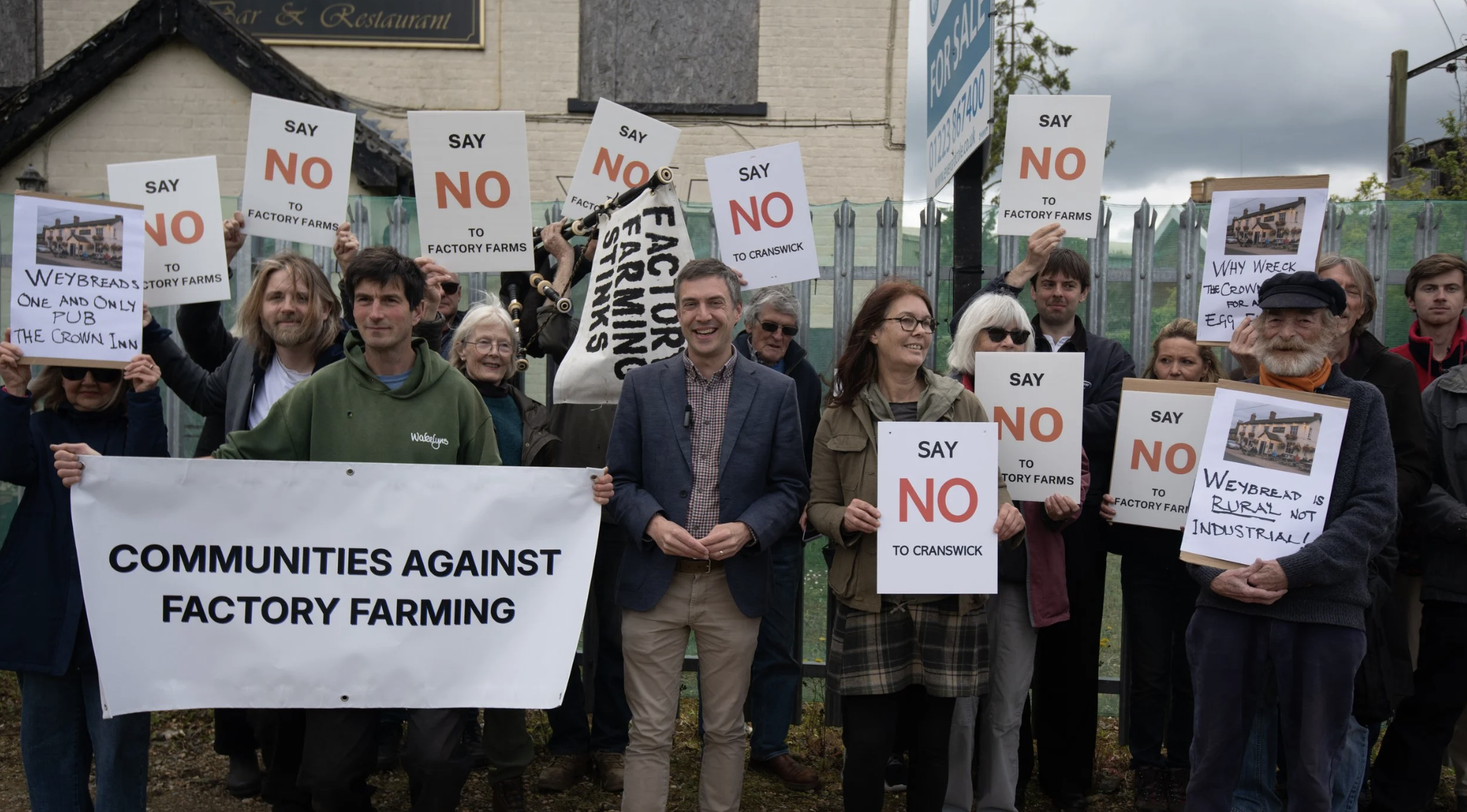
Green MP and Newly Elected Councilor join residents in Weybread to protest the Cranswick expansion.
Adrian Ramsay MP for Waveney Valley & Cllr Sally Mittuch joined residents in Weybread in a peaceful protest today against plans for a large-scale chicken incubation unit in the village.
The protest will see residents and campaigners gather outside the former Crown Inn to voice concerns over agricultural giant Cranswick’s controversial planning application for a broiler chicken incubation facility.
Campaign group Communities Against Factory Farming (CAFF), which has been supporting residents opposing the application, will attend alongside members of the Weybread Community Group.
Campaigners are urging Mid Suffolk District Council’s planning committee to “Stop the Incubator” and “Save Our Pub”.
Under the plans, The Crown Inn, which has been owned by Cranswick and closed for several years, would be demolished to make way for the factory development. Residents have raised concerns about the long-term loss of an important community asset, alongside worries over increased HGV traffic, industrial activity, pollution and the wider impact on village life.
Adrian Ramsay MP said
“The impact of large-scale factory farm developments on rural communities, like the one proposed in Weybread, is becoming increasingly concerning. These enormous industrial operations are being placed in tiny villages that are just not suitable.
Residents are rightly worried about the impact of three shift working patterns, with significant numbers of HGV movements travelling through small village roads throughout the day and night.
At a time when many rural communities desperately need genuinely affordable housing and investment in local services, people are asking why yet more large-scale industrial facilities are being prioritised over developments that would actually strengthen village life and support local people.
In addition, residents in Weybread are rightly concerned about the pollution impacts of this development and the huge implications of an increasingly industrialised food system for animal welfare."
Cllr Sally Mittuch, newly elected Green Councillor for Hoxne & Eye, said.
“Our community in Weybread has already seen huge changes over the past decade, and many residents feel we are gradually losing the very character of the village we love. People move to places like Weybread because of the countryside, the peace and the strong sense of community, but increasingly those qualities are being eroded by large-scale industrial developments that are completely out of keeping with a small rural village.
Residents still feel the loss of the village pub. Rural pubs are not just businesses; they are community spaces that bring people together and help sustain village life. We are deeply worried about the growing levels of industrial traffic, noise and disturbance associated with these kinds of developments, alongside the wider environmental impacts on the River Waveney and the surrounding countryside.”
ENDS
Adrian Ramsay MP reacts to the King’s Speech, saying “What was needed was a fundamental reset”
PRESS RELEASE
Adrian Ramsay MP reacts to the King’s Speech, saying “What was needed was a fundamental reset”
Adrian Ramsay MP has criticised the Government’s King’s Speech, saying that it failed to deliver the transformative agenda needed to tackle the major challenges facing the country.
Speaking after the King’s Speech, Adrian Ramsay MP for Waveney Valley said:
“I like to be fair with this Government, but there really were not many positives in the King’s Speech. The Duty of Candour Bill absolutely should have been passed long before now. I am glad it was included because families who the state has failed, whether after Hillsborough, the Chinook helicopter crash or other state failures, deserve answers and accountability.
“The speech talked a lot about security, and there are many genuine security threats facing the country, but one area the Government continues to overlook is nature loss and ecosystem collapse. The Government’s own National Security Assessment highlighted that the decline of nature is a risk to national security.
“That matters because nature is fundamental to our quality of life and to the essentials we all rely on, clean air, clean water, food security and the stability of our economy and society. We urgently need clear legislation not only to protect nature but to restore it.
“There was also only a single reference to climate change in the speech, yet at the same time, the Government continues to back airport expansion. It simply does not make sense to dramatically increase emissions on one hand while claiming to be committed to reaching net zero on the other.
“Ultimately, this was a deeply disappointing King’s Speech. What was needed for both the country and this Government was a fundamental reset, one that delivered a transformative agenda to tackle the cost of living crisis, repair overstretched public services, restore nature and confront climate breakdown.
“The speech failed to meet that moment, and the Government now needs to think again if it is serious about addressing the scale of the challenges facing the country.”
ENDS
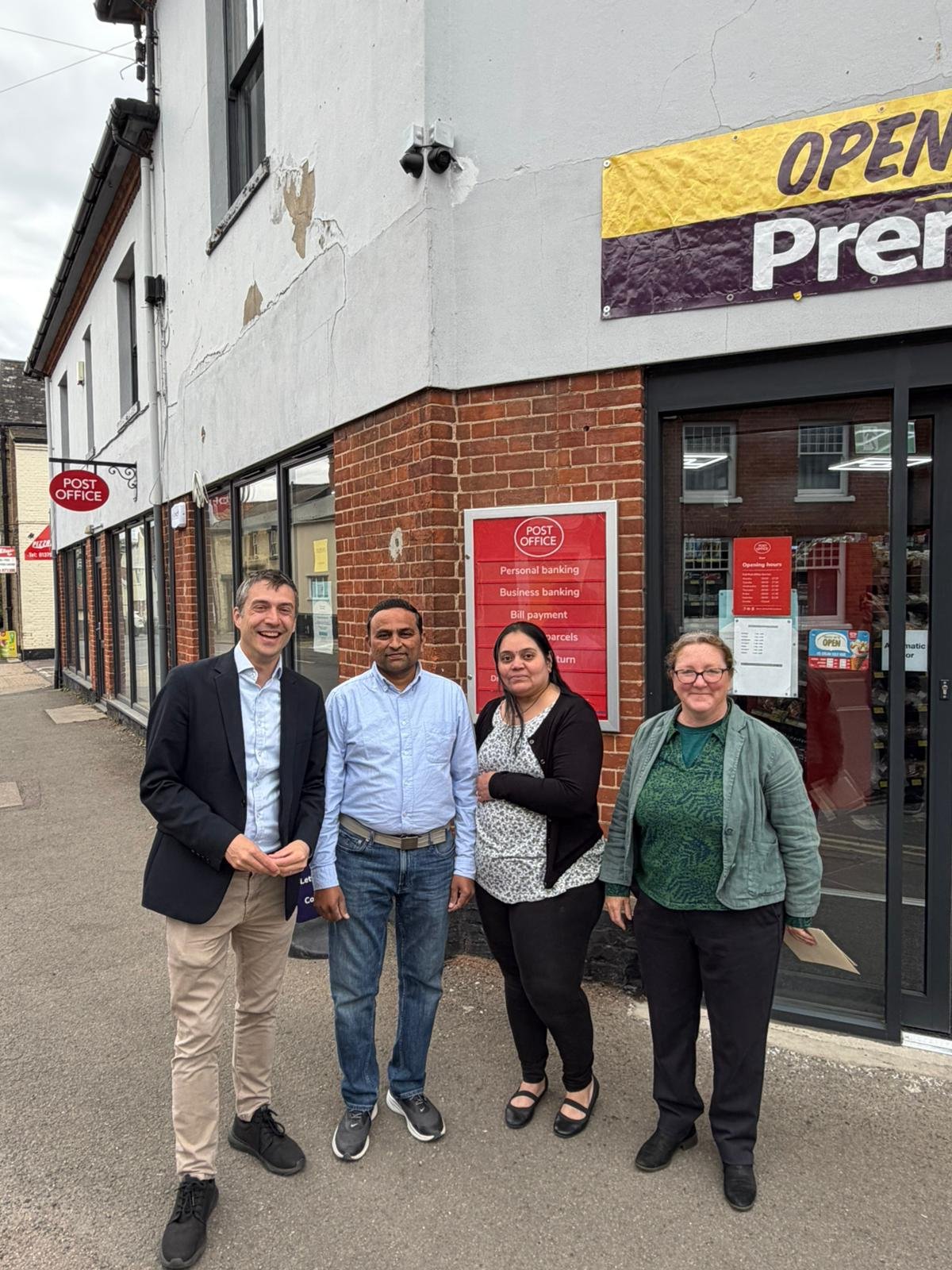
Adrian Ramsay MP visits the new Eye Post Office during the first week of operation.
Adrian Ramsay MP visits the new Eye Post Office during the first week of operation.
Adrian Ramsay MP visited the new Post Office in Eye during its first week of operation, marking the return of a permanent Post Office service to the town for the first time in more than two years.
The reopening follows work by District Councillor Lucy Elkin, who has worked alongside Adrian to help restore the service for residents and businesses as quickly as possible.
The new branch is being run by local postmaster Minesh Patel, who already operates the Post Office in Mendlesham.
Speaking at the Eye Post Office, Adrian Ramsay MP said:
“I’m delighted that, following a lot of behind-the-scenes work from Green Councillor Lucy Elkin, Eye now has a permanent post office again. For far too long, residents have been left without this vital service. With no bank in the town, having a post office is crucial for businesses and residents. In Parliament, I have been pushing for the restoration of local post offices, and I wish the local postmaster, Minesh Patel, all the best.”
Minesh Patel, the postmaster, said.
“I’m delighted that the Eye post office is now operating. From this week, we will be serving the community here in Eye, along with my other store in Mendlesham. I want to thank residents for the warm welcome and support we have already received.”
Cllr Lucy Elkin added.
“Since the previous Post Office closed, residents have consistently told me how important it was to restore this vital service to Eye. I am delighted that, after a great deal of work behind the scenes with Minesh, we now once again have a permanent Post Office in Eye.”
ENDS
100 days on from the landmark Joint Intelligence Committee National Security Assessment, no parliamentary debate has taken place
100 days on from the landmark Joint Intelligence Committee National Security Assessment, no parliamentary debate has taken place
Parliament must debate matter of “grave importance”, says Green MP
It has now been 100 days since the Joint Intelligence Committee published its National Security Assessment which stated that global biodiversity loss and ecosystem collapse is a threat to national security. Yet, there has still been no Parliamentary scrutiny. The report, which warns of serious risks to ecological stability and national security, has not been debated in Parliament.
Green MP Adrian Ramsay, Waveney Valley, first called for a debate on the report during Business Questions on 22 January. In response, the Leader of the House stated, "The member rightly points out that the report is to be welcomed. Once the report has been considered, I will look to find time for Members to debate these matters, given their importance."
Following this commitment, Adrian wrote to the Leader of the House, as well as the Cabinet Office and DEFRA, seeking clarity on when a debate would be scheduled and urging the Government to bring forward parliamentary scrutiny of the report.
He again raised the issue during questions in Parliament on 5 February and has continued to pursue it through further correspondence with Ministers and in external speeches. Despite repeated requests, there has still been no indication from the Government that a debate will be scheduled.
Speaking on the 100 days Adrian Ramsay MP said,
“It has now been 100 days since this critical report was published, following the Government's hand being forced via a Freedom of Information request. Yet Parliament has still not been allowed to properly scrutinise its findings. For an issue of such grave importance, this is completely unacceptable. At the election, the Government promised a transparency revolution: no power without accountability, and no accountability without transparency. That must apply to matters of national security and how we restore the natural environment that we all depend on. It is incumbent on the Government to have a debate immediately after the King's Speech"
ENDS
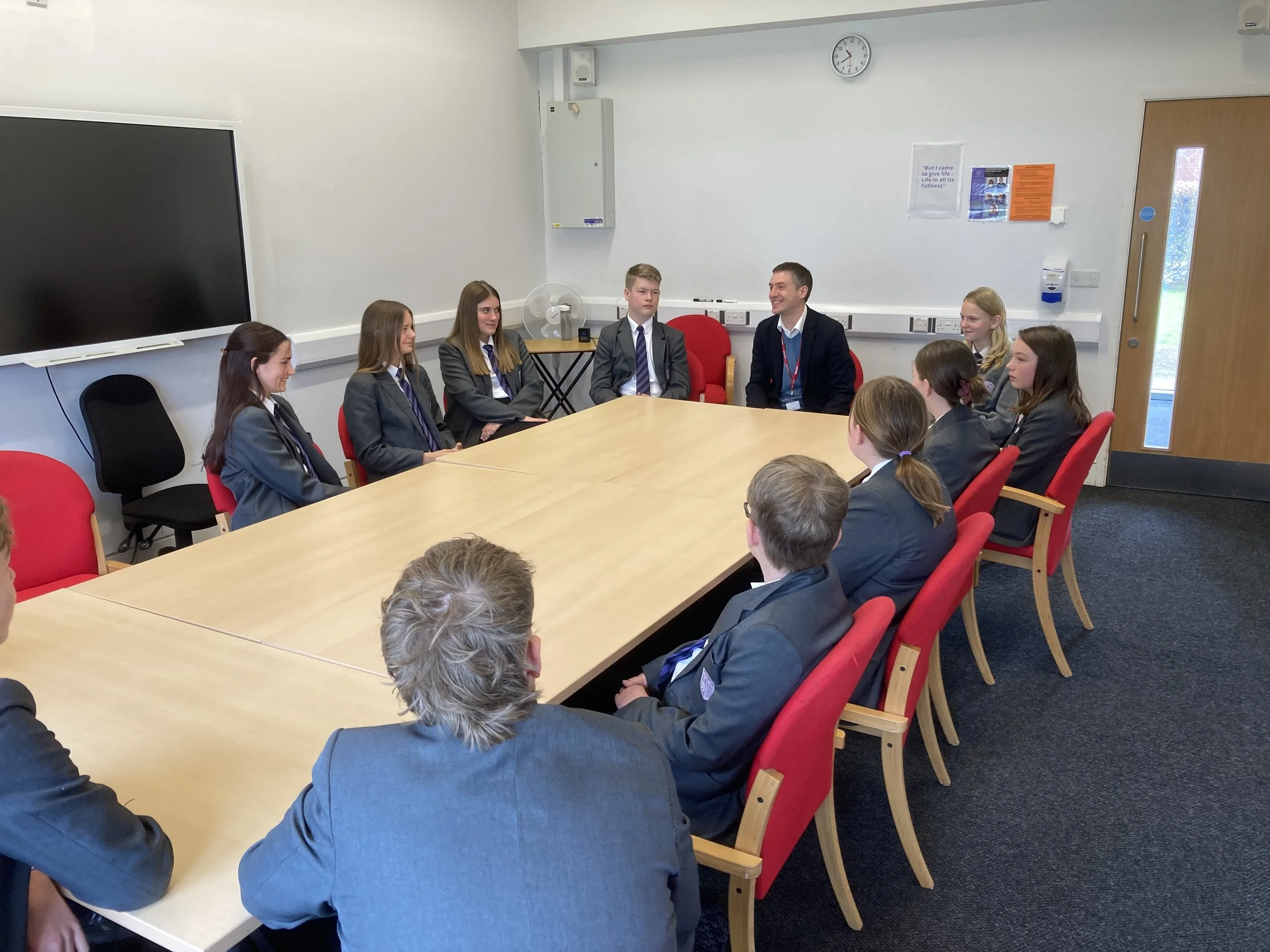
Adrian Ramsay MP seeks young people’s views on proposed social media ban.
Adrian Ramsay MP seeks young people’s views on proposed social media ban.
Adrian Ramsay, Green Party MP for Waveney Valley, has visited two secondary schools in his constituency to speak with young people and teachers about the proposed social media ban.
Speaking after both forums, Adrian said
“Access to social media for children and teenagers has been a constant topic of discussion in recent months. We all recognise the substantial risks, but we should also acknowledge the benefits of social media.
“I’ve received many welcome emails from parents expressing their views and concerns. I also felt it was important to hear directly from young people and teachers. Over the past few weeks, I have met with secondary school pupils and teachers at Harleston Sancroft and Hartismere School to hear their views and experiences.
“There was a range of views, but overall, the feeling was that there needs to be far stronger restrictions on the content that the tech firms allow on their platforms to ensure we keep young people safe online. Age restrictions need to be put in place which correspond with the content on each platform. Phones need to be set up so that a responsible adult always has control over a phone used by an under-16. And stronger resourcing of social services is needed to support those young people who are becoming vulnerable to online harms.
“These responses reinforce my own feelings on the topic, as an MP and as a parent, that it’s probably not a case of there being a total ban or not but about what restrictions are needed to keep young people safe and what is the right age for different apps. I will be responding to the Government consultation informed by these helpful discussions and will carefully follow the outcomes of the Government consultation which must inform the debate.”
Teachers who attended the roundtables also shared their perspectives, noting that, from a safeguarding standpoint,
“The majority of what we are dealing with as safeguarding leads is via social media.”
Students also had their say. One who is supportive of a ban said,
“Whilst scrolling through short-form media my phone picks up inappropriate content and restricts me from seeing it. Although scrolling is addictive, you do learn about other people’s lives.”
Others highlighted the need for balance, with one stating,
“There are games where you can make friends without insecurities, but there should also be a balance (on usage)”.
Teachers also recognised some of the benefits of social media, saying,
“Pupils gain more knowledge and power, better communication skills, especially for those with neurodivergence. [They can] gain more confidence socially via chatting online than they might get from family and friends.”
ENDS
Adrian Ramsay challenges the Government on only 39% of adults having access to NHS dentistry
Adrian Ramsay challenges the Government on only 39% of adults having access to NHS dentistry
Adrian Ramsay, MP for Waveney Valley and health spokesperson for the Green MPs, questioned the Minister responsible for Dentistry: what is the Government's ambition for access to NHS Dentistry?
Adrian asked:
"The British Dental Association has highlighted that current budgets allow just 39% of adults to access NHS treatment within 2 years. Is that really the height of the Government's ambition? And if not, what percentage of access is the Government aiming for?"
In reply, Minister Stephen Kinnock said, “We are working closely with the BDA on long-term contract reform. That’s got to be about getting the balance right so that dentists are incentivised to do NHS dentistry, and we also maximise access. Fundamental contract reform. A public consultation is coming up before the summer, and I’m sure he’ll want to take part."
After questioning the Minister, Adrian said, "Of course, we need dental contract reform and also training places, and I've been actively pushing for those things. But if we are serious about NHS dentistry being accessible to everyone, the Government's ambition has got to be much greater than 39% of adults - and that is going to have to mean more funding."
ENDS
RE: Windfall tax on those profiting from the war on Iran to tackle the cost of living crisis
-
Dear Prime Minister and Chancellor,
RE: Windfall tax on those profiting from the war on Iran to tackle the cost of living crisis
Across the UK, millions are barely staying afloat. Energy bills are bursting family budgets, childcare costs are washing away wages, businesses are struggling, and housing costs have skyrocketed. Many of the greatest problems people in the UK are facing right now will intensify as the impacts of the war on Iran continue to ripple through the economy.
The US-Israeli strikes on Iran as part of an illegal war, have caused chaos, killed civilians and have triggered the largest ever disruption to fuel supply, according to the International Energy Agency, sending crude oil costs surging over $100 per barrel in recent days. This has only worsened after the recent attacks on gasfields and LNG processing facilities in Iran and Qatar, which have caused gas prices to jump to four-year highs, with the impacts to be felt for many months and years to come.
Domestically, UK gas prices have more than doubled since late February. They are now at their highest since August 2022 and are likely to drive up energy bills unless action is taken to protect households and businesses when the next price cap is determined. Meanwhile, households are already grappling with the impacts of jumping fuel price increases, making simply getting by increasingly expensive. At the same time, experts are predicting major disruption to production and imports for agriculture inputs like fertilisers, risking further affordability issues for food and drink essentials in the months to come.
This crisis makes clear that the UK must end its reliance on fuels imported from overseas and invest in domestic renewable energy, to ensure British energy security is not left susceptible to global conflicts, disasters, or trade disputes. This will also help accelerate the UK’s transition toward a low-carbon economy, thereby reducing the likelihood of further economic shocks.
Sadly, there are some clear winners of the war on Iran. Oil and gas giants, big banks, agricultural input industries and defence companies will likely make record profits, at the expense of enormous human suffering. In recent crises, like those triggered by the Covid-19 pandemic and war in Ukraine, the wealthiest households and super-rich amassed even greater fortunes - to the tune of hundreds of billions of pounds, while millions were left struggling. Time after time, when wars break out, or major crises unfold, companies across different sectors, alongside super-rich individuals, make eye-watering sums of money. North Sea energy firms are set to make bumper profits. According to new data, for every month that energy prices remain at 18th March 2026 levels, profits could result in over £200m in tax revenue through the Energy Profits Levy. Banks reap profits due to the Bank of England’s misguided decision to raise interest rates in response to supply-side inflation. Higher rates are paid by borrowers - whose mortgage costs are already soaring off the back of the Iran crisis - and the Bank of England itself, which pays interest on the risk-free reserves banks hold with them. The latter cost is ultimately borne by the Treasury, currently to the tune of £20bn per year.
It is not right that extraordinary profits, generated off the backs of ordinary people during periods of crisis, are siphoned off into private hands and corporate bank accounts. All whilst households and businesses are in urgent need of substantial support to cope with the affordability crisis. The government’s own cost of living champion has called for measures to prevent profiteering. We urge you to make this crisis a turning point for the UK. Taking bold action to systemically reform our tax system and invest in our energy security will build resilience in our economy to
withstand future shocks and make life affordable for people and businesses in the UK.
We are writing to you today, as leading organisations from civil society, urging you to:
Ensure a permanent and strengthened energy profits mechanism which captures all excess profits made by oil and gas companies - including windfalls during crises - and close all loopholes which encourage further investment in harmful fossil fuels.
Introduce a levy on banks specifically targeting UK retail net income, profits they have made directly from the UK public.
Apply additional excess profits (windfall) taxes to companies in sectors profiteering from this crisis and the war in Iran, for example big agribusiness, the defence industry and associated AI and tech firms.
Invest revenue from excess profits into direct support to households and businesses to help weather the shock of the affordability crisis, alongside accelerating bringing online mass-scale low and zero carbon solutions to build a resilient energy system in the UK.
The billions in revenue from the additional proposed taxes on windfalls from this crisis must be reinvested into providing direct cost of living support and making our economy more resilient to withstand shocks in the future.
We can break free of the war-energy crisis doom loop, invest in renewables and low-carbon solutions, support people to deal with the cost of living crisis and put Britain on a path to better living standards for everyone in this country.
Yours sincerely,
Adrian Ramsay MP co-signed this letter along with Sian Berry MP, Carla Denyer MP, Hannah Spencer MP and Dr Ellie Chowns MP. Tax Justice UK, Faiza Shaheen, Executive Director
Greenpeace UK, Areeba Hamid, Co-Executive Director
Global Witness, Mike Davis, CEO
Women’s Budget Group, Dr Daniella Jenkins, Executive Director
National Education Union, Daniel Kebede, General Secretary38Degrees, Matthew McGregor, CEO
PCS Union, Fran Heathcote, General Secretary
Positive Money, Sara Hall, Co-Executive Director
End Fuel Poverty Coalition, Simon Francis, Coordinator
Global Justice Now, Nick Dearden, Executive Director
Autonomy Institute, Will Stronge, Chief Executive
Patriotic Millionaires UK, Rebecca Gowland, Executive Director
Green New Deal Rising
350.org, Anne Jellema, Executive Director
Zero Hour, Amy McDonnell and James Sutton, Co-Executive Directors
Care Full, Ruth Hannan & Hannah Webster, Co-Directors
Stamp Out Poverty, David Hillman, Director
War on Want, Liz McKean, Executive Director
Fairness Foundation, Will Snell, Chief Executive
Compass, Lena Swedlow, Deputy Director
Equality Trust, Priya Sahni-Nicholas and Jo Wittams; Co-Executive Directors
Taxpayers Against Poverty, Tom Burgess, CEO
Debt Justice, Heidi Chow, Executive Director
Fuel Poverty Action, Stuart Bretherton, Campaigns Lead
Mainstream
Women’s Environmental Network, Kate Metcalf, Co-Director
Voices Adfocad, Mike O'Brien, Founder
Tipping Point UK, Louise Hazan, Co-Director
Wellbeing Economy Alliance Scotland, Lisa Hough- Stewart, Interim Director
WEAll Global, Stewart Wallis, Executive Co Chair
Culture Unstained, Chris Garrard, Co-Director
Possible, Hirra Khan Adeogun & Juliet Michaelson, Co-directors
Cost of Living Action, Conor O'Shea, Campaign Coordinator Financial Transparency Coalition, Matti Kohonen, Executive Director
Conflict and Environment Observatory, Doug Weir, Director
JustMoney Movement, Sarah Edwards, Executive Director
Tipping Point North South, Deborah Burton. Co-founder
New Economics Foundation, Danny Sriskandarajah, Chief Executive
CLES (Centre for Local Economies), Dr Sarah Longlands
Oil Change International, Elizabeth Bast, Executive Director